 Free · Open 24/7
Quartiere Coppedè
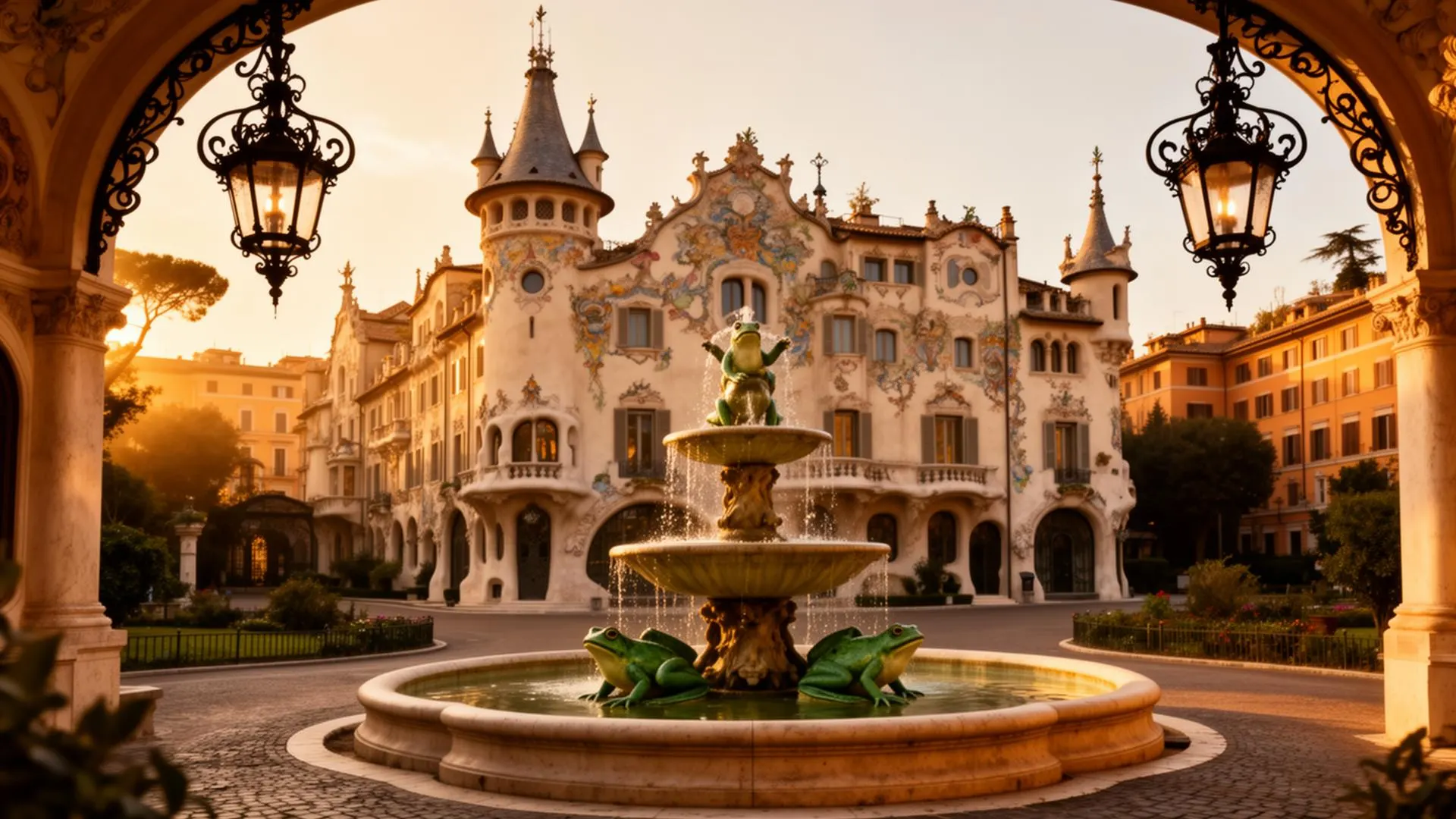
Rome's free open-air Art Nouveau quarter — developed from the 1910s into the late 1920s under Gino Coppedè's design direction, around the Fountain of the Frogs and the famous chandelier arch.
30–45 minFreeHidden GemPhoto paradisePiazza Mincio, 00198 Roma RMOpen on MapPlan Your Visit
Compare tickets, tours and stays — booking ahead usually gives more choice
Book a TourHotels NearbyBy AllTrips Editors••8 min readQuartiere Coppedè is a free open-air Art Nouveau enclave in Rome's Trieste district — around 26 palazzini and 17 villini around Piazza Mincio, developed from the 1910s into the late 1920s under the design direction of Florentine architect Gino Coppedè, with remaining work completed after his death. You enter through a wrought-iron chandelier arch on Via Dora and end up at the Fontana delle Rane(Fountain of the Frogs). No ticket, no queue, open 24/7 — Rome's most surprising hidden gem and a 30-minute walk you will not forget.
📋 In This Guide
Built
1910s–1920s
Architect
Gino Coppedè
Style
Art Nouveau / Liberty
Entry
Free, 24/7
Visit time
30–45 min
Tram
3 or 19 (Buenos Aires)
Why Visit Quartiere Coppedè?
Most of Rome's wonders are 2,000 years old. Quartiere Coppedè is barely 100 — and it is the strangest neighbourhood in the city. For 30 unhurried minutes you walk through an architect's private fantasy: chandelier arches, frescoed fairy houses, sculpted frogs, Assyrian spiders, medieval turrets and Latin inscriptions — developed under Gino Coppedè's design direction from the 1910s into the late 1920s, with work continuing after his death. It is free, open day and night, and almost nobody outside Rome has heard of it.
One Architect's Vision
Around 26 palazzini and 17 villini developed under the design direction of Gino Coppedè, with remaining work completed by others after his death.
Fantasy Architecture
Liberty Art Nouveau fused with medieval, Baroque, Assyrian and Greek motifs — unique in Italy.
Photography Paradise
Every façade is a different shot. Golden hour at the Fontana delle Rane is the city's most underrated photo opportunity.
Free & Crowd-Free
No ticket, no queue, no opening hours. A residential neighbourhood you can simply walk into.
What to See in Quartiere Coppedè
The quarter is small enough to walk in 15 minutes and rich enough to spend two hours photographing. Here are the four sets of details to look for as you wander.
Iconic Landmarks
- Entrance Arch on Via Dora — wrought-iron chandelier suspended between the twin Palazzi degli Ambasciatori, Latin greeting 'INGREDERE HOSPES' (Enter, Guest)
- Fontana delle Rane (1924) — Piazza Mincio centrepiece with 12 sculpted frogs spouting water from two stacked basins
- Villino delle Fate (Fairy House) — irregular Art Nouveau jewel with frescoes of bees, spiders and Florentine vedute
- Palazzina del Ragno (Spider Building) — Assyrian-style spider in its web carved on the upper façade as a symbol of patient industry
Architectural Details
- Twin Palazzi degli Ambasciatori — symmetrical palaces flanking the entrance, joined by the chandelier arch
- Medieval Turrets — fairy-tale towers with pointed roofs along Via Brenta and Via Olona
- Carved Grotesques & Gargoyles — masks, mythological beasts and satyrs on doorways and cornices
- Roman & Greek Motifs — Doric columns, classical friezes and Latin inscriptions seamlessly blended with Liberty curves
Hidden Details to Discover
- Zodiac Signs — astronomical symbols carved into panels along Via Olona
- Polychrome Mosaics — flowers, animals and geometric patterns on multiple façades
- Wrought-Iron Balconies — organic curves and nature-inspired metalwork unique to each villino
- Latin Inscriptions — small mottoes carved over a dozen doorways throughout the quarter
Best Photo Spots
- From the pavement opposite the entrance arch on Via Dora — the chandelier framed by the twin palaces
- Low angle around the Fontana delle Rane with a palazzino behind
- The Fairy House's painted façade in early-morning or late-afternoon golden light
- Looking straight up at the turrets against a clear blue sky from Via Brenta
The Fontana delle Rane (Fountain of the Frogs)
Inaugurated in 1924, the Fontana delle Rane is Coppedè's homage to Rome's famous Fontana delle Tartarughe (Fountain of the Tortoises) in Piazza Mattei — a fountain designed by Giacomo della Porta and sculpted by Taddeo Landini in the 1580s, to which the tortoises were added later, traditionally attributed to Bernini (some scholars credit Andrea Sacchi). In Piazza Mincio, Coppedè's twelve sculpted frogs spout water from two stacked travertine basins, framed by the irregular octagon of the square. Popular interpretations sometimes link the number twelve to the apostles, the zodiac signs or the months of the year, but there is no scholarly source confirming any single intended meaning.
Walk a full 360° around the basin: each of the eight palazzini surrounding the piazza was designed to frame the fountain from a different angle. Coppedè composed the square as a single architectural experience, not a collection of buildings. The fountain is also the only element of the quarter that is municipal property — the City of Rome maintains it, and it has been cleaned as part of restoration work in recent years.
The Chandelier Arch on Via Dora
The neighbourhood's threshold is a monumental stone arch stretched between the twin Palazzi degli Ambasciatori, completed in the 1920s. From its centre hangs a vast wrought-iron chandelier — Coppedè's calling card and one of Rome's most photographed details. Above the keystone, carved in Latin: INGREDERE HOSPES — Enter, Guest. Beneath it, a frieze of grotesque masks and Liberty-style tendrils.
The two flanking palazzi are mirror twins on the outside but subtly different on the inside courtyards — Coppedè rarely repeated himself exactly. The chandelier glows with warm electric bulbs every evening, turning the arch into a glowing portal at dusk. This is the single best moment of the day to visit.
Villino delle Fate & Palazzina del Ragno
The Villino delle Fate (Fairy House) on the north side of Piazza Mincio is the most photographed villino of the quarter. Its façades — there are three different ones, because Coppedè refused symmetry — are covered with painted frescoes of bees and spiders (industry), Florentine vedute (Coppedè's home city), Petrarch and Dante portraits (Italian letters) and zodiac signs. A small loggia, a fairy-tale turret and a crooked outline make it look exactly like a building drawn by a child.
A few steps east on Via Brenta is the Palazzina del Ragno (Spider Building), Coppedè's stranger masterpiece. A massive Assyrian-style spider crouches in its carved stone web on the upper façade — a deliberate symbol of patient industry borrowed from ancient Mesopotamian iconography. The doorway below is flanked by Doric columns that would not look out of place on a Greek temple. This single building sums up the Coppedè method: take any ten centuries of architectural history and reassemble them on one façade.
Who Was Gino Coppedè?
Gino Coppedè (Florence 1866 – Rome 1927) was an Italian architect, sculptor and decorator who built almost nothing the way anyone else did. Trained in Florence's Istituto Artistico, he made his name in 1893 with the Castello Mackenzie in Genoa — a fantastical reinvention of medieval Tuscan castle architecture for a Scottish insurance magnate. Commissions followed in Genoa, Messina, Buenos Aires and finally Rome.
The Roman quarter that bears his name was the project he directed most closely from masterplan to detail, though work continued beyond his lifetime. He died in 1927, before the last villino was built. A small team of collaborators completed the remaining buildings to his designs through 1928. The neighbourhood was officially named "Quartiere Coppedè" in his memory the following year.
The Coppedè Style
Architectural historians sometimes call it "Stile Liberty Coppediano" — Italian Art Nouveau in Coppedè's idiosyncratic dialect. The base layer is unmistakably Stile Liberty (the Italian name for Art Nouveau): organic curves, floral wrought iron, polychrome stuccoes. But Coppedè piles on every other style he loved:
- Medieval Tuscan — turrets, crenellations and Florentine bifore windows
- Ancient Greek and Roman — Doric columns, classical friezes, Latin inscriptions
- Baroque — exuberant cartouches, twisted pilasters, masks
- Assyrian-Babylonian — winged figures and the famous spider
- Gothic and fairy-tale — peaked roofs, dragon spouts, painted frescoes
The mix is shamelessly eclectic — and unique in Italian architecture. Coppedè has no real heirs and no real precedents. The closest international cousin is Antoni Gaudí's Park Güell in Barcelona, completed only a few years earlier.
Quartiere Coppedè Through History
1909Speculative Land Acquired
The Società Anonima Edilizia Moderna, a Roman building consortium, acquires a triangular plot of farmland north of Villa Borghese, on the new Via Tagliamento axis being driven through the Trieste district.
1913Gino Coppedè Hired
Florentine architect Gino Coppedè — already famous for the Castello Mackenzie in Genoa — is commissioned to direct the design of an entire residential quarter from scratch: around 26 palazzini, 17 villini and a central piazza, in a single uniform style of his own invention. Work would continue into the late 1920s, including after his death.
1916First Villini Completed
Construction begins despite the First World War. The first buildings on Via Tagliamento and Via Dora are finished, and the bold eclectic style — Liberty mixed with medieval, Greek, Baroque and Assyrian motifs — provokes immediate Roman press debate.
1921Piazza Mincio Laid Out
The octagonal Piazza Mincio, the architectural heart of the quarter, is paved and the surrounding palazzine begin to rise: the Villino delle Fate, the Palazzina del Ragno and the twin Palazzi degli Ambasciatori take shape simultaneously.
1924Fontana delle Rane Inaugurated
The Fountain of the Frogs is unveiled in the centre of Piazza Mincio. Designed by Coppedè in dialogue with Rome's Fontana delle Tartarughe in the historic centre, its 12 sculpted frogs become the quarter's symbol.
1920sChandelier Arch Finished
The monumental entrance arch over Via Dora is completed, with its iconic wrought-iron chandelier suspended at the centre and the Latin greeting INGREDERE HOSPES carved above. The neighbourhood now has its dramatic threshold.
1927Coppedè Dies
Gino Coppedè dies in Rome in 1927. He does not see the final villini completed, and remaining work on the quarter continues under his collaborators. The neighbourhood is named after him in 1928.
1965The Beatles Legend
Local legend says the Beatles entered the fountain after visiting the nearby Piper Club in 1965. The story is widely repeated, including by Rome's tourism portal, but no definitive contemporary photograph is known.
1980sCinema Discovers Coppedè
The quarter's eerie atmosphere has often attracted filmmakers, and it has become associated over the decades with Italian horror cinema and other productions drawn to its unusual architecture.
2010sInstagram Era Begins
Coppedè explodes on Instagram and Pinterest as one of Rome's 'hidden' photo spots. Visitor numbers triple, the residents' association posts polite signs asking influencers not to block doorways.
2023Façade Restoration
A restoration campaign cleans the polychrome stuccoes of the Villino delle Fate and restores the wrought-iron chandelier under the entrance arch, refreshing the quarter's appearance.
2026Still Free, Still Magical
Despite global fame, Quartiere Coppedè remains exactly what Gino Coppedè designed: a free, residential, open-air work of architecture. No ticket, no queue, no opening hours — just walk through the chandelier arch.
The Beatles Legend
Local legend says the Beatles entered the fountain after visiting the nearby Piper Club in 1965, following a concert in Rome. The Piper Club sat on Via Tagliamento, a short walk from the Coppedè entrance arch, which is part of why the story has stuck. The tale is widely repeated, including by Rome's tourism portal, but no definitive contemporary photograph is known, and there is no plaque at the fountain. Treat it as charming neighbourhood folklore rather than a documented fact.
Best Time to Visit in 2026
Golden Hour
The hour after sunrise (≈06:00–07:00 in summer, 07:30–08:30 in winter) and the hour before sunset are unbeatable. Warm light brings out the polychrome stuccoes and you have the piazza to yourself.
Weekday Mornings
Tuesday–Friday 09:00–11:00 is the second-best window: residents have left for work, very few visitors, school groups not yet arrived.
Evenings
After dark the entrance chandelier is lit — magical for photos. Trieste is a safe residential district at all hours.
Avoid
Spring Sunday afternoons (locals out with families), and harsh midday summer light (12:00–16:00) which flattens the façade detail.
Coppedè vs Rome's Other Hidden Quarters
| Quarter | Era | Style | Visit time | Cost |
|---|---|---|---|---|
| Quartiere Coppedè | 1910s–1920s | Liberty / Eclectic | 30–45 min | Free |
| Garbatella | 1920s–1930s | Garden city / Barocchetto | 2 hours | Free |
| EUR | 1937–1942 | Rationalist Fascist | 3 hours | Free |
| Trastevere | Medieval / Renaissance | Vernacular Roman | 3+ hours | Free |
Coppedè is the smallest, the strangest and the fastest — perfect as a 45-minute add-on to a half-day in the Trieste / Parioli area.
Common Mistakes to Avoid
❌ Looking for a ticket office
There is none. Quartiere Coppedè is a public street, not a museum. Walk straight in under the chandelier arch.
❌ Trying to enter the buildings
All 43 palazzini and villini are private homes. Admire from the street only — ringing doorbells is not appreciated.
❌ Visiting at midday in summer
Harsh overhead light (12:00–16:00) flattens the polychrome stuccoes. Come at golden hour or in the evening.
❌ Blocking residents' doorways
This is a real neighbourhood with real apartments. Influencers blocking entrances is the one thing residents complain about.
❌ Bringing a drone
All of central Rome is a no-fly zone. Drones are confiscated and fined — every angle is reachable on foot.
❌ Combining only with the Colosseum
Coppedè is far from ancient Rome. Pair it instead with Villa Torlonia, MACRO or Villa Ada — all 10–15 minutes away.
Rome Tickets to Book Same Day
Quartiere Coppedè is free, but most visitors pair it with a ticketed Rome highlight in the same morning or afternoon. The Colosseum and Roman Forum are 25 minutes away by Metro Line B — here are the best skip-the-line options for 2026:
Colosseum Priority Entrance
Best for: First-time visitors
~2 hoursSkip-the-line access to the Colosseum with entry to Roman Forum and Palatine Hill included. Perfect for first-time visitors.
- Skip-the-line entry
- Colosseum access
- Roman Forum included
- Palatine Hill included
🎟️ Compare Prices:
TiqetsKlookTrip.comColosseum Guided Tour
Best for: History enthusiasts
~3 hoursExpert-led tour with professional guide sharing gladiator history, architecture secrets, and ancient Roman stories.
- Professional English-speaking guide
- Skip-the-line entry
- In-depth historical commentary
- Small group experience
🎟️ Compare Prices:
TiqetsKlookTrip.comColosseum Arena & Underground
Best for: Unique experience seekers
~3.5 hoursWalk where gladiators fought on the arena floor and explore the underground chambers where they awaited their fate.
- Arena Floor access
- Underground chambers access
- Roman Forum & Palatine Hill
- Expert guided tour included
🎟️ Compare Prices:
TiqetsKlookTrip.comPair Your Visit
Coppedè takes 45 minutes — pair it with one of these nearby attractions for a perfect half-day in the Trieste / Parioli area:
Villa Torlonia
10-min walk — Mussolini's former residence with the Casino dei Principi and Casina delle Civette stained glass.
MACRO Museum
15-min walk — Rome's contemporary art museum in a converted Peroni brewery on Via Nizza.
Villa Borghese & Galleria Borghese
20-min walk — Rome's grandest park and the Bernini and Caravaggio masterpieces of the Galleria Borghese.
Catacombs of Priscilla
15-min walk north — early Christian catacombs with the oldest known image of the Virgin Mary.
Highlights Checklist
Free to visit, open 24/7, no ticket or reservationThe wrought-iron chandelier arch on Via Dora — Rome's most photographed entranceFontana delle Rane (1924) with its 12 sculpted frogs in Piazza MincioVillino delle Fate — frescoed Fairy House with bees, spiders and Florentine vedutePalazzina del Ragno — the giant Assyrian-style spider carvingTwin Palazzi degli Ambasciatori flanking the entranceAround 26 palazzini and 17 villini developed under Gino Coppedè's design direction30–45 minute self-guided walk, perfectly photogenic at golden hourGetting There in 2026
🚋 Tram (best option)
Tram 3 or 19 to Buenos Aires stop. 3-min walk south on Via Tagliamento to the chandelier arch on Via Dora. Best for visitors coming from Termini, San Lorenzo, Trastevere or Piramide.
🚇 Metro
Metro Line B1 to Sant'Agnese / Annibaliano, then 10-min walk south. Note: Line B1, not B — they split at Bologna station.
🚌 Bus
Lines 63, 83, 92 and 360 stop at Piazza Buenos Aires. Bus 92 connects directly from Termini in about 15 minutes.
🚶 On foot
From Villa Borghese (Pinciano gate): 15-min walk north through Parioli. From Villa Torlonia: 10-min walk west on Via Spallanzani.
Where to Stay Near Quartiere Coppedè
Looking for convenient accommodation near Quartiere Coppedè? Stay within walking distance to make the most of your visit.
Hotels Near This AttractionTop Rated HotelsBudget-Friendly OptionsLuxury HotelsCentral locations with easy access to Quartiere Coppedè and other attractionsFrequently Asked Questions
What is Quartiere Coppedè in 2026?
Quartiere Coppedè is a small free-to-enter neighbourhood in Rome's Trieste district developed from the 1910s into the late 1920s under the design direction of Florentine architect Gino Coppedè, with remaining work completed after his death. Around 26 palazzini and 17 villini are arranged around Piazza Mincio in a single eclectic style that blends Art Nouveau (Stile Liberty), medieval, ancient Greek, Baroque and Assyrian-Babylonian motifs. The buildings are private residences but the streets and the Fontana delle Rane (Fountain of the Frogs) can be visited freely 24/7.
Is Quartiere Coppedè free to visit?
Yes — completely free and open 24 hours a day. It is an outdoor residential neighbourhood, not a museum. The buildings are private (most are still apartment homes, a few host small offices and the Embassy of South Africa), so you can only admire the exteriors and the Piazza Mincio fountain. There is no ticket office, no entrance gate and no opening hours.
Where is Quartiere Coppedè exactly?
The neighbourhood sits in Rome's Trieste district, north-east of Villa Borghese and just south of Villa Ada. The unmistakable entrance is the giant wrought-iron chandelier arch between the two Palazzi degli Ambasciatori on Via Dora, where it meets Via Tagliamento. The whole quarter is bounded by Via Tagliamento, Via Arno, Piazza Buenos Aires and Via Po — roughly four city blocks.
How do I get to Quartiere Coppedè?
By tram: tram 3 or 19 to the 'Buenos Aires' stop, then a 3-minute walk south on Via Tagliamento — the easiest option from Termini, San Lorenzo or Trastevere. By bus: lines 63, 83, 92 and 360 stop at Piazza Buenos Aires. By Metro: take Metro Line B1 to Sant'Agnese/Annibaliano (10-minute walk) — note Line B1, not B. From Villa Borghese it is a 15-minute walk through the Parioli quarter.
How long do I need at Quartiere Coppedè?
Plan 30–45 minutes for a careful visit: 5 minutes at the entrance arch on Via Dora, 15–20 minutes around the Fontana delle Rane in Piazza Mincio (the centrepiece), then a slow loop down Via Olona, Via Brenta and Via Aterno to spot the Fairy House (Villino delle Fate), the Spider Building (Palazzina del Ragno) and the Ambassadors' Palaces. Photographers easily spend 60–90 minutes.
Why is it called 'Coppedè'?
The neighbourhood is named after its lead architect, Gino Coppedè (Florence 1866 – Rome 1927). Coppedè was hired in 1913 by the Società Anonima Edilizia Moderna to design an entirely new residential quarter on speculative land north of Villa Borghese. He directed the project for the rest of his life and died in 1927, with the remaining work completed by his collaborators after his death.
Is the Fountain of the Frogs really linked to The Beatles?
Local legend says the Beatles entered the fountain after visiting the nearby Piper Club in 1965. The story is widely repeated, including by Rome's tourism portal, but no definitive contemporary photograph is known. There is no plaque, and the tale should be treated as neighbourhood folklore rather than confirmed fact.
Can I go inside any of the buildings?
No — every building in Quartiere Coppedè is private property. The exception is the South African Embassy at Via Tanaro 14, which occupies one of the original Coppedè villini and can occasionally be visited during European Heritage Days (Giornate Europee del Patrimonio) in late September. A handful of ground-floor entrances host small architecture studios that sometimes leave the inner-courtyard gates open in summer — peek respectfully if invited.
When is the best time to visit?
Golden hour — the hour after sunrise or before sunset — is unbeatable: warm light brings out the polychrome stuccoes, mosaics and wrought iron, and you have the piazza to yourself. Mid-morning (09:00–11:00) on weekdays is the second-best window. Avoid Sunday afternoons in spring when local Romans bring their families. Christmas evenings are a quiet bonus when the chandelier arch is lit.
Is photography allowed?
Yes — public streets, completely free, no permit required for personal photos. Tripods and professional fashion shoots theoretically need a Roma Capitale permit but are rarely enforced for amateurs. Drone photography is forbidden (entire centre of Rome is a no-fly zone). Be respectful: residents live here and are tired of influencers blocking doorways.
What is the architectural style?
Coppedè is a one-man eclectic style sometimes called 'Stile Liberty Coppediano' — Italian Art Nouveau (Liberty) is the dominant ingredient, but it is fused with medieval Tuscan castle motifs, ancient Greek and Roman classicism, Baroque exuberance, Assyrian-Babylonian winged figures and even a touch of Gaudí-style organic curves. The result is unique in Rome and arguably in Italy: closer to a film set than to mainstream early 20th-century architecture.
Is Quartiere Coppedè safe?
Yes — it is one of the safest neighbourhoods in Rome at any hour. Trieste is an upmarket residential district with consular residences, embassies and police patrols around the South African Embassy. Petty crime is virtually unheard of. The streets are well lit at night and quiet enough that single travellers and women routinely visit at dusk and after dark.
Related Attractions
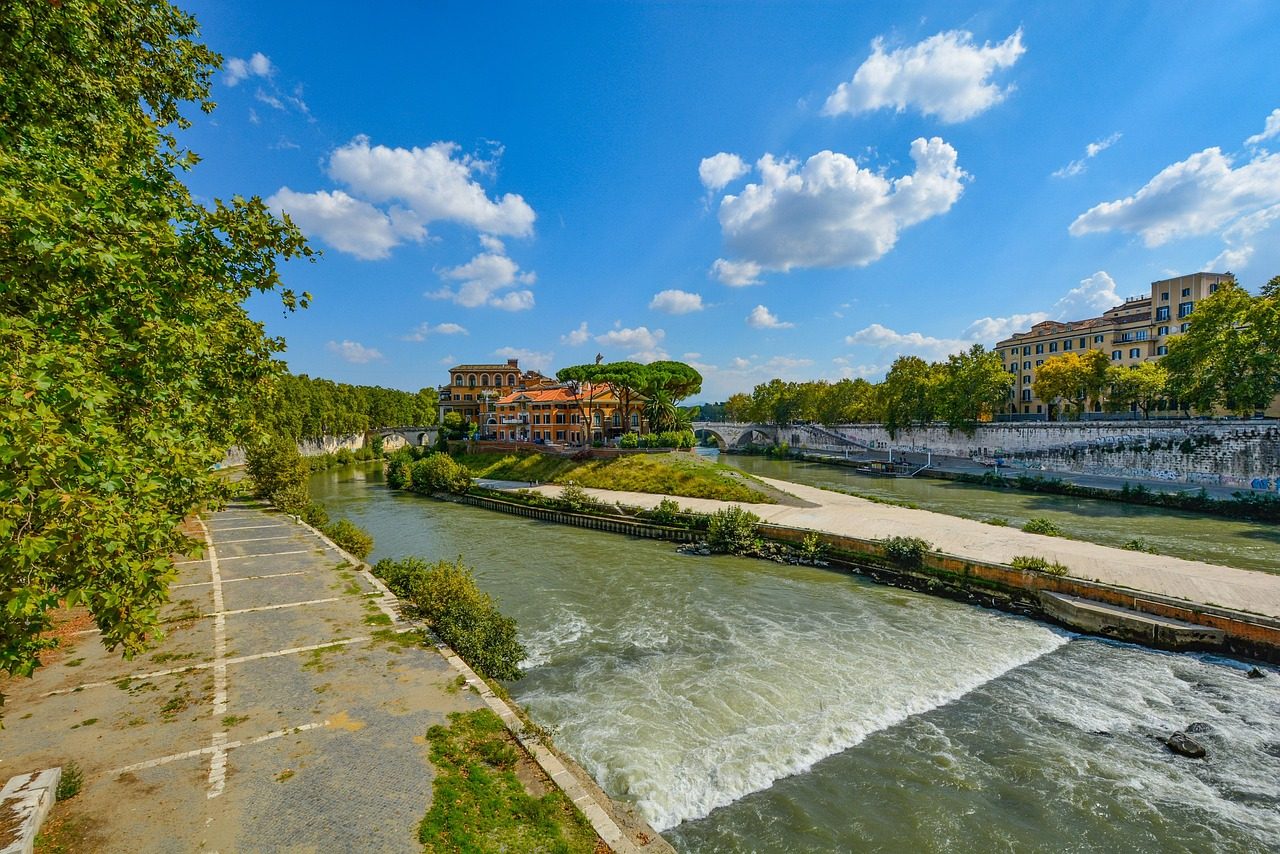
Tiber Island
Ancient boat-shaped island with 2,500 years of history
Explore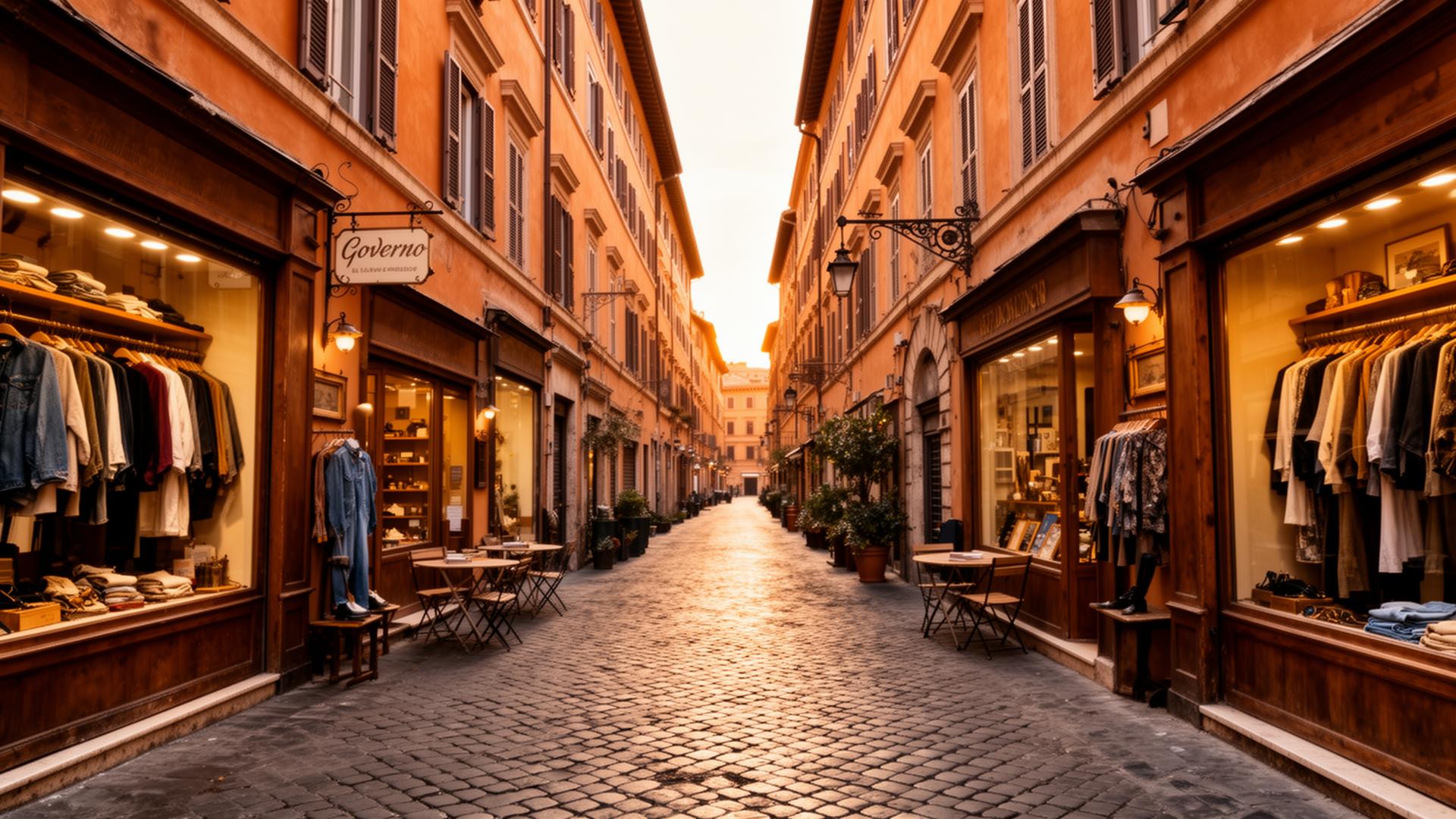
Via del Governo Vecchio
Rome's best street for vintage shopping
Explore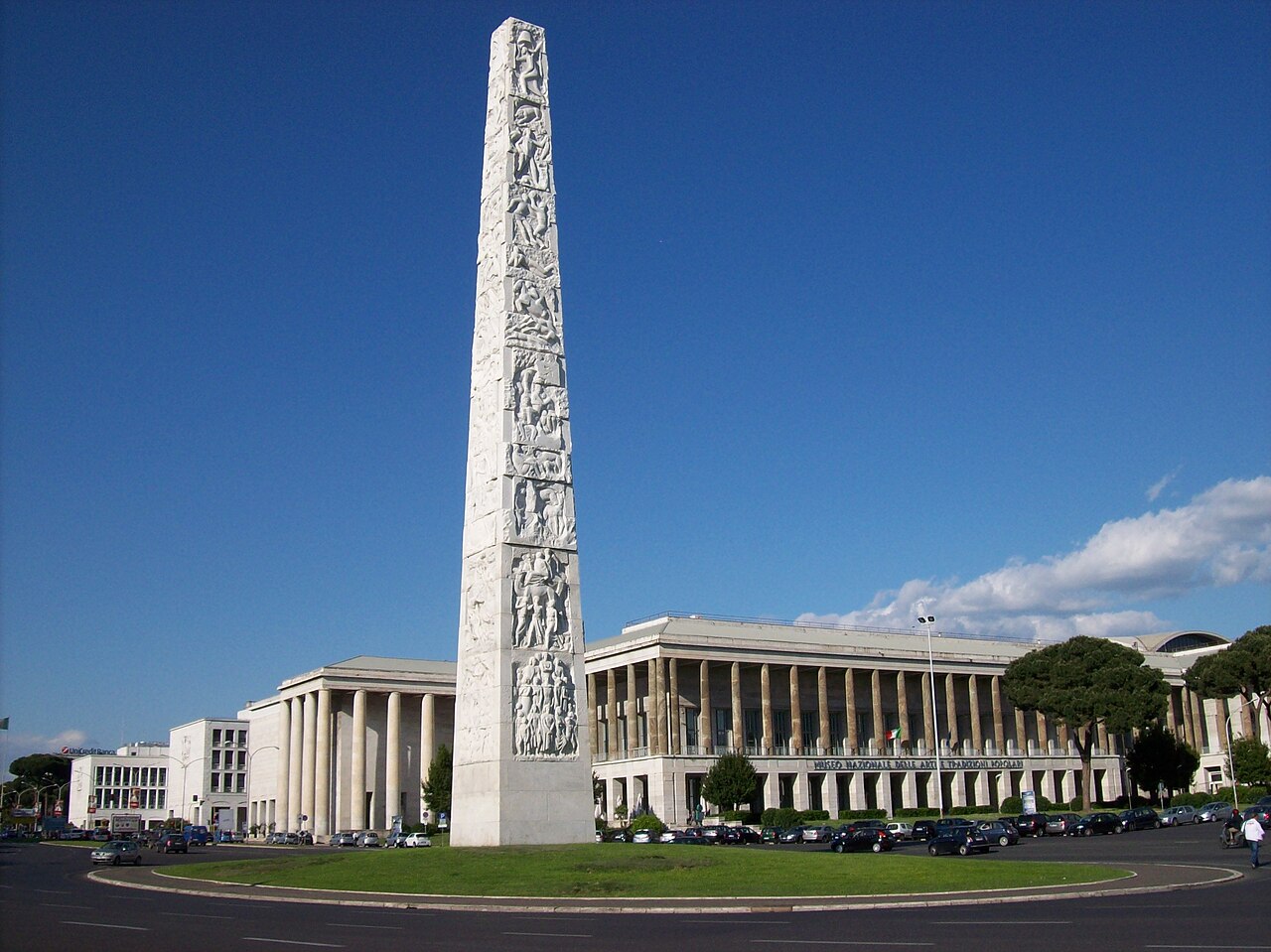
EUR District
Mussolini-era rationalist architecture with Square Colosseum
Explore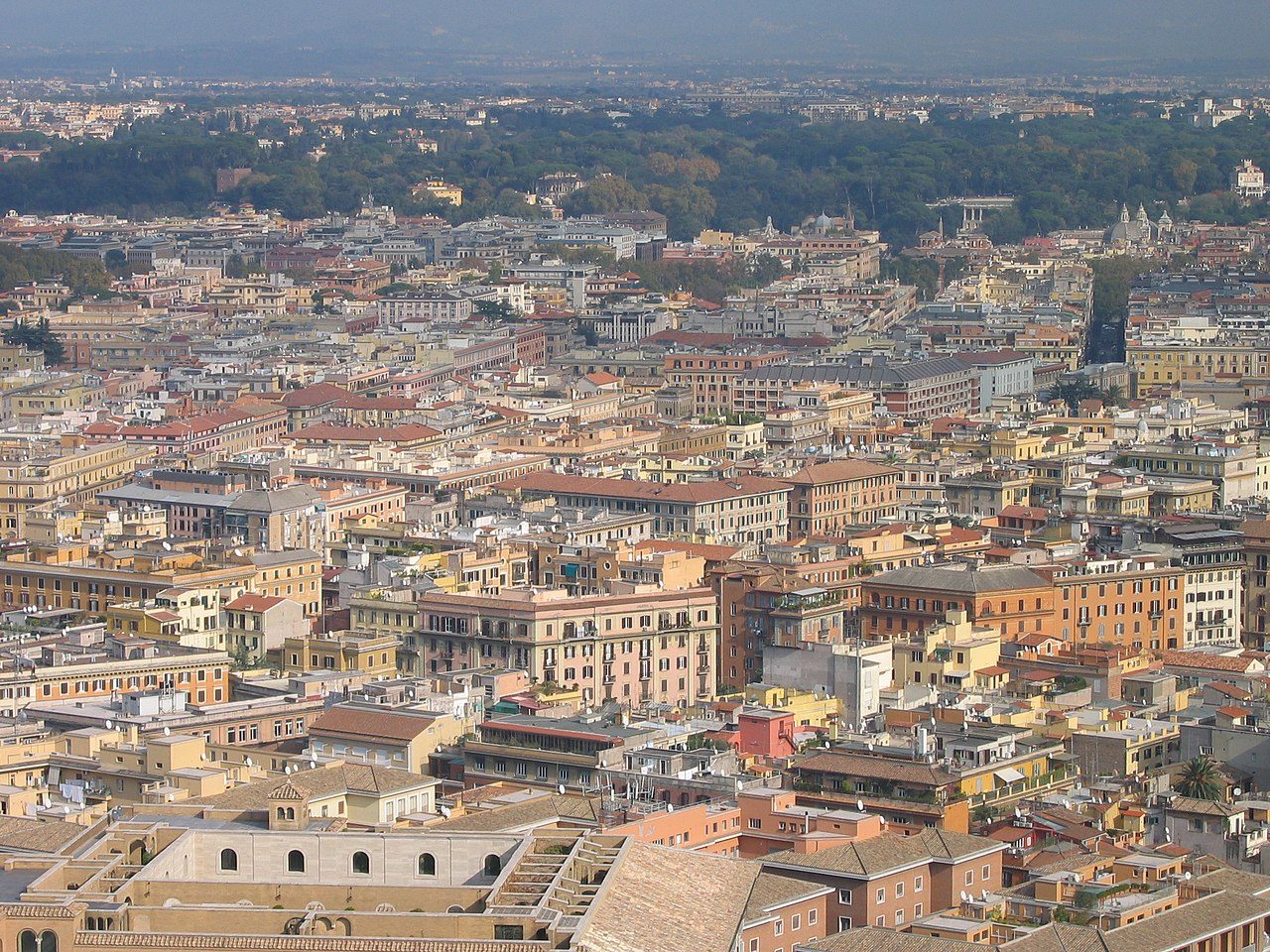
Prati & Borgo
Elegant neighborhood near Vatican with great restaurants
Explore
Pompeii Day Trip
Roman city preserved by Vesuvius; personalised tickets and a 20,000-visitor daily limit — book ahead
Explore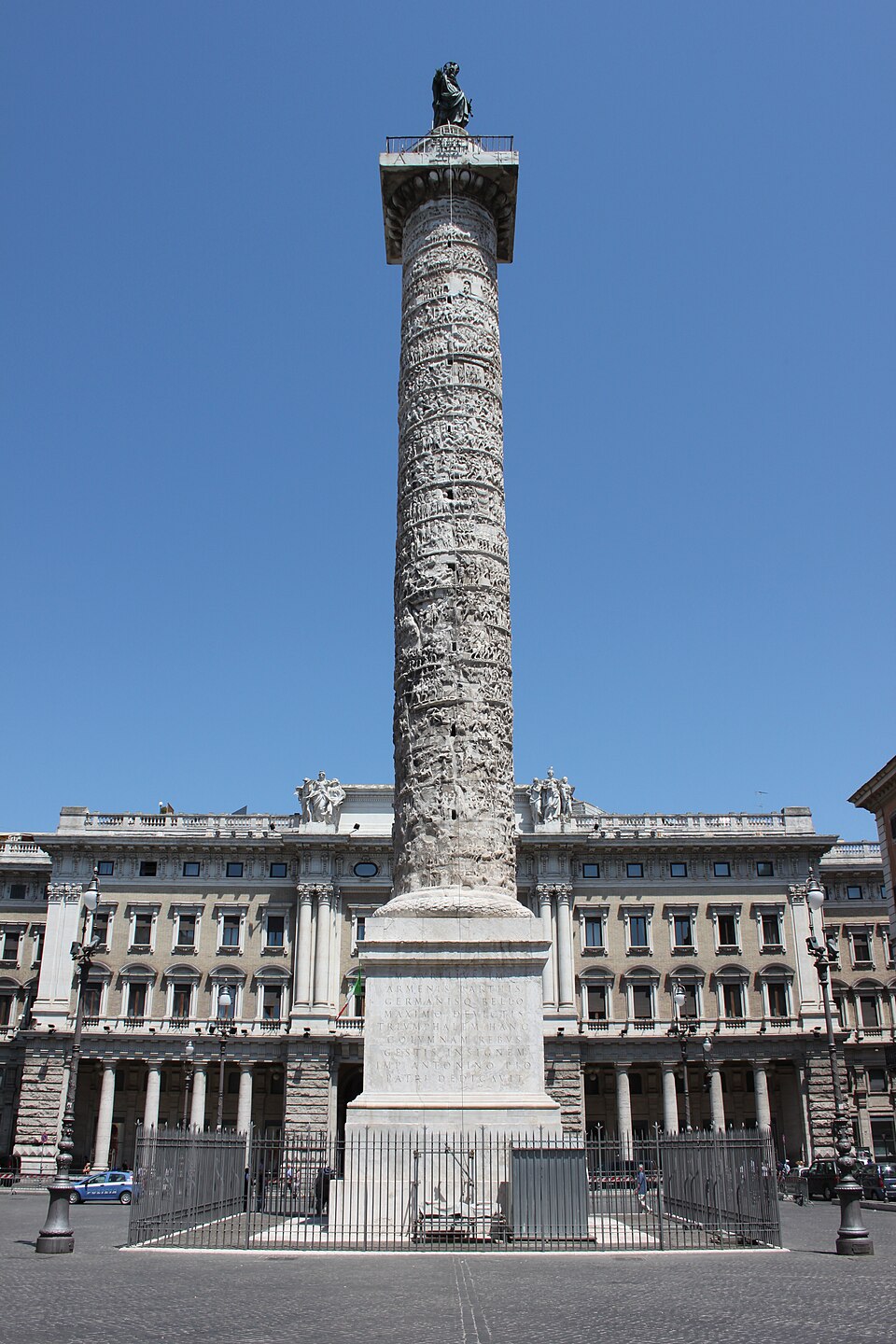
Column of Marcus Aurelius
Towering spiral column depicting Roman military campaigns
ExploreQuick Planning Guide
⏱️ Time Needed
30–45 minutes
💰 Cost
Free
🎫 Reservation
Not required
♿ Accessibility
Outdoor walking, flat streets, cobbles
📅 Best Time
Golden hour (sunrise / sunset)
👨👩👧👦 Family Friendly
Yes — kids love the frogs and turrets
🌡️ Weather
Outdoor — best in dry weather
Nearby Attractions
Villa Torlonia10-min walk
MACRO Museum15-min walk
Villa Ada15-min walk
Villa Borghese20-min walk
Catacombs of Priscilla15-min walk
Auditorium Parco della Musica20-min walk
You May Also Like
Villa Borghese GardensCatacombs of PriscillaMACRO MuseumFeatured In These Itineraries
Hidden Gems of RomeRome Like a LocalRome with KidsEssential Tips
- ✓ Enter via the chandelier arch on Via Dora
- ✓ Visit at golden hour — light is magic
- ✓ Bring a camera; every façade is photogenic
- ✓ Residential area — be quiet & respectful
- ✓ Combine with Villa Torlonia or MACRO