 Status: Temporarily Closed
Crypta Balbi
A major stratigraphic museum built over the 13 BC Theatre of Balbus, currently closed for significant restoration and excavation work.
ClosedRestorationHistoric CentreMNR SiteVia delle Botteghe Oscure 31, 00186 Roma RMOpen on MapPlan Your Visit
Compare tickets, tours and stays — booking ahead usually gives more choice
Book a TourHotels NearbyTemporarily Closed
Crypta Balbi is currently closed for major archaeological excavation and restoration work. No regular public-admission date has been announced. Check the National Roman Museum before travelling.Note: The following content describes the museum as it was prior to its closure in 2023.
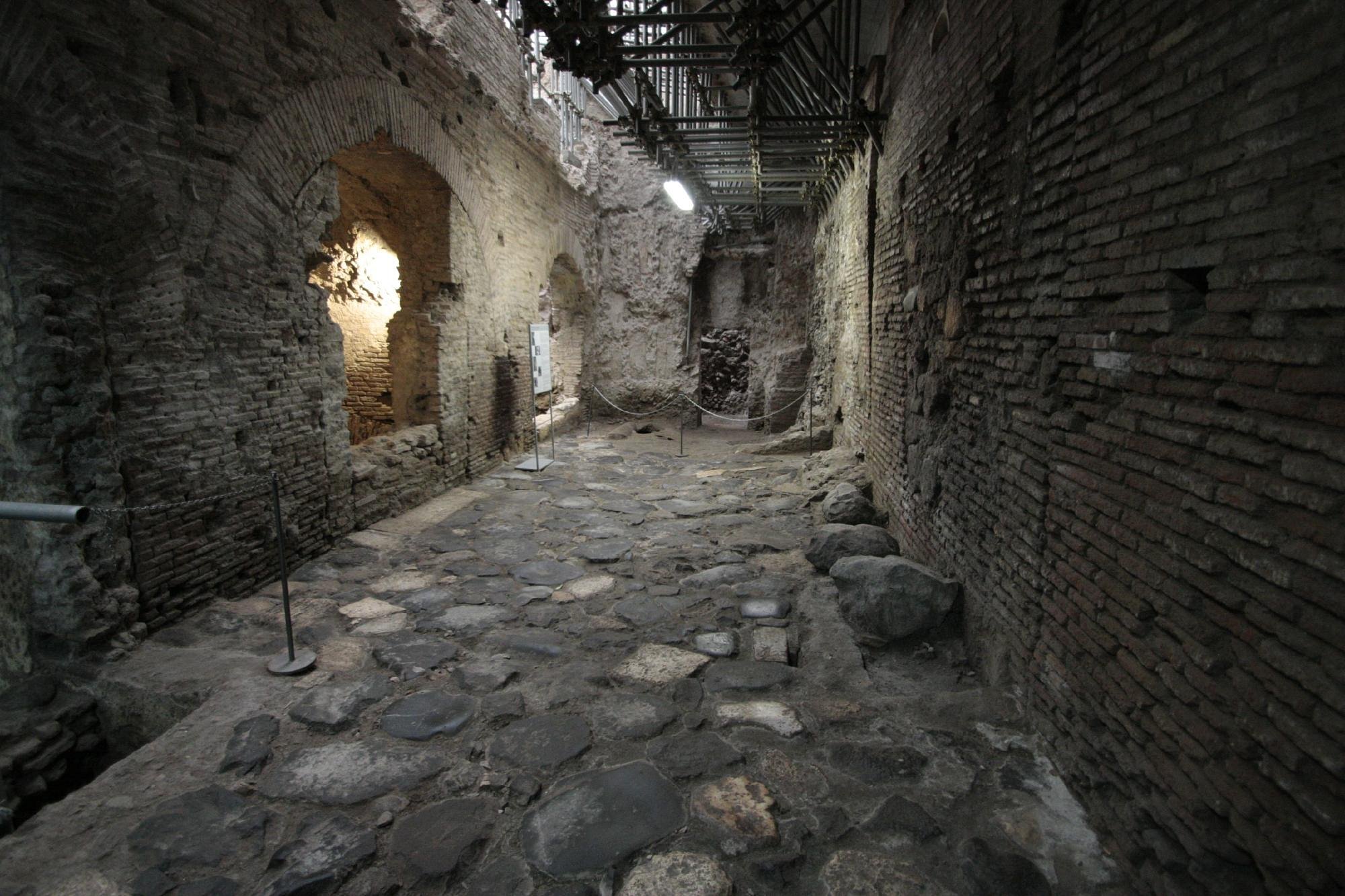
The Crypta Balbi is the most complex site of the Museo Nazionale Romano — a stratigraphic museum built directly over the 13 BC Theatre of Balbus. It was the only museum in the world dedicated to the transformation of a single Roman urban block from imperial antiquity through the early Middle Ages to the Renaissance. Before its closure, visitors could descend 6 metres beneath Via delle Botteghe Oscure to walk along the surviving brick arches of the original portico, past 7th–8th century glass-making furnaces and bronze workshops.
Current status
Temporarily closed; checked August 2026
Closed since
2023
Reason
Major archaeological excavation
Other sites
MNR Palazzo Massimo/Altemps open
Location
Via delle Botteghe Oscure 31
Why the Crypta Balbi is a Must-Know Site
The 'Time Machine' Stratigraphy
It remains one of the only places in Europe where you can read the entire transformation of a Roman urban block in a single excavation. While currently closed, it continues to be a primary site for understanding how Rome's 'Dark Ages' actually worked.
The Industrial Heart of Medieval Rome
The discoveries at Crypta Balbi rewrote history by proving that early medieval Rome (5th–10th century) was a vibrant center of production, not just a depopulated ruin.
Timeline: From Theatre to Excavation
55 BCTheatre of Pompey opens
Pompey the Great inaugurates Rome's first permanent stone theatre nearby, setting the precedent.
13 BCTheatre of Balbus built
Lucius Cornelius Balbus builds Rome's third stone theatre. The attached portico becomes the Crypta Balbi.
1st–4th c. ADTheatre in active use
The complex operates for 400 years as a performance space and public meeting place.
5th c. ADTheatre falls into ruin
After the collapse of imperial patronage, the site is partly converted into workshops.
6th–8th c.Workshops & lime kilns
The site becomes an industrial quarter for glass-making, bronze, and bone-carving.
8th c.Convent of Santa Maria Domine Rose
A female convent is established on top of the ruined theatre.
1582Palazzo built above
The Mattei family build a Renaissance palazzo, burying the ancient levels.
1981Excavations begin
The Italian state begins excavations, discovering 1,500 years of intact stratigraphy.
2000Crypta Balbi museum opens
The site opens as the fourth branch of the Museo Nazionale Romano.
2023Temporary Closure
The museum closes to the public for a massive archaeological excavation and restoration project.
Reading the Stratigraphy
The core importance of Crypta Balbi is its 8 metres of vertical history. When it was open, the museum's interpretive displays used 3D urban-transformation models to show the same city block at different points in time:
- 13 BCTheatre of Balbus: A grand stone theatre and covered portico (the crypta) for strolling between shows.
- 700 ADThe Workshop Quarter: Glass-makers and metalworkers set up shop in the ruined theatre arches.
- 1100 ADThe Convent: The site is occupied by the monastery of Santa Maria Domine Rose.
- 1582Renaissance Rome: The Mattei family builds the palazzo that still stands on the site today.
What the Site Preserves (Currently Inaccessible)
Underground excavations of the Theatre of Balbus
- Prior to closure, visitors could descend 6 metres below street level to the surviving brick arches of the 13 BC Theatre of Balbus portico.
- The site featured a vertical stratigraphic 'window' showing the layered fill of 1,500 years in cross-section.
- Archaeologists are currently working to further excavate these lower levels during the restoration period.
- The excavations include the cryptoporticus foundations, the largest surviving piece of the theatre complex.
Medieval workshops
- The site housed 7th–8th century glass-making furnaces, evidence of early-medieval production in Rome.
- Displays included bronze and bone workshops where craftsmen recycled ancient Roman material into new objects.
- The lime kilns showed the process of turning ancient marble sculptures into building mortar.
- These industrial remains are a core focus of the current restoration and research project.
Convent of Santa Maria Domine Rose
- Foundations of an 8th-century female convent built directly on top of the ruined theatre.
- The museum displayed carved marble screens and altar fragments from the convent chapel.
- Traces of monastic cells illustrate how medieval Christianity reused Roman urban infrastructure.
Lucius Cornelius Balbus
Lucius Cornelius Balbus was a fascinating figure: a wealthy Roman general from Gades (modern Cádiz, Spain) and the first non-Italian to celebrate a Roman triumph (in 19 BC). He used his African war booty to build Rome's third permanent stone theatre, seating approximately 7,700 people.
Unlike the nearby Theatre of Pompey, Balbus's theatre was tucked into the urban fabric. The attached covered portico (the crypta) gave the museum its name. The ongoing excavations aim to reveal more about the scale and grandeur of this once-magnificent structure.
Did you know?
Balbus was so wealthy that when he died, he left 25 denarii to every single Roman citizen. His theatre was just one part of a vast legacy that is only now being fully rediscovered through modern archaeology.
Crypta Balbi vs. Palazzo Massimo
| Feature | Crypta Balbi | Palazzo Massimo |
|---|---|---|
| Current status | Temporarily Closed | Open to the public |
| Period covered | 1st c. BC – 10th c. AD | 8th c. BC – 4th c. AD |
| Type of museum | Stratigraphic + archaeology | Sculpture, frescoes, mosaics |
| Location | Via delle Botteghe Oscure | Next to Termini Station |
| Famous masterpiece | Site stratigraphy itself | Boxer of the Quirinal, Discobolus |
Location & Getting There
The site is located at Via delle Botteghe Oscure 31, in the heart of Rome's historical center. While you cannot enter, the location is a short walk from several other major landmarks:
By Bus
Any bus stopping at Piazza Venezia (40, 60, 64, 70, 87, 170, 492) or Largo di Torre Argentina (Tram 8).
Walking
2 minutes from Largo di Torre Argentina, 5 minutes from Piazza Venezia, and 7 minutes from the Pantheon.


 🏺
+− Leaflet | © OpenStreetMap contributors
🏺
+− Leaflet | © OpenStreetMap contributorsVisitor Status & Common Questions
Travelling to Visit Now
The most common mistake currently is arriving at Via delle Botteghe Oscure expecting to enter. The site is strictly closed to the public for the duration of the restoration project.
Ticket Availability
General National Roman Museum tickets are still sold for the other three sites, but they no longer provide access to Crypta Balbi. Do not buy a ticket specifically expecting to see this site.
Finding the Entrance
Even when open, the entrance at Via delle Botteghe Oscure 31 was famously discreet. Look for the palazzo facade, but note that the museum doors will be shuttered.
Where to Stay Near Crypta Balbi
Looking for convenient accommodation near Crypta Balbi? Stay within walking distance to make the most of your visit.
Hotels Near This AttractionTop Rated HotelsBudget-Friendly OptionsLuxury HotelsCentral locations with easy access to Crypta Balbi and other attractionsCrypta Balbi Closure FAQ
Related Attractions

Underground Basilica of Porta Maggiore
Rome's most mysterious 1st-century subterranean basilica
Explore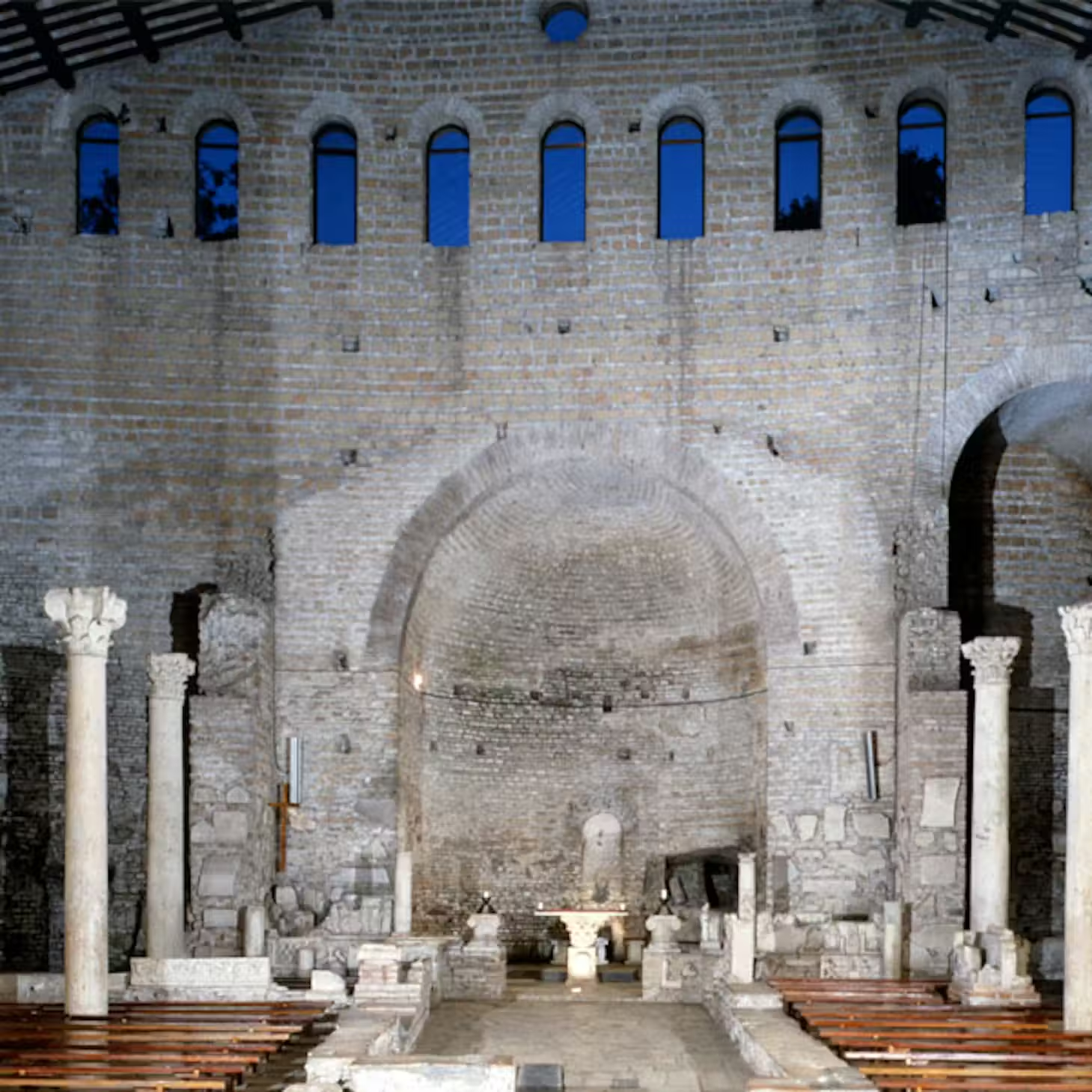
Catacombs of Domitilla
Rome's oldest catacombs—17km of tunnels and underground basilica
Explore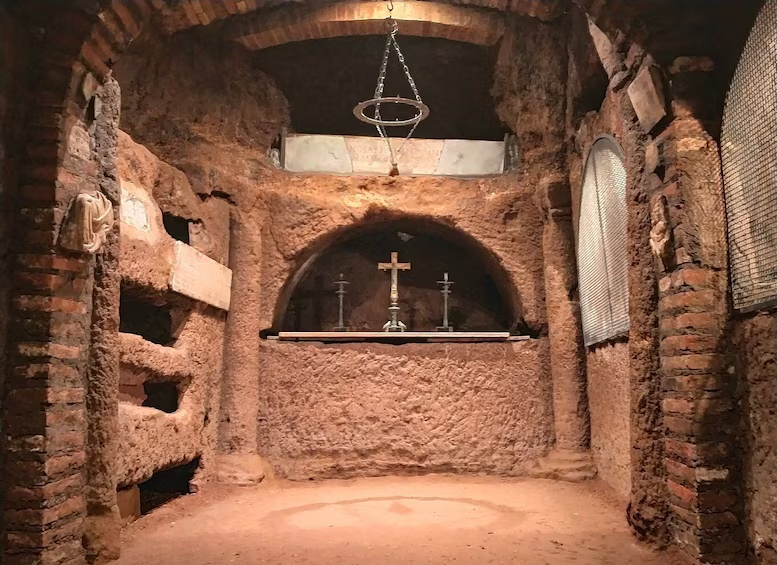
Catacombs of Sant'Agnese
Early Christian catacombs with Saint Agnes's tomb and 4th-century mosaics
Explore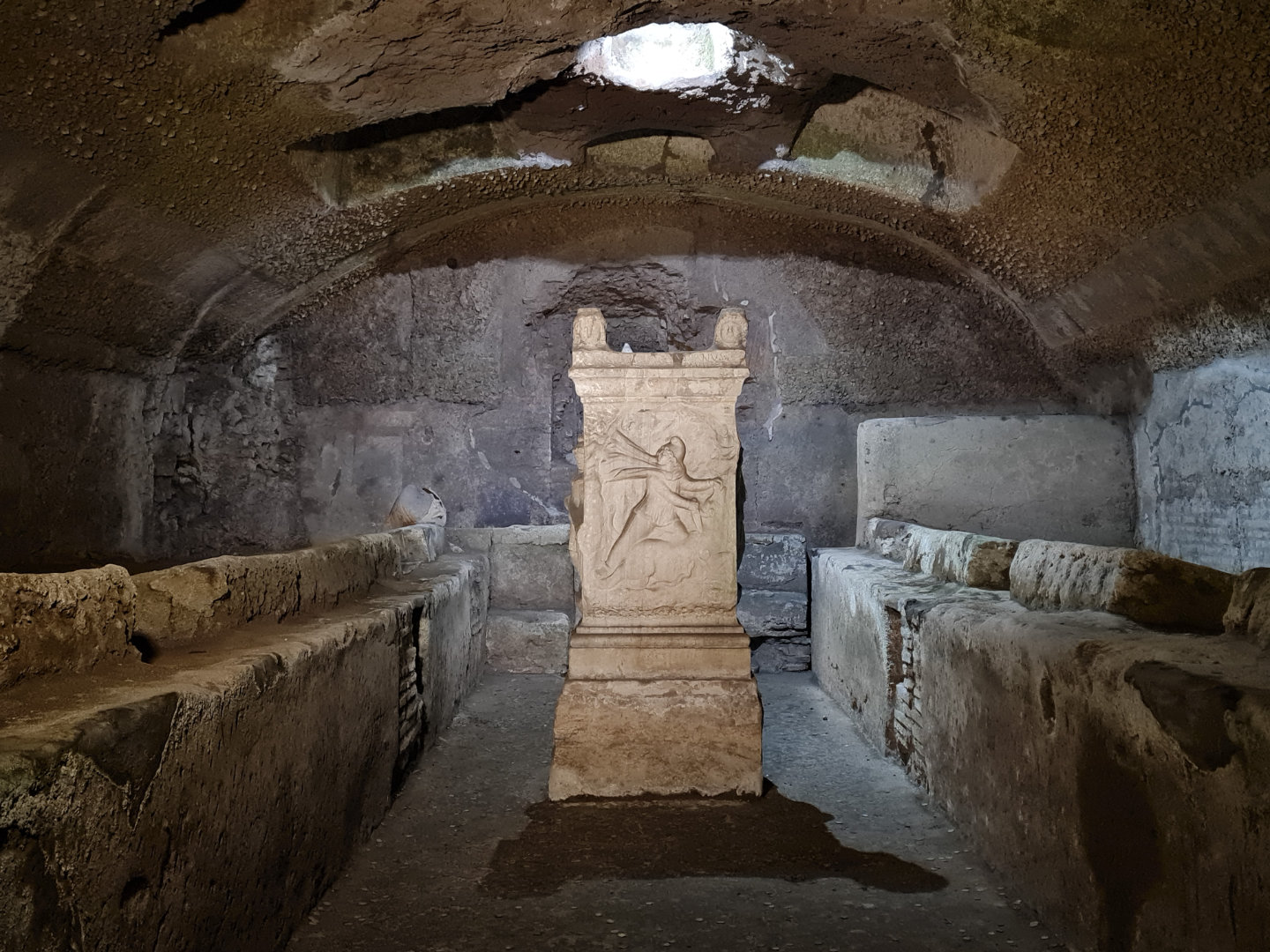
Mithraeum under San Clemente
Ancient Roman temple to Mithras hidden three levels below
Explore
Bioparco di Roma
Rome's zoo with 1,200+ animals in Villa Borghese
Explore
Palatine Hill
Legendary birthplace of Rome and luxurious home of emperors
ExploreQuick Planning Guide
⏱️ Time Needed
Currently closed
💰 Cost
N/A
🎫 Reservation
Not available
♿ Accessibility
Currently inaccessible
📅 Best Time
N/A
👨👩👧👦 Family Friendly
Check reopening
🌡️ Weather
N/A
Nearby Attractions
Largo di Torre Argentina2 min walk
Jewish Ghetto & Portico d'Ottavia5 min walk
Pantheon7 min walk
Capitoline Museums10 min walk
Piazza Venezia5 min walk
Featured In These Itineraries
Hidden Gems of Rome5 Day Rome ItineraryEssential Tips
- ✓ Crypta Balbi is temporarily closed; checked August 2026
- ✓ Check museonazionaleromano.it for updates
- ✓ Visit Palazzo Massimo or Palazzo Altemps instead
- ✓ You can still view the exterior facade
- ✓ Excavations are ongoing behind the scenes