 Free Square · Renaissance Masterpiece
Piazza Farnese
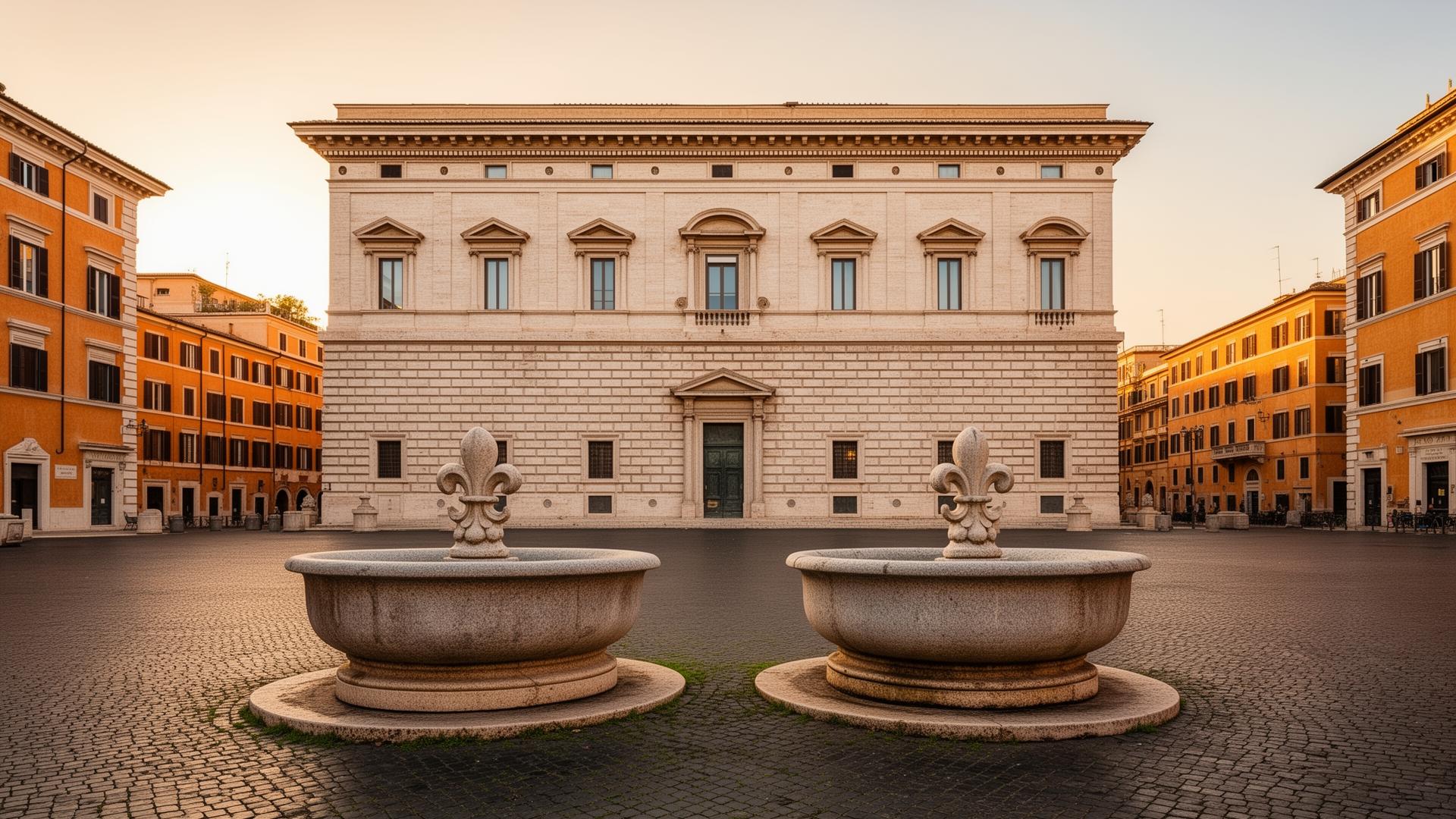
Michelangelo and Sangallo's Renaissance masterpiece, the Annibale Carracci frescoed gallery, and twin fountains made from ancient Roman bathtubs — Centro Storico's most refined square.
30 min – 1.5 hrFree piazza · €15 tourFrench EmbassyCaracalla bathtubsPiazza Farnese, 00186 Roma RMOpen on MapPlan Your Visit
Compare tickets, tours and stays — booking ahead usually gives more choice
Book a TourHotels NearbyBy AllTrips Editors••9 min readPiazza Farnese is the most refined Renaissance square in Rome. It is dominated by Palazzo Farnese (1517–1589), built in succession by Antonio da Sangallo the Younger, Michelangelo and Giacomo della Porta for the family of Pope Paul III — the single most influential Renaissance palace in Europe and home to the French Embassy since 1874. Inside, the Carracci Gallery (frescoed by Annibale Carracci 1597–1608) is the foundational masterpiece of Baroque ceiling painting. The two granite fountains in the square are genuine ancient Roman bathtubs from the Baths of Caracalla, which previously stood at Piazza San Marco — one arrived here first and the second followed later, both becoming working fountains in 1626. Free 24/7; the interior is open by guided tour Monday, Tuesday, Thursday and Friday, from €15.
📋 In This Guide
Palazzo
Palazzo Farnese (1517–1589)
Architects
Sangallo · Michelangelo · Della Porta
Current Use
French Embassy (since 1874)
Fountains
Granite bathtubs from Caracalla
Piazza Entry
Free 24/7
Inside
Carracci Gallery (1597–1608)
Best Time
Sunset for golden facade
Tour Days
Mon, Tue, Thu, Fri by booking
Bus Stop
Corso Vittorio (40, 46, 62, 64)
Why Visit Piazza Farnese?
Most visitors to Rome rush through Piazza Farnese on the way to Campo de' Fiori — and that's a mistake. This is the square where three of the greatest names in Renaissance architecture (Sangallo, Michelangelo, Della Porta) collaborated, where Annibale Carracci painted the ceiling that launched the Baroque, and where two genuine ancient Roman bathtubs sit as fountains in front of the French Embassy. It's also one of the few squares in central Rome that was actually designed as a composition — geometric, ceremonial, symmetrical — rather than evolved organically over centuries.
Palazzo Farnese
The single most influential Renaissance palace in Europe — Sangallo, Michelangelo and Della Porta in one building.
Carracci Gallery
Annibale Carracci's 1597–1608 ceiling — the foundational masterpiece of Baroque painting, comparable to the Sistine.
Real Caracalla Bathtubs
Two genuine ancient Roman granite labra from the Baths of Caracalla, early third century.
Quiet & Refined
60 seconds from Campo de' Fiori but a different city — calm, geometrical, perfect for sunset aperitivo.
What to See at Piazza Farnese
The square is small — about 60 metres square — but every element rewards close attention. Here are the eight things to look for:
Michelangelo's Cornice (top of facade)
The deep, projecting cornice (1547) is the building's defining feature. Michelangelo designed it to be visible from across the Tiber. It overshoots the wall by nearly 2 metres — bigger than any classical model.
Farnese Papal Arms (above the central window)
The carved coat of arms with six fleur-de-lis identifies Pope Paul III (Alessandro Farnese), under whom the upper floors were built. The papal tiara and crossed keys above are post-1534.
Twin Granite Fountains
Two grey Egyptian granite bathtubs (labra) from the Baths of Caracalla, which previously stood at Piazza San Marco — one was installed here first, the second followed later. Both were adapted as working fountains in 1626, probably to a design attributed to Girolamo Rainaldi, and crowned with the Farnese fleur-de-lis.
Carracci Gallery (interior, ticketed)
On the piano nobile: 20-metre barrel-vaulted hall frescoed by Annibale Carracci 1597–1608 with 'The Loves of the Gods'. Visible only on a pre-booked guided tour, currently offered Monday, Tuesday, Thursday and Friday, from €15.
Hercules Hall (interior, ticketed)
Vast 18-metre-high salon with a coffered wooden ceiling and a copy of the famous Farnese Hercules (the original is in Naples). Part of the same guided tour.
Santa Brigida (south-west corner)
Small church on the site where St Bridget of Sweden lived 1350–1373. Modest exterior, surprisingly rich Baroque interior. Free, mornings and 16:00–19:00.
Vicolo dei Venti (approach from north)
The narrow alley north of the square frames Palazzo Farnese in a perfect arched view — the best photographic approach to the building.
Camponeschi & Hostaria Romanesca
Two outdoor restaurants on the eastern side of the piazza for sunset aperitivo with views of the illuminated facade. Reserve for dinner; aperitivo walk-in fine.
Palazzo Farnese: A Renaissance Masterclass
Palazzo Farnese is the textbook example of a 16th-century Roman palazzo — so influential that it became the model for embassies, banks, museums and city halls across Europe for the next 350 years. Three architects, two popes, and 72 years of construction made it.
1517–1546Antonio da Sangallo the Younger
Established the plan: a square block around an enormous central courtyard with three superimposed orders (Doric, Ionic, Corinthian). Built the ground floor and most of the first storey.
1546–1564Michelangelo
Took over after Sangallo's death. Designed the second floor, the central window above the entrance, the Farnese coat of arms over it, and the dramatic projecting cornice that crowns the building.
1573–1589Giacomo della Porta
Completed the rear façade overlooking Via Giulia and the loggia connecting the palazzo to a never-built bridge across the Tiber to the Villa Farnesina.
Tradition holds that some of the palazzo's travertine came from ancient sites such as the Colosseum and the Theatre of Marcellus, which were commonly used as quarries in Renaissance Rome — a practice that continued at the Colosseum until Pope Benedict XIV banned it in 1749.
The Carracci Gallery
On the first floor of Palazzo Farnese is a 20-metre barrel-vaulted hall frescoed by Annibale Carracci between 1597 and 1608, assisted by his brother Agostino and pupils including Domenichino. The cycle, titled The Loves of the Gods (Gli Amori degli Dei), depicts mythological love stories from Ovid's Metamorphoses — Bacchus and Ariadne, Polyphemus and Galatea, Diana and Endymion, Jupiter and Juno.
Carracci broke with the late Mannerist style of the previous generation by returning to a classical, Raphael-derived language while introducing a new illusionistic framing: the mythological scenes are painted as if they were framed easel paintings (quadri riportati) attached to a fictional architectural structure of bronze atlantes, gilded mouldings and stone reliefs. This quadratura system became the template for nearly every Baroque ceiling that followed — Pietro da Cortona, Andrea Pozzo, Tiepolo all studied it.
"Without the Carracci Gallery there would be no Baroque ceiling painting." — most modern art historians, paraphrased.
Tour days
Monday, Tuesday, Thursday and Friday, with varying times and special combined visits, in French, English and Italian.
Price (2026)
€15 standard tour, €20 with underground areas, €22 with the École française de Rome. Only children up to six years old are free. Book at visite-palazzofarnese.it up to 90 days ahead (until 5 days before).
No photography, no bags
Photography is strictly forbidden inside, and even small backpacks are not permitted.
Photo ID required
Bring passport or national ID — it's an active embassy with security control.
The Caracalla Bathtub Fountains
The two enormous grey-granite basins (vasche in Italian) in front of the palazzo are genuine ancient Roman labra — ceremonial bathtubs from the great Baths of Caracalla, early third century AD. Each is carved from a single monolithic block of grey Egyptian granite imported from quarries near Aswan, weighs many tons, and bears the original Roman tool marks visible on close inspection.
The first basin, which had previously stood at Piazza San Marco, was moved to Piazza Farnese in 1580 by Cardinal Odoardo Farnese as part of his redesign of the square. The second followed in 1626 to create symmetry — and in that same year both were adapted as working fountains, probably to a design attributed to Girolamo Rainaldi, and crowned with the carved Farnese fleur-de-lis you see today. Water still flows from a small spout in the centre of each lily.
Material
Grey Egyptian granite, quarried near Aswan, transported to Rome by Roman cargo ship.
Age
Roughly 1,800 years old — from the Baths of Caracalla, early third century AD.
Farnese addition
Adapted as fountains in 1626, probably to a design by Girolamo Rainaldi, with stone fleur-de-lis added.
Piazza Farnese Through 1,800 Years
From a 3rd-century AD imperial bathhouse to a 21st-century French Embassy — fourteen turning points.
Early 3rd century ADGranite bathtubs made
Two enormous grey-Egyptian-granite labra (ceremonial basins) are made for the Baths of Caracalla on the Aventine. They will sit there for over a millennium before being rediscovered.
1495Site acquired
The young Cardinal Alessandro Farnese (the future Pope Paul III) buys land in the Parione rione and begins assembling a site for a future family palace.
1517Sangallo begins
Antonio da Sangallo the Younger starts construction of Palazzo Farnese — courtyard, ground floor and lower facade. The largest private palace project in Rome.
1534Cardinal becomes Pope Paul III
Alessandro Farnese is elected pope. The palace is rescaled upwards to befit a papal family — and becomes a propaganda statement of Farnese power.
1546Michelangelo takes over
Sangallo dies. Michelangelo, then 71, is appointed architect. He redesigns the upper storey, the central window above the entrance and the great projecting cornice that will define the building's silhouette.
1580First Caracalla basin arrives
The first of the two granite basins, which had previously stood at Piazza San Marco, is moved to Piazza Farnese as part of Cardinal Odoardo Farnese's redesign of the square.
1589Della Porta finishes
Giacomo della Porta completes the rear façade facing the Tiber and the loggia. The exterior is now exactly as you see it today.
1597–1608Annibale Carracci frescoes the gallery
Cardinal Odoardo Farnese commissions the Bolognese painter Annibale Carracci to fresco a vaulted gallery on the piano nobile with 'The Loves of the Gods'. The cycle redefines ceiling painting and inaugurates the Baroque.
1626Second basin installed, both become fountains
The second granite basin is installed symmetrically, and both are adapted as fountains, probably to a design by Girolamo Rainaldi. The Farnese fleur-de-lis is added to both — completing the piazza's design.
1635France first leases the palace
Cardinal Francesco Barberini permits France to use Palazzo Farnese as its embassy under Louis XIII. The French connection — never permanently broken since — begins.
1731End of the Farnese line
The last Farnese duke dies childless. The palazzo passes to Charles of Bourbon, future King of Naples and Sicily. Most of the family's art collection is shipped to Naples (today at the Capodimonte and MANN museums).
1874Official French Embassy
Following Italian unification, France formally establishes its embassy to the Kingdom of Italy at Palazzo Farnese.
1936 / 2008The symbolic-euro lease
France buys the palazzo from Italy for 1 lira; Italy buys it back. A 99-year reciprocal lease at 1 symbolic euro is established and renewed in 2008.
2026Today: guided tours
In 2026 the Carracci Gallery is open to the public on guided tours Monday, Tuesday, Thursday and Friday. Piazza Farnese remains a calm, refined alternative to the busier Campo de' Fiori.
Tickets & Tours (2026)
FreeThe Square, Fountains & Facade
Open 24/7, no ticket required. Best photographed 16:30–19:30 when the travertine glows golden.
From €15 · BookedPalazzo Farnese Guided Tour
Monday, Tuesday, Thursday and Friday, with varying times, in French/English/Italian. Standard tour €15; combined with underground areas €20; combined with the École française de Rome €22. Only children up to six are free. Book at visite-palazzofarnese.it up to 90 days ahead, until 5 days before. No photography, and even small backpacks are not permitted.
FreeSanta Brigida Church
South-west corner of the piazza. Open mornings and 16:00–19:00. Modest exterior, rich Baroque interior.
TipIf tours are sold out
Try the embassy's occasional 'open weekends' (Giornate FAI in March, European Heritage Days in September), or check visite-palazzofarnese.it for newly released slots up to 90 days ahead.
Best Time to Visit
Late afternoon (16:30–19:30)
The travertine glows warm gold; the cornice casts dramatic shadows. The single best photographic window.
Evening (after sunset)
The facade is theatrically illuminated until midnight. Aperitivo on the eastern side has the best view.
Best months
April–June and September–October. Mild evenings, all restaurants open, palazzo tours running.
Avoid
Midday in summer (harsh light, no shade), Saturday lunchtime (wedding parties at Santa Brigida), and 14 July (Bastille Day — embassy security closes the square partially).
Vs Other Renaissance Palazzi
| Palazzo | Architect(s) | Visit? | Best for |
|---|---|---|---|
| Palazzo Farnese | Sangallo, Michelangelo, Della Porta | Tour Mon/Tue/Thu/Fri, from €15 | Renaissance + Carracci ceiling |
| Palazzo della Cancelleria | Anon. (Bramante school) | Lobby + church free | Earliest Renaissance palazzo (1489) |
| Villa Farnesina | Peruzzi | €12, daily | Raphael's Galatea + Loggia of Cupid & Psyche |
| Palazzo Spada | Mazzoni; courtyard by Borromini | €5 gallery | Borromini's forced-perspective colonnade |
| Palazzo Doria Pamphilj | Various 16th–18th c. | €16, daily | Velázquez, Caravaggio, family apartments |
| Palazzo Barberini | Maderno, Bernini, Borromini | €15, Tue–Sun | Pietro da Cortona ceiling, national gallery |
Common Mistakes to Avoid
Walking past without looking up
The whole point of Michelangelo's design is the cornice — visible only if you cross to the far side of the square and tilt your head.
Trying to walk in
It's an active embassy with police outside. Interior access is strictly by pre-booked guided tour with photo ID.
Booking the tour at the last minute
Slots are released up to 90 days ahead and can only be booked until 5 days before, subject to availability. Book as soon as you finalise your Rome dates.
Bringing a camera or bag for the gallery
Photography is forbidden inside, including phones, and even small backpacks are not permitted. Plan to look, not record.
Ignoring the fountains
Most visitors photograph the palazzo and miss the basins entirely. They are roughly 1,800 years old and come from the Baths of Caracalla.
Visiting at noon
Harsh overhead light flattens the facade and the square has almost no shade. 16:30 onwards is when the magic happens.
Confusing it with Villa Farnesina
Two different buildings, both Farnese. The Villa is across the Tiber in Trastevere and famous for Raphael frescoes.
Pair Your Visit
Morning combo
Campo de' Fiori market 09:00 → coffee at Forno Roscioli → 11:00 booked tour of Palazzo Farnese → lunch on Via Giulia.
Architecture day
Palazzo Farnese (Sangallo/Michelangelo) → Palazzo Spada (Borromini perspective) → Palazzo della Cancelleria → cross to Trastevere for Villa Farnesina (Raphael).
Sunset combo
17:00 Piazza Farnese photos → 18:00 aperitivo at Camponeschi → 19:30 dinner in the Jewish Ghetto (Nonna Betta or Ba'Ghetto).
Highlights at a Glance
- The single most influential Renaissance palace in Europe — a textbook of cinquecento architecture
- Designed in succession by Antonio da Sangallo the Younger, Michelangelo and Giacomo della Porta
- Michelangelo's projecting cornice (1547) — gave the building its Roman nickname 'la cornice'
- Annibale Carracci's frescoed gallery (1597–1608) — pioneer of the Baroque ceiling tradition
- Twin fountains made from ancient Roman granite bathtubs of the Baths of Caracalla
- Home to the French Embassy since 1874 — leased from Italy for one symbolic euro
- Carved Farnese papal coat of arms above the entrance — six fleur-de-lis of Pope Paul III
- Santa Brigida church on the corner — site of St Bridget of Sweden's 14th-century house
- Quietest of the Centro Storico squares — a refined contrast to busy Campo de' Fiori
- Free, photogenic, illuminated at night — ideal for sunset and evening photography
Getting There
From Termini
Bus 64 or 40 to Corso Vittorio Emanuele / Argentina (12 min) + 5-min walk south through Campo de' Fiori.
From the Vatican
Bus 62 to Largo Argentina + 7-min walk; or 20-min walk over Ponte Sant'Angelo and through the Centro Storico.
From the Pantheon
10-min walk south via Piazza Navona and Vicolo dei Venti (best photographic approach).
Metro?
No nearest metro. The closest station is Spagna (Line A) or Colosseo (Line B), both 25 minutes on foot.
Where to Stay Near Piazza Farnese
Looking for convenient accommodation near Piazza Farnese? Stay within walking distance to make the most of your visit.
Hotels Near This AttractionTop Rated HotelsBudget-Friendly OptionsLuxury HotelsCentral locations with easy access to Piazza Farnese and other attractionsFrequently Asked Questions
Can I visit the inside of Palazzo Farnese in 2026?
Yes — but only on official guided tours organised by Inventer Rome on behalf of the French Embassy. In 2026 tours run Monday, Tuesday, Thursday and Friday in French, English and Italian, at varying times, with special combined visits also available. The standard tour lasts about 1 hour and costs €15 (only children up to six years old are free); a version including the underground areas is €20, and one including the École française de Rome is €22. Tickets are released up to 90 days ahead and can be bought until five days before, subject to availability. Photo ID is required at entry; no photography is allowed inside, and even small backpacks are not permitted.
What is the Carracci Gallery and why is it famous?
The Galleria dei Carracci is a 20-metre barrel-vaulted hall on the first floor, frescoed by Annibale Carracci between 1597 and 1608 with 'The Loves of the Gods'. Painted just before the Sistine Chapel ceiling was rediscovered as a benchmark, it pioneered the Bolognese classical style, was decisive for the development of Baroque ceiling painting, and is regularly compared to Michelangelo's Sistine and Raphael's Stanze for sheer ambition.
Are the fountains in Piazza Farnese really ancient Roman bathtubs?
Yes — the two huge granite vasche are genuine Roman labra (ceremonial basins) that come from the Baths of Caracalla, early third century. The left basin was moved to Piazza Farnese in 1580, the right one in 1626 — both had previously stood at Piazza San Marco. In 1626 both were adapted as fountains, probably to a design by Girolamo Rainaldi, and crowned with the Farnese fleur-de-lis. The grey Egyptian granite is exactly what Roman emperors stood beside in the baths.
Why is Palazzo Farnese the French Embassy?
The Farnese family died out in 1731 and the palace passed to the Bourbons of Naples. France first rented it in 1635 (during the reign of Louis XIII) and has used it almost continuously since. In 1874 it became the official French Embassy to the Kingdom of Italy. France and Italy later agreed a symbolic 99-year reciprocal lease arrangement, last renewed in 2008.
Who designed Palazzo Farnese?
Three of the greatest Renaissance architects worked on it in succession: (1) Antonio da Sangallo the Younger started it in 1517 for Cardinal Alessandro Farnese — laying out the courtyard and ground floor; (2) Michelangelo took over in 1546 after Sangallo's death, designing the iconic deep cornice, central window and upper part of the courtyard; (3) Giacomo della Porta finished the rear façade and loggia in 1589. The result is the single most influential Renaissance palace in Europe.
When is the best time to visit Piazza Farnese?
Late afternoon into sunset (16:30–19:30) is unbeatable — the travertine façade glows warm gold, the fountains catch raking light, and the piazza is at its quietest because Campo de' Fiori siphons the evening crowds one block east. Avoid noon (harsh light, no shade) and Saturday lunchtime (wedding parties on the steps of Santa Brigida).
Is Piazza Farnese free?
Yes — the piazza, fountains and façade are completely free and accessible 24 hours a day. Only the interior guided tour of the palazzo (Carracci Gallery, Hercules Hall, Salon of the Fasti Farnesiani) costs from €15 and requires advance booking.
How does Piazza Farnese compare with Campo de' Fiori?
They are 60 seconds apart but feel like two different cities. Campo de' Fiori is loud, market-driven, full of tourists drinking by Bruno's statue. Piazza Farnese is geometrical, refined, almost ceremonial — designed as a Renaissance forecourt to display the Farnese family's wealth. Use Campo for breakfast and groceries, Piazza Farnese for sunset and aperitivo.
What's the famous Roman saying about Palazzo Farnese?
Romans call the four greatest Renaissance palaces 'Il dado, la cornice, il cembalo e il portone' — the dice (Palazzo Venezia for its cubic mass), the cornice (Palazzo Farnese for Michelangelo's projecting cornice), the harpsichord (Palazzo Borghese for its trapezoidal plan), and the portal (Palazzo Pamphilj for its grand doorway). Palazzo Farnese is 'la cornice'.
Related Attractions
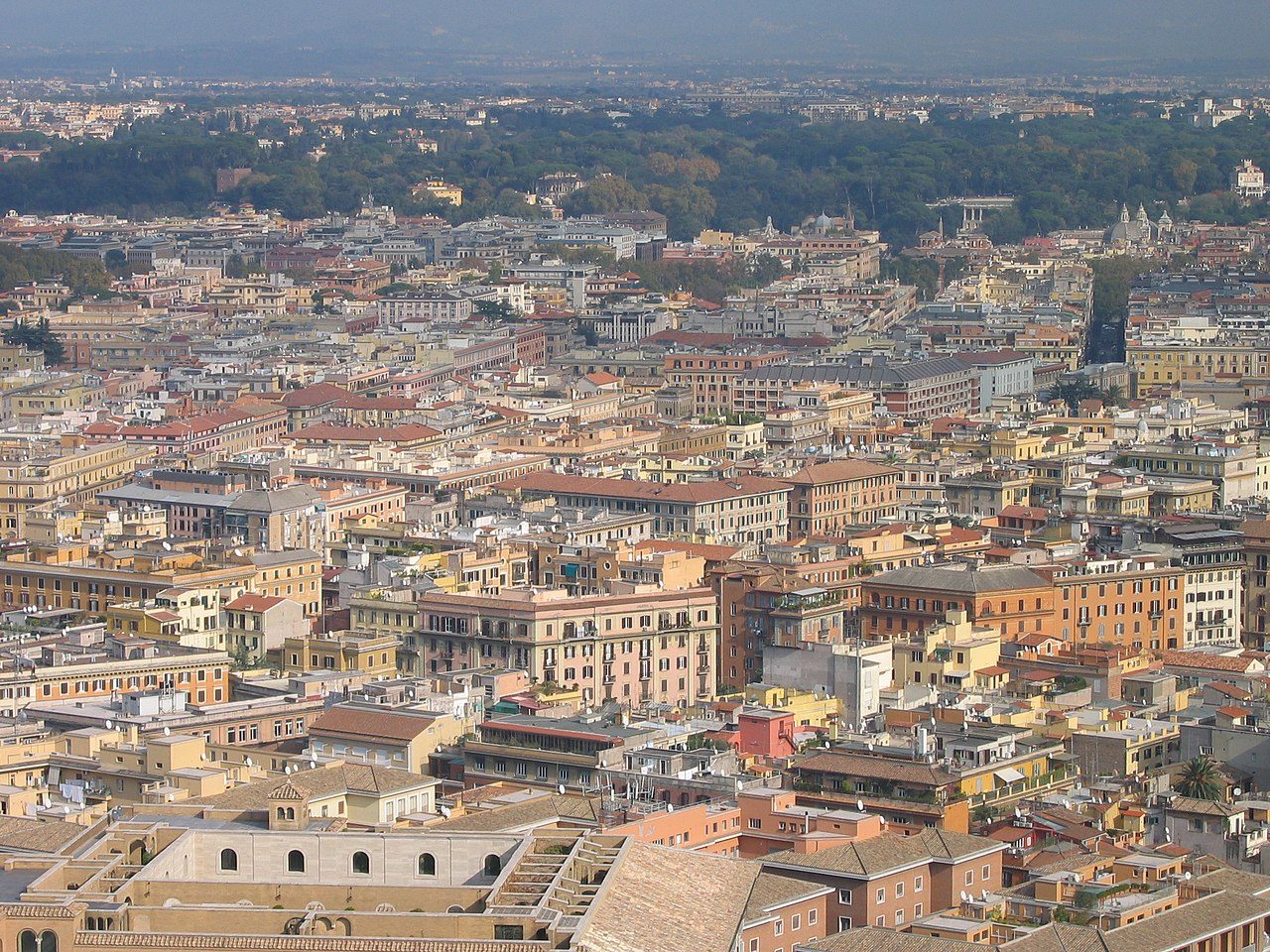
Prati & Borgo
Elegant neighborhood near Vatican with great restaurants
Explore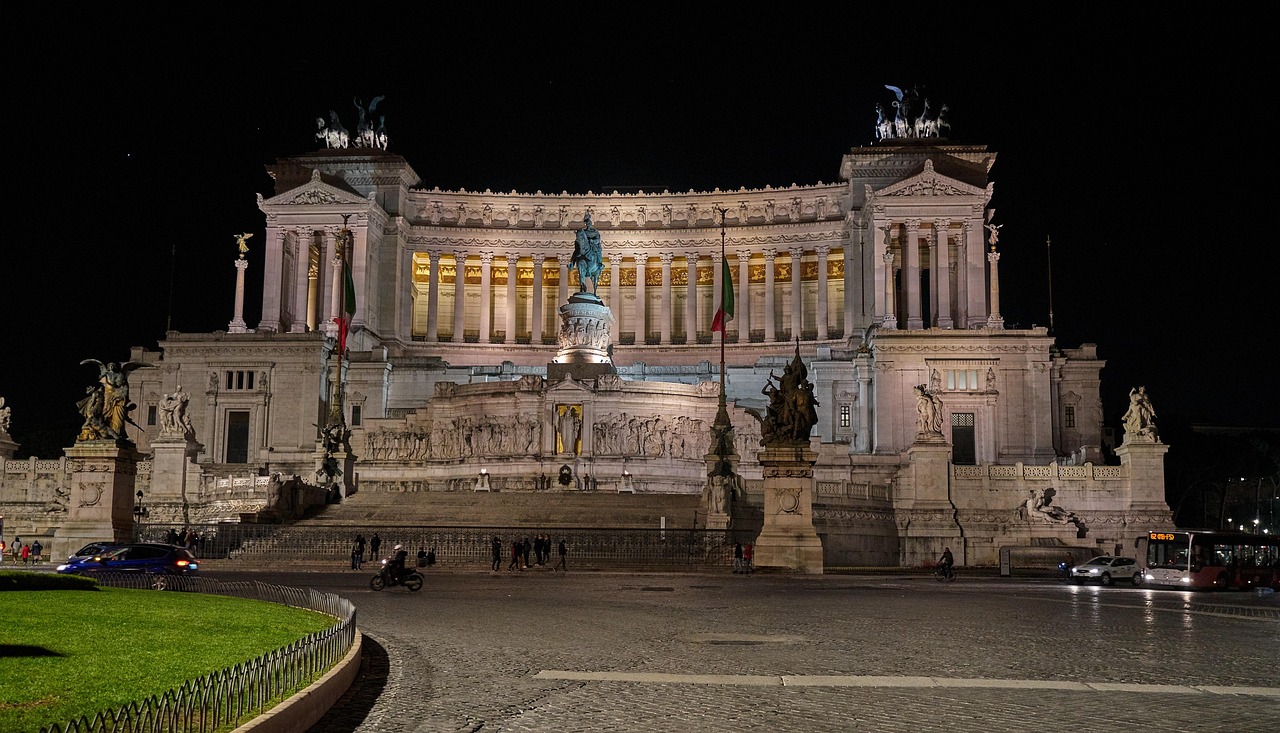
Piazza Venezia
Grand central square with Victor Emmanuel Monument
Explore
Venice Day Trip
Experience the magic of the floating city from Rome
Explore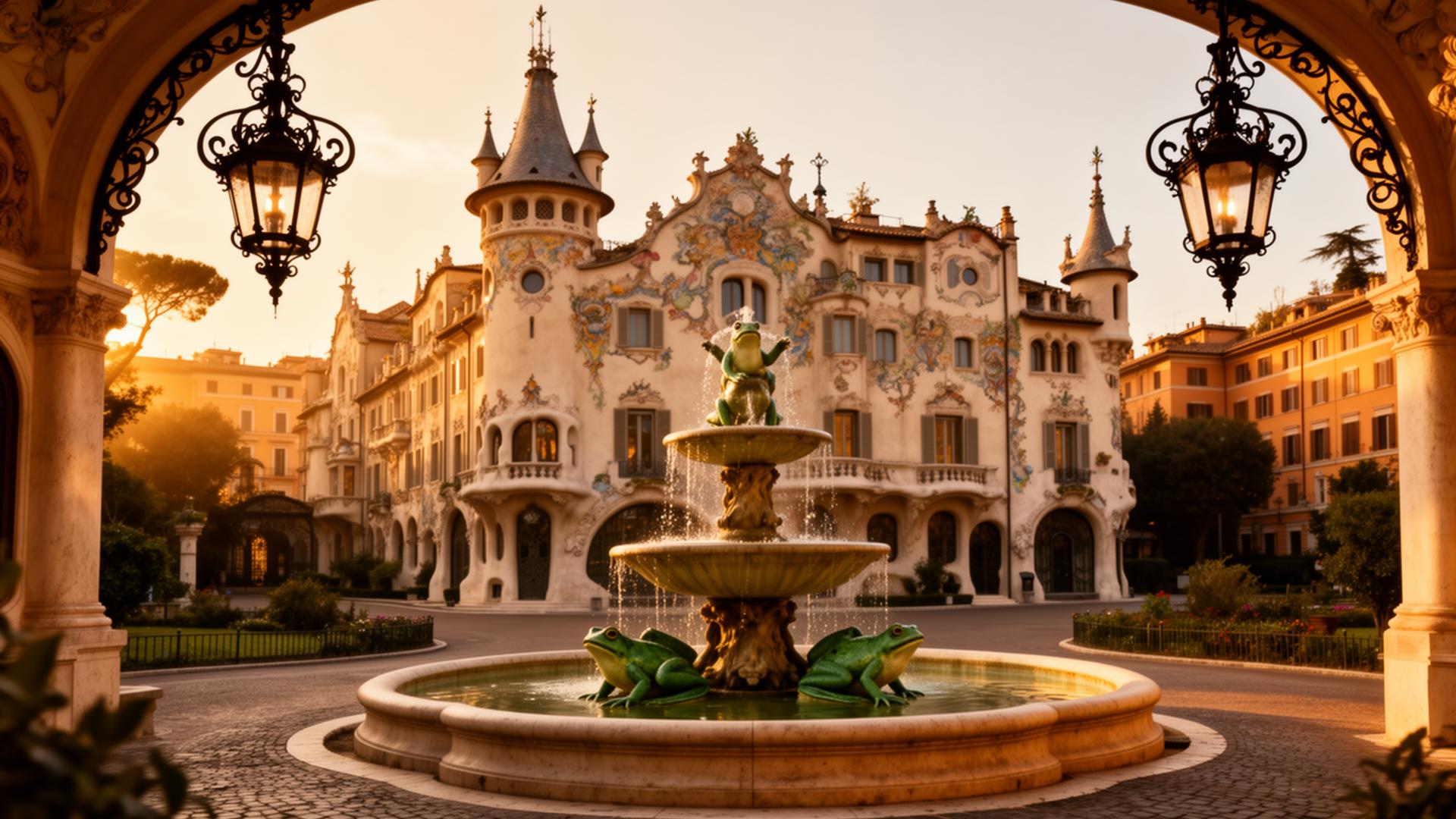
Quartiere Coppedè
Fairy-tale Art Nouveau neighborhood
Explore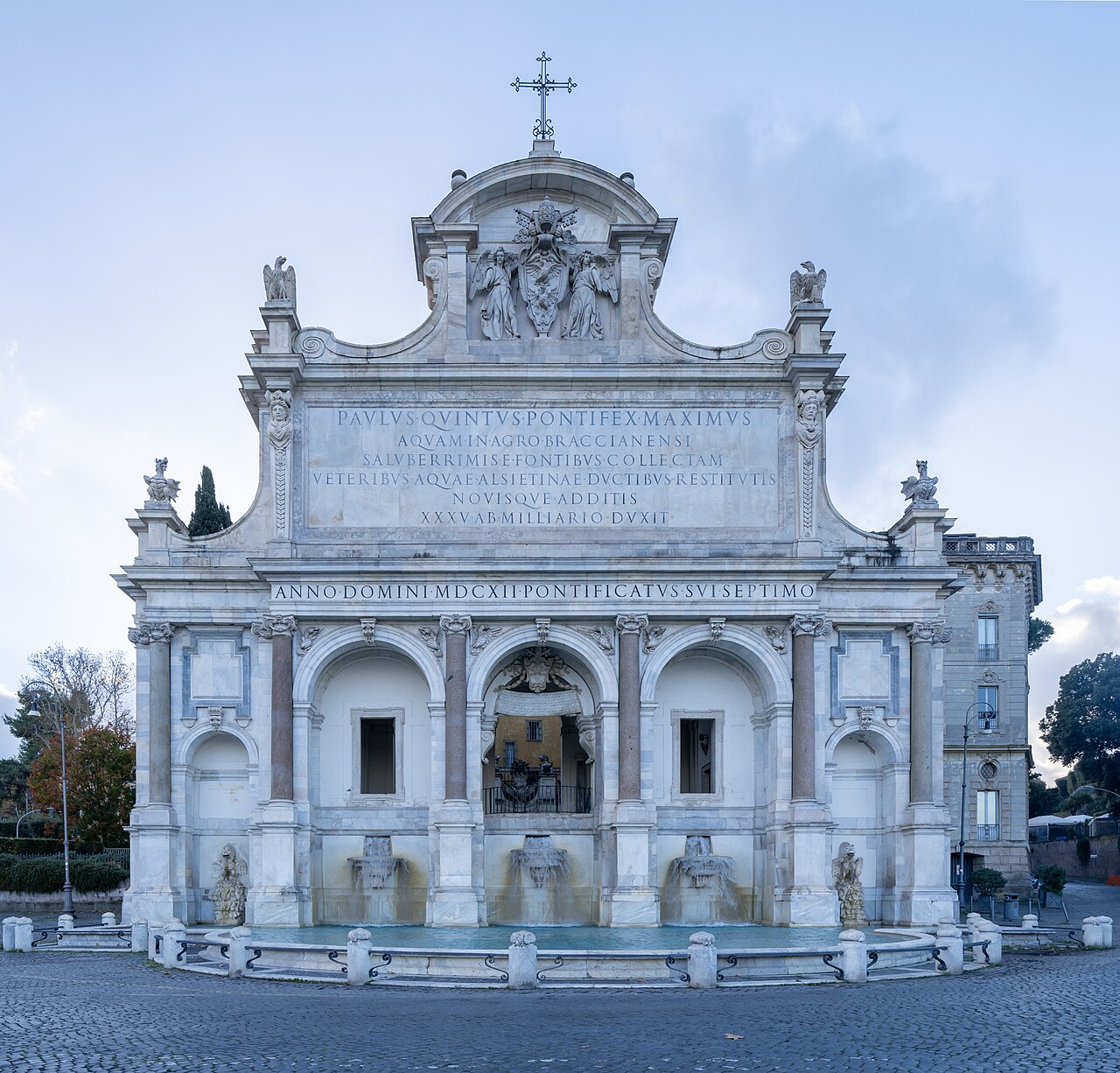
Fontana dell'Acqua Paola
The magnificent 'Fontanone' on Janiculum Hill
Explore
Palace of the Popes Viterbo
Medieval papal residence—site of longest papal conclave
ExploreQuick Planning Guide
⏱️ Time Needed
30 min (square) · +1 hr guided tour
💰 Cost
Free piazza · €15 interior tour
🎫 Reservation
Required for interior (book up to 90 days ahead, until 5 days before)
♿ Accessibility
Flat cobblestone square · partially accessible inside
📅 Best Time
16:30–19:30 for golden facade
👨👩👧👦 Family Friendly
Yes — open square, fountains
🌡️ Weather
Outdoor — best in dry weather
Nearby Attractions
Campo de' Fiori1-min walk
Via Giulia3-min walk
Jewish Ghetto5-min walk
Piazza Navona7-min walk
Pantheon10-min walk
Largo Argentina8-min walk
Featured In These Itineraries
Local Rome 2 DaysHidden Gems of RomeClassic Rome in 3 DaysEssential Tips
- ✓ Book the Carracci Gallery tour up to 90 days ahead (and no later than 5 days before) at visite-palazzofarnese.it
- ✓ Bring photo ID — required at embassy entry
- ✓ Visit at 17:00–19:00 for golden facade light
- ✓ Approach via Vicolo dei Venti for the best reveal
- ✓ Combine with Campo de' Fiori market in the morning