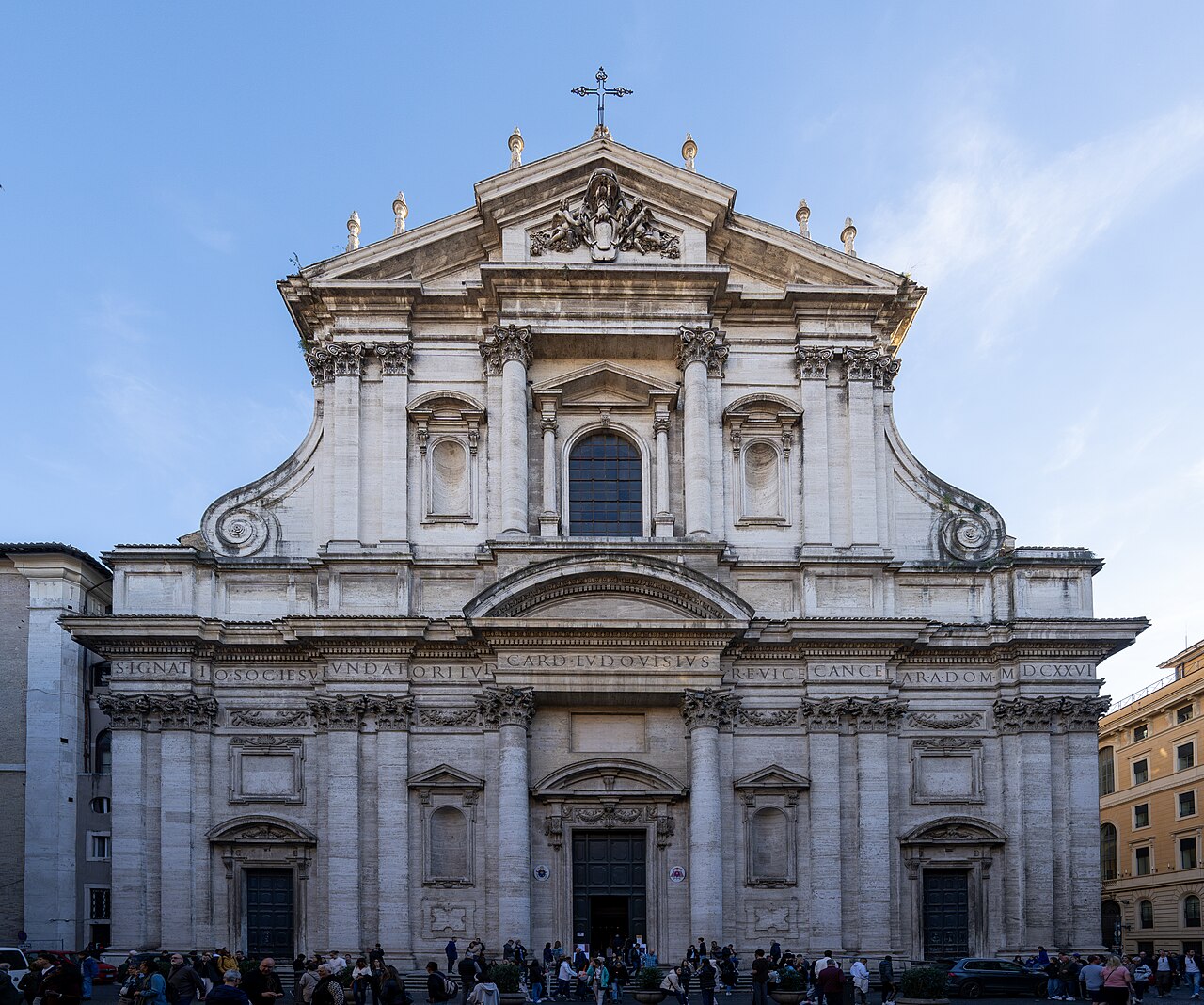
 Baroque Jesuit Church — free entry
Sant'Ignazio di Loyola
Andrea Pozzo's 1685 trompe-l'œil ceiling and painted fake dome — two of the greatest optical illusions in European art, in a quiet Baroque church 3 minutes from the Pantheon.
30–45 min visitFree entryPozzo ceiling + fake domeMust-see Baroque artVia del Caravita 8a, 00186 Roma RMOpen on MapPlan Your Visit
Compare tickets, tours and stays — booking ahead usually gives more choice
Get TicketsBook a TourHotels NearbySant'Ignazio di Loyola in Campo Marzio is the second great Jesuit church of Rome (after Il Gesù), built between 1626 and 1650 in the Campo Marzio just north of the Pantheon to honour the recently canonised Ignatius of Loyola, founder of the Society of Jesus. It is world-famous for two of the most spectacular optical illusions in the history of European art: Andrea Pozzo's 1685 trompe-l'œil nave ceiling fresco — the 'Apotheosis of Saint Ignatius', which from the marked yellow marble disc in the centre of the nave makes the flat ceiling appear to extend upward into infinite painted architecture open to the sky — and the painted fake dome over the crossing, a 17-metre-wide perspectival dome painted on a flat canvas to compensate for the crossing's missing dome. A real masonry dome was never completed, probably because of financial and structural constraints; Pozzo supplied a painted illusion in its place. Free entry, open daily 07:30–19:00, three minutes' walk from the Pantheon.
Why visit Sant'Ignazio di Loyola?
Few experiences in Rome are as immediately memorable as standing on the yellow marble disc in the centre of Sant'Ignazio's nave, looking up, and watching a flat ceiling open into infinite painted architecture extending into the sky — and then walking ten metres forward to watch a 'dome' collapse into a flat painted canvas. Andrea Pozzo's two great trompe-l'œil illusions of 1685 are the climax of European Baroque perspective painting and the most pedagogically clear demonstration of how perspective itself works.
- Pozzo's nave ceiling: the 'Apotheosis of Saint Ignatius' (1685) — Christ receiving Ignatius into heaven, missionary light radiating to the four continents, all on a perfectly flat ceiling that appears infinitely deep from the marked viewing point.
- The painted fake dome: 17 metres of perspectival 'dome' painted on a flat canvas over the crossing. A real masonry dome was never completed, probably because of financial and structural constraints; Pozzo supplied a painted illusion in its place. Indistinguishable from a real dome from the disc; visibly flat from anywhere else.
- Glory of Saint Ignatius (apse, 1697–1701): the largest single canvas of Pozzo's career, behind the high altar — the climax of the church's overall iconographic programme.
- Piazza di Sant'Ignazio: Raguzzini's 1727 Rococo theatrical piazza of three curved apartment buildings — one of the most original urban-design experiments of 18th-century Rome, hidden in plain sight.
- Free, central, accessible: 3 minutes from the Pantheon, free entry, fully wheelchair accessible, no booking required, never seriously crowded — the easiest single 'must-see Baroque' in Rome.
Quick facts
Built
1626–1650
Style
High Baroque
Famous for
Pozzo's trompe-l'œil ceiling
Fake dome
Painted on canvas, 1685
Entry 2026
Free
Visit time
30–45 minutes
Order
Jesuit (Society of Jesus)
Location
3 min from Pantheon
Table of Contents
Jump to any section of the itinerary
A brief history
In 1540, the Basque nobleman and former soldier Ignatius of Loyola founded the Society of Jesus in Rome with the approval of Pope Paul III. The new order combined rigorous education, foreign missions and direct service to the papacy and grew with extraordinary speed: by Ignatius's death in 1556 it had more than 1,000 members; by his canonisation in 1622 (alongside Francis Xavier, Teresa of Ávila, Philip Neri and Isidore the Farmer) it was the most influential religious order in Catholic Europe.
In 1626, Pope Gregory XV's nephew Cardinal Ludovico Ludovisi financed the construction of a great Roman church dedicated to the newly canonised founder. The site, in the Campo Marzio just north of the Pantheon, was given over by the adjacent Roman College — the Jesuits' principal educational establishment in Rome. The design was by the Jesuit mathematician and architect Orazio Grassi, with the help of Carlo Maderno. The church was essentially complete by 1650 — but the great central dome that the original design called for was never built. A real masonry dome was never completed, probably because of financial and structural constraints; Pozzo supplied a painted illusion in its place. The crossing was left under a temporary flat ceiling.
In 1681, the Jesuit lay-brother Andrea Pozzo, the leading European master of trompe-l'œil perspective painting, was called to Rome specifically to complete the church's decoration. Over the next twenty years he produced three masterpieces: in 1685 the great nave ceiling fresco of the 'Apotheosis of Saint Ignatius' and the painted fake dome on a flat canvas over the crossing; between 1697 and 1701 the vast 'Glory of Saint Ignatius' filling the apse behind the high altar.
Pozzo's 'Perspectiva Pictorum et Architectorum', published in two volumes between 1693 and 1700, illustrated his own work at Sant'Ignazio with detailed engravings and became the single most influential perspective treatise in Europe for 150 years — translated into Latin, French, German, English and even Mandarin Chinese for the Jesuit missions in China.
In 1727–28, Filippo Raguzzini completed the Rococo Piazza di Sant'Ignazio in front of the church — three small curved apartment buildings forming a perfectly composed theatrical stage-set. In 1773 Pope Clement XIV suppressed the Society of Jesus under pressure from the Bourbon courts; the church passed to other clergy until the Jesuits were formally restored in 1814. Further restoration work has continued in the church since, including in the 20th century.
The year 2026 marks 400 years since construction of Sant'Ignazio began (1626).
Sant'Ignazio through the centuries
1540Society of Jesus founded
Ignatius of Loyola, a Basque nobleman and former soldier, founds the Society of Jesus (the Jesuits) in Rome with the approval of Pope Paul III. The new order is dedicated to education, missions and direct service to the papacy.
1556Death of Ignatius
Ignatius dies in Rome at the age of 65. By the time of his death the Society of Jesus already has more than 1,000 members and is the most rapidly expanding religious order in Europe.
1622Canonisation of Ignatius
Pope Gregory XV canonises Ignatius together with Francis Xavier, Teresa of Ávila, Philip Neri and Isidore the Farmer in one of the most important canonisation ceremonies in Roman history. The Jesuits begin planning a great church in Rome dedicated to their newly canonised founder.
1626Construction begins
Pope Gregory XV's nephew, Cardinal Ludovico Ludovisi, finances the new church. The design is by the Jesuit mathematician and architect Orazio Grassi, with the help of Carlo Maderno. The site, in the Campo Marzio just north of the Pantheon, is given over by the Roman College.
1650Church completed
After 24 years of work the church is essentially complete — but the great central dome that the original design called for is never built. A real masonry dome was never completed, probably because of financial and structural constraints; Pozzo supplied a painted illusion in its place.
1685Pozzo's nave ceiling
Andrea Pozzo, a Jesuit lay-brother and the leading European master of trompe-l'œil perspective painting, completes his nave ceiling fresco — the 'Apotheosis of Saint Ignatius' — depicting Ignatius being received into heaven by Christ as missionary light radiates to the four continents (Europe, Asia, Africa, the Americas).
1685The painted fake dome
To compensate for the missing central dome, Pozzo paints a perspectival 'dome' on a flat canvas 17 metres in diameter and installs it over the crossing. From the marked viewing point in the nave it is indistinguishable from a real dome; from any other point the illusion deliberately distorts.
1697–1701Pozzo's apse 'Glory of Saint Ignatius'
Pozzo completes the great apse painting of the Glory of Saint Ignatius behind the high altar — the largest single canvas of his career and the climax of the church's overall iconographic programme.
1693–1700Perspectiva Pictorum et Architectorum
Pozzo publishes his two-volume treatise on perspective painting and architecture, illustrated with engravings of his own work at Sant'Ignazio. The book becomes the single most influential perspective manual in Europe for 150 years and is translated into Latin, French, German, English and Mandarin Chinese.
1727–1728Piazza di Sant'Ignazio
Filippo Raguzzini designs the theatrical Rococo piazza in front of the church — a perfectly composed stage-set of three small curved apartment buildings framing the Baroque facade. One of the most original urban-design experiments of 18th-century Rome.
1773Suppression of the Jesuits
Pope Clement XIV suppresses the Society of Jesus under pressure from the Bourbon courts. The church and the adjoining Roman College pass to other clergy. The Jesuits are not formally restored until 1814.
1929Lateran Treaty restoration
Major restoration of the church follows the 1929 Lateran Treaty between the Italian state and the Vatican. The Pozzo ceiling and apse are conserved; some church records associate this period with work on the painted dome canvas, though details are not fully documented.
2000s–2010sConservation and lighting
Sustained conservation work on the Pozzo ceiling and the rediscovery of original 17th-century pigments. New lighting has transformed the visit — a coin-operated light box may be available near the central viewing disc to reveal the colours.
2026400 years since the foundation stone
The year 2026 marks 400 years since construction of Sant'Ignazio began (1626).
What to see at Sant'Ignazio
Pozzo's Nave Ceiling (1685)
- Andrea Pozzo's 'Apotheosis of Saint Ignatius' — the great trompe-l'œil ceiling fresco of the nave, depicting Ignatius being received into heaven by Christ.
- Stand on the yellow marble disc embedded in the centre of the nave floor — Pozzo's marked viewing point — for the perfect perspectival illusion.
- Painted architecture appears to extend the real walls upward into infinite columns, arches and clouds open to the sky.
- Allegorical figures of the four continents (Europe, Asia, Africa, the Americas) at the corners — emblems of the global Jesuit missions.
The Painted Fake Dome
- 17-metre-diameter perspectival 'dome' painted by Pozzo in 1685 on a flat canvas mounted over the crossing.
- From the marked viewing disc in the nave it is essentially indistinguishable from a real dome with coffered architecture and an oculus.
- Walk forward toward the altar and watch the illusion progressively distort — the architectural perspective collapses into a flat painted oval.
- A real masonry dome was never completed, probably because of financial and structural constraints; Pozzo supplied a painted illusion in its place.
The Glory of Saint Ignatius (Apse, 1697–1701)
- Pozzo's massive apse painting of the Glory of Saint Ignatius behind the high altar — the largest single canvas of his career.
- Surrounded by the gilded columns, polychrome marble inlay and Baroque sculptural ensemble of the apse architecture.
- Drawn directly from Pozzo's own perspective treatise — the figures appear to ascend bodily through the architecture into divine light.
- Side chapels of Saint Aloysius Gonzaga and Saint John Berchmans — Jesuit saints with notable Baroque tombs and altars.
Piazza di Sant'Ignazio (1727–28)
- Rococo theatrical piazza by Filippo Raguzzini — three small curved apartment buildings forming a perfectly composed stage-set in front of the church.
- One of the most original urban-design experiments of 18th-century Rome, often compared in its theatricality to the slightly later Spanish Steps.
- The complete Baroque ensemble of facade + piazza is best appreciated standing at the south end of the square at sunset.
- A hidden quiet square that most visitors to the nearby Pantheon and Trevi Fountain never discover.
Pozzo's ceiling — how the Apotheosis of Saint Ignatius works
The nave ceiling fresco of 1685 — the 'Apotheosis of Saint Ignatius' — is the climax of European Baroque perspective painting. Pozzo painted directly onto the flat plaster ceiling of the nave (no real dome, no real architectural extension) and produced an image that, from the mathematically calculated viewing point in the centre of the nave floor, appears to extend the real walls upward into infinite painted architecture: ranks of fictive columns, arches, balconies and clouds open to the sky, with Christ at the centre receiving Ignatius into heaven and missionary light radiating to the four corners.
The four corners contain allegorical figures of the four continents then known to Europeans — Europe (a crowned woman with a horse), Asia (a woman with a camel), Africa (a woman with a crocodile) and the Americas (a woman with an alligator and feathered headdress) — emblems of the global Jesuit missions. The light radiating from Christ's heart to Ignatius and outward to the four continents is the central theological argument of the entire programme: the Jesuit mission carries the light of Christ to the whole world.
The geometric trick is mathematically straightforward but visually astonishing. Pozzo calculated a single ideal viewpoint (marked today by the yellow marble disc embedded in the nave floor) and constructed all the fictive architecture from that exact perspective. From the disc, every painted column rises perfectly vertical; every painted arch curves naturally; the painted sky appears infinitely far away. From any other point in the church, the painted columns visibly tilt and the architecture distorts — Pozzo deliberately chose not to compensate for off-axis viewers, in order that the perfect viewpoint would be unmistakable.
Pozzo published the entire perspectival construction, with engraved diagrams, in his 'Perspectiva Pictorum et Architectorum' of 1693–1700. The treatise is the single most influential perspective manual in European art history — read by Bach, Tiepolo, Sir Christopher Wren and the Jesuit missionaries who carried it to China, where Pozzo's perspective system shaped 18th-century Chinese architectural painting at the Qianlong court.
The painted fake dome — how a flat canvas became a dome
The original 1626 design of Sant'Ignazio called for a great central dome over the crossing — the standard climax of any major Baroque church. By the time the church was approaching completion in the 1640s, however, a real masonry dome was never completed, probably because of financial and structural constraints; Pozzo supplied a painted illusion in its place. By 1650 the church was complete except for the dome, leaving an architectural problem at the crossing that no one knew how to solve.
In 1685, the Jesuit lay-brother Andrea Pozzo proposed a brilliant solution: a perspectival fake dome painted on a flat canvas. The canvas, 17 metres in diameter, was mounted on a wooden frame over the crossing. Pozzo painted onto it a complete coffered dome with eight ribs, a series of fictive cherubs in the spandrels, and an oculus open to a painted sky — all from the perspective of the marked viewing point in the nave.
From the disc the illusion is essentially perfect. The painted coffers recede convincingly; the painted oculus appears to open onto real sky; the cherubs sit naturally in their painted spandrels. Walk forward toward the altar, however, and the illusion progressively distorts: the painted coffers begin to read as flat ovals; the painted oculus tilts; the cherubs slide. By the time you stand directly under the canvas the illusion has collapsed entirely into a slightly flattened painted oval.
The fake dome is the most pedagogically clear single demonstration of how perspective painting works that exists anywhere in Europe. Visit it twice — once as illusion, once as exposed flat canvas — and the entire system of European one-point perspective from Brunelleschi through Alberti through Pozzo to modern photography becomes visually obvious. It is also, simply, an extraordinary piece of painting in its own right. The canvas has undergone conservation and restoration work over the centuries, though the precise history of any replacement is not fully documented.
Who was Saint Ignatius of Loyola?
Iñigo López de Loyola was born in 1491 in the Basque country of northern Spain into a family of minor military nobility, the youngest of thirteen children. He spent his youth as a page at the court of Castile and then as a professional soldier. In 1521, defending the Spanish-held citadel of Pamplona against a French invasion, he was struck by a cannonball that shattered his right leg. The wound essentially ended his military career.
During the long and painful recovery at the family castle of Loyola, with no books available except a life of Christ and a collection of saints' lives, Ignatius experienced a profound religious conversion. He resolved to abandon military life entirely and devote himself to the service of God. After a year of solitary prayer in the cave of Manresa in Catalonia (1522–23), he composed the first draft of his 'Spiritual Exercises' — a structured four-week programme of guided meditation that would become one of the most influential spiritual handbooks in Christian history.
In his thirties and forties Ignatius, despite his age and his lameness, returned to formal education — studying first at the Spanish universities of Alcalá and Salamanca, then completing a full degree at the University of Paris (1528–35). At Paris he gathered around him a small group of close companions including the future Saint Francis Xavier, the apostle of Asia. In 1540, in Rome, Pope Paul III formally approved the new order they had founded — the Society of Jesus.
Ignatius governed the rapidly expanding order from Rome until his death in 1556, by which point the Jesuits already numbered more than 1,000 members across Europe, India, Brazil, Japan and Ethiopia. He was canonised in 1622 alongside his close companion Francis Xavier, in one of the most significant canonisation ceremonies of the Counter-Reformation. His tomb is at Il Gesù in Rome (the Roman Jesuit mother-church), beneath Pozzo's celebrated 1697–99 silver altar; Sant'Ignazio in Trastevere — built four years after his canonisation — is the great Roman monument to his cult.
Sant'Ignazio vs other Jesuit churches in Rome
| Feature | Sant'Ignazio | Il Gesù | San Francesco Saverio |
|---|---|---|---|
| Founded / built | 1626–1650 | 1568–1584 | 1620s |
| Famous artwork | Pozzo ceiling + fake dome (1685) | Baciccio's Triumph of the Name of Jesus (1679) | Saint Francis Xavier altar |
| Ceiling artist | Andrea Pozzo S.J. | Giovanni Battista Gaulli ('Baciccio') | — |
| Style | High Baroque + trompe-l'œil | High Baroque, prototype Jesuit | Baroque, smaller scale |
| Entry 2026 | Free | Free | Free |
| Visit length | 30–45 minutes | 30–45 minutes | 20–30 minutes |
| Best for | Optical illusion + Pozzo masterpiece | Bernini, Pozzo (Loyola altar), Baciccio | Quiet alternative, Jesuit history |
| Crowds | Moderate (a few tour groups) | Moderate | Very quiet |
Verdict: visit both Sant'Ignazio and Il Gesù — they are 8 minutes' walk apart and complementary. Il Gesù is the prototype Jesuit church and contains Ignatius's tomb plus Pozzo's silver altar (check Il Gesù's current schedule for the mechanical altar presentation). Sant'Ignazio is the single most spectacular trompe-l'œil experience in Rome. The pair makes the perfect 'Baroque Jesuit Rome' afternoon.
Best time to visit
Time of day
17:30 (best)
The late-afternoon sun pours through the upper nave windows and lights Pozzo's ceiling without the coin box. Stand on the disc and look up — the most magical 30 minutes of the day.
09:00–11:00 (quietest)
Weekday mornings — the church is genuinely quiet and the morning light is excellent. Easy access to the central viewing disc.
During Mass (avoid)
Service times vary — check the church's current programme. The lighting box may be unavailable and tourist circulation restricted during Mass.
Best days & seasons
Tuesday–Friday (best)
Quietest days. Avoid Sunday morning (Mass) and Saturday afternoon (peak tourist circulation).
31 July — Saint Ignatius's feast
Solemn high Mass with full choir and organ. Among the most beautiful sacred-music events in Rome.
Year-round (indoor)
The church is comfortable in any weather — among the best rainy-day options in central Rome.
Occasional organ concerts
Check santignazio.org for the current schedule. Concerts, when held, tend to cluster around feast days and Christmas.
Getting there
Walking from the Pantheon (best)
From the Pantheon, walk east on Via del Seminario for 3 minutes — the Pantheon's east side leads almost directly into Piazza di Sant'Ignazio. From the Trevi Fountain, walk west for 5 minutes via Via dei Sabini and Via di Pietra. From Piazza Venezia, walk north on Via del Corso then west for 8 minutes.
Tram & Metro
Tram 8 stops at Largo di Torre Argentina, 8 minutes' walk south-west. The closest metro stations — Spagna (Line A) and Barberini (Line A) — are both 12 minutes' walk; the historic centre is not directly served by the metro.
Bus
Buses 40 Express, 62, 64, 70, 81, 87, 117, 119, 492, 628 all stop within 5–8 minutes' walk along Via del Corso, Via del Tritone or Largo di Torre Argentina.
Find the entrance
The main entrance is the great Baroque facade on the south side of Piazza di Sant'Ignazio. Address: Via del Caravita 8a, 00186 Rome. The piazza itself is small and slightly hidden — look for Raguzzini's curved Rococo apartment buildings.
Common mistakes to avoid
Not standing on the yellow marble disc
The single yellow marble disc embedded in the centre of the nave floor is Pozzo's mathematically calculated viewing point. From this exact spot the trompe-l'œil ceiling and fake dome work perfectly; from anywhere else the illusion is partial. Almost every first-time visitor wanders around looking up — find the disc first, stand still, then look.
Skipping the coin-operated light box
A coin-operated light box may be available near the central viewing disc. Without the lights the ceiling reads as a slightly faded brown; with the lights on, Pozzo's full colour palette (deep blues, gold, rose pinks, white clouds) erupts.
Not walking around the fake dome
Stand on the disc to see the dome 'work', then walk slowly toward the altar while looking up. The whole point of the illusion is the moment when it collapses — the painted architecture distorts into a flat painted oval. The before/after comparison is the most-shared fact about Sant'Ignazio.
Confusing Sant'Ignazio with Il Gesù
The two great Roman Jesuit churches are often confused. Il Gesù (1568–1584, on Piazza del Gesù south of Largo di Torre Argentina) is the prototype Jesuit church and contains the tomb of Saint Ignatius and Pozzo's celebrated Saint Ignatius altar (1697–99). Sant'Ignazio (1626–1650, on Piazza di Sant'Ignazio north of the Pantheon) contains the Pozzo nave ceiling and fake dome. Visit both — they are 8 minutes apart.
Visiting during Mass
The church is an active Jesuit parish. Service times vary — check the church's current programme. The lighting box may not be available during Mass. Outside Mass the church is essentially yours to explore.
Missing the piazza
The Rococo Piazza di Sant'Ignazio in front of the church is one of the most original urban-design experiments of 18th-century Rome — three curved apartment buildings forming a perfect theatrical set. After visiting the church, walk to the south end of the piazza and look back at the facade framed by Raguzzini's curved buildings.
Insider tips from locals
Visit at 17:30 for the golden hour
Arrive at 17:30 — the late-afternoon sun pours through the upper nave windows and lights the ceiling without the coin box. Stand on the disc, look up, and see Pozzo's Apotheosis as he intended it: lit by the sky itself. The most magical 30 minutes you will spend in any Roman church.
Combine with Il Gesù in a single afternoon
The two great Jesuit churches are 8 minutes' walk apart — visit Il Gesù (3:00 pm) for Baciccio's Triumph of the Name of Jesus and Pozzo's celebrated Loyola altar, then walk north to Sant'Ignazio (4:00 pm) for the nave ceiling and fake dome. The single most rewarding 'Baroque Jesuit Rome' afternoon.
Aperitivo at Caffè Sant'Eustachio
After the church, walk 5 minutes south-west to Caffè Sant'Eustachio (Piazza Sant'Eustachio 82) — the most famous espresso in Rome. Or 3 minutes west to the Pantheon (free) for a coffee at Tazza d'Oro under Hadrian's dome.
Check for organ concerts
The church occasionally hosts organ concerts and Jesuit music programmes, particularly around the feast days of Saint Ignatius (31 July) and Saint Aloysius Gonzaga (21 June). Check the parish website (santignazio.org) for the current schedule. The acoustics under Pozzo's ceiling are extraordinary.
Read Pozzo's treatise before visiting
Andrea Pozzo's 1693–1700 'Perspectiva Pictorum et Architectorum' (available free as a Google Books PDF) explains the mathematical principles of the ceiling, with engravings of his own designs at Sant'Ignazio. Read the relevant 30 pages on the train to Rome — the ceiling becomes a guided tour of European perspective theory.
Photograph the fake dome distortion
Stand on the yellow disc, hold your phone vertically, take a wide-angle photo of the dome (with the lights on). Then walk 10 metres toward the altar, stand still, take the same photo. The before/after pair is the single most-shared 'Rome optical illusion' photo on Instagram. Free, easy and genuinely impressive.
Practical visitor tips
Find the yellow disc
Look for the yellow marble disc embedded in the centre of the nave floor — Pozzo's mathematically calculated viewing point. Stand on it for the perfect illusion.
Illuminate the ceiling
A coin-operated light box may be available near the viewing disc to see Pozzo's ceiling in its full colour. Without the lights the fresco reads as faded brown; with the lights, it erupts.
Walk around the 'dome'
Stand on the disc to see the dome work, then walk slowly toward the altar — the illusion collapses into a flat painted oval. The before/after photo pair is essential.
Check for organ concerts
The church occasionally hosts organ concerts and Jesuit music programmes — check the parish website for the current schedule. The acoustics under Pozzo's ceiling are extraordinary.
Where to Stay Near Sant'Ignazio di Loyola
Looking for convenient accommodation near Sant'Ignazio di Loyola? Stay within walking distance to make the most of your visit.
Hotels Near This AttractionTop Rated HotelsBudget-Friendly OptionsLuxury HotelsCentral locations with easy access to Sant'Ignazio di Loyola and other attractionsFrequently Asked Questions
What is Sant'Ignazio di Loyola?
Sant'Ignazio di Loyola in Campo Marzio is the second great Jesuit church of Rome (after Il Gesù), built between 1626 and 1650 to honour the recently canonised Ignatius of Loyola, founder of the Society of Jesus. It is world-famous for two of the most spectacular optical illusions in the history of European art — Andrea Pozzo's 1685 trompe-l'œil nave ceiling fresco ('Apotheosis of Saint Ignatius') and the painted fake dome over the crossing. Free entry, near the Pantheon.
Where is Sant'Ignazio located?
The church faces Piazza di Sant'Ignazio, just north of the Pantheon in the Campo Marzio neighbourhood. The official address is Via del Caravita 8a, 00186 Rome. From the Pantheon it is a 3-minute walk; from the Trevi Fountain 5 minutes; from Piazza Venezia 8 minutes. The closest tram is line 8 at Largo di Torre Argentina (8 min walk south-west).
How much does it cost to visit in 2026?
Entry to the church is completely free. A coin-operated light box may be available near the central viewing disc to illuminate Pozzo's ceiling in full colour. There is no time limit on your visit and no booking required.
What are the opening hours?
Monday–Saturday 07:30–19:00, Sunday 09:00–19:00. The church may close briefly during Mass — service times vary, so check the church's current programme. The lighting box may be unavailable during Mass. Best tourist visiting hours are 09:00–11:30 and 14:30–17:30.
What is the famous trompe-l'œil ceiling?
Andrea Pozzo's 1685 ceiling fresco — the 'Apotheosis of Saint Ignatius' — is one of the greatest optical illusions in European art. Standing on the yellow marble disc embedded in the centre of the nave floor and looking up, the flat ceiling appears to extend upward into infinite painted architecture (columns, arches, clouds) open to the sky, with Christ receiving Ignatius into heaven and missionary light radiating to the four allegorical continents. From any other point in the church the illusion partly distorts; from the disc it is essentially perfect.
Why does Sant'Ignazio have a fake dome?
The original 1626 design called for a great central dome over the crossing. A real masonry dome was never completed, probably because of financial and structural constraints; Pozzo supplied a painted illusion in its place. By 1650 the church was complete except for the dome, leaving an architectural problem at the crossing. In 1685 the Jesuit lay-brother Andrea Pozzo solved it brilliantly by painting a perspectival fake dome on a flat canvas 17 metres in diameter. From the marked viewing point in the nave it is essentially indistinguishable from a real dome — only as you walk forward does the illusion collapse.
Who was Andrea Pozzo?
Andrea Pozzo (1642–1709) was an Italian Jesuit lay-brother — never ordained as a priest — who became the leading European master of trompe-l'œil perspective painting. After training in northern Italy he was called to Rome in 1681 specifically to complete the decoration of Sant'Ignazio. His work here (the nave ceiling, the fake dome and the apse Glory) is the climax of his career. His two-volume treatise 'Perspectiva Pictorum et Architectorum' (1693–1700) was the most influential perspective manual in Europe for 150 years and was translated into Latin, French, German, English and Mandarin Chinese.
What is the Glory of Saint Ignatius in the apse?
The vast painting filling the apse behind the high altar is Pozzo's 'Glory of Saint Ignatius' (1697–1701) — the largest single canvas of his career. Ignatius is depicted ascending bodily through Pozzo's signature perspectival architecture into divine light, surrounded by the angels, virtues and Jesuit saints of his order. The framing gilded columns, polychrome marble inlay and Baroque sculptural ensemble are the climax of the church's overall iconographic programme. Together with the nave ceiling and the fake dome it forms a single unified Pozzo masterpiece.
What other artworks should I see?
Beyond the three Pozzo masterpieces, look for: the side chapels of Saint Aloysius Gonzaga (right transept) and Saint John Berchmans (left transept), with notable Baroque tombs and altars; the Maratta painting of the Death of Saint Aloysius Gonzaga; the Cammuccini ceiling of the Aloysius chapel; the late 17th-century stucco-work throughout the nave; and the marble statue of Saint Stanislaus Kostka in the Aloysius chapel.
What is the Piazza di Sant'Ignazio?
Filippo Raguzzini's 1727–28 Rococo piazza in front of the church is one of the most original urban-design experiments of 18th-century Rome — a perfectly composed theatrical stage-set of three small curved apartment buildings framing the Baroque facade. The complete ensemble of facade + piazza is best appreciated standing at the south end of the square at sunset. Most visitors to the nearby Pantheon and Trevi Fountain never discover this hidden quiet square.
Is the church wheelchair accessible?
Yes — Sant'Ignazio is fully wheelchair accessible at ground level. The nave is a single open space with no steps from the main entrance to the central viewing disc. The yellow marble disc itself is at floor level and immediately accessible. The apse area (behind the high altar) has a few steps but the Pozzo Glory of Saint Ignatius is fully visible from the nave. The church is one of the most accessible Baroque churches in Rome.
Is photography allowed?
Yes — photography for personal use is permitted (no flash, no tripod, no commercial use). Pozzo's ceiling is the most photographed Baroque ceiling in Italy. For best results: stand on the yellow disc, hold your phone vertically, take a wide-angle shot with the coin-operated lights on. Then walk 10 metres toward the altar and take the same shot to capture the famous before/after fake-dome distortion.
How does Sant'Ignazio compare with Il Gesù?
The two great Roman Jesuit churches are complementary. Il Gesù (1568–1584, the older, larger and prototype Jesuit church on Piazza del Gesù south of Largo di Torre Argentina) contains the tomb of Saint Ignatius, Baciccio's celebrated Triumph of the Name of Jesus ceiling (1679) and Pozzo's spectacular Saint Ignatius altar (1697–99) where the silver statue mechanically reveals Ignatius's tomb daily at 17:30. Sant'Ignazio (1626–1650, on Piazza di Sant'Ignazio north of the Pantheon) contains Pozzo's nave ceiling and fake dome. Visit both — they are 8 minutes apart on foot.
Who was Saint Ignatius of Loyola?
Iñigo López de Loyola (1491–1556) was a Basque nobleman and former soldier who experienced a profound religious conversion during his recovery from a battle wound at the Battle of Pamplona in 1521. He composed the 'Spiritual Exercises' (1522–24), studied at the universities of Alcalá, Salamanca and Paris, and in 1540 founded the Society of Jesus (the Jesuits) in Rome with the approval of Pope Paul III. The new order combined rigorous education, foreign missions and direct service to the papacy. By Ignatius's death in 1556 the Jesuits already had more than 1,000 members; he was canonised in 1622 alongside his close companion Francis Xavier.
When are the best times to visit?
Three windows. (1) 09:00–11:00 weekday mornings — the church is genuinely quiet and the morning light is excellent. (2) 14:30–16:30 weekday afternoons — the light is warmer, slightly more atmospheric, still uncrowded. (3) 17:30 — the late-afternoon sun pours through the upper nave windows and lights the ceiling without the coin box, creating the most magical 30 minutes of the day. Service times vary — check the church's current programme and avoid visiting during Mass.
What should I combine with Sant'Ignazio?
An ideal Baroque half-day. Pantheon (3 min west, free), Sant'Ignazio (the Pozzo ceiling), Doria Pamphilj Gallery (5 min south, €18, the great patrician picture collection with Velázquez's Innocent X), Il Gesù (8 min south, the prototype Jesuit church with Baciccio's ceiling and Pozzo's Loyola altar — check Il Gesù's current schedule for the mechanical altar presentation), and Piazza Venezia and the Capitoline Museums beyond. The single most rewarding 'Baroque Rome on foot' afternoon.
Related Attractions
Santa Maria Maggiore
Rome's largest Marian church with stunning 5th-century mosaics
Explore
Santa Maria in Aracoeli
Hilltop church with 124 marble steps and Santo Bambino
Explore
St. Peter's Basilica
World's largest church with Michelangelo's Pietà and dome views
Explore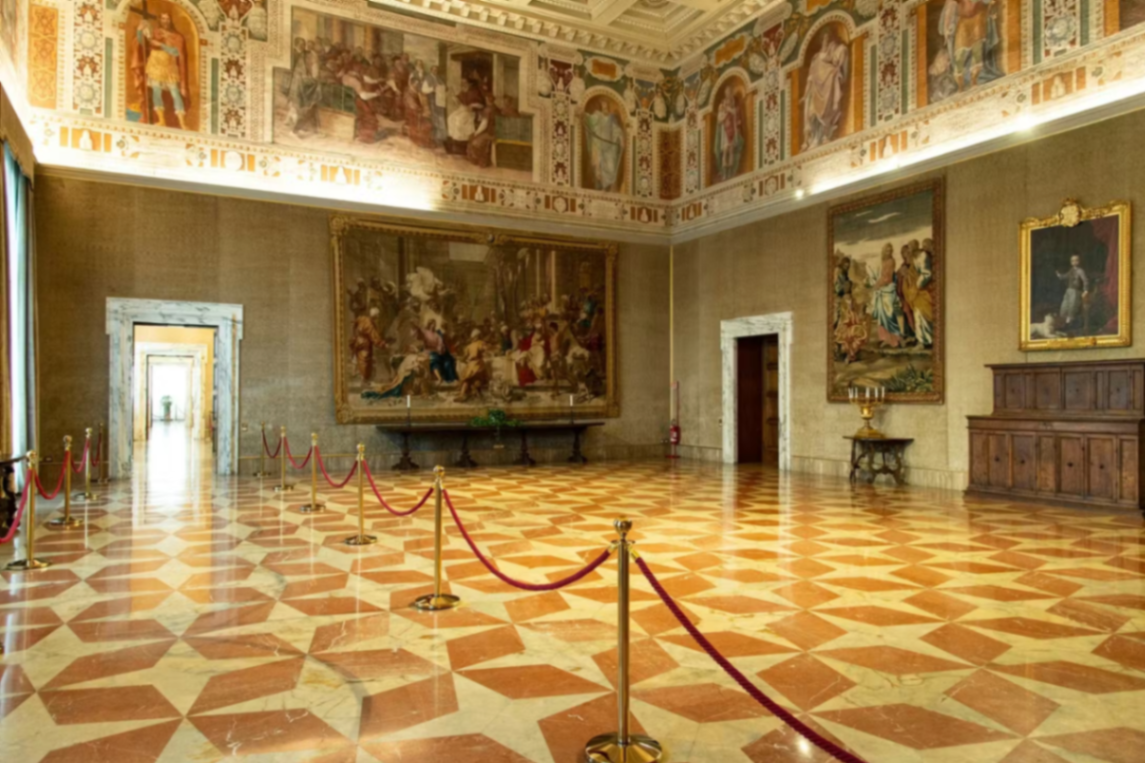
Lateran Palace
Original papal residence for 1,000 years
Explore
Venice Day Trip
Experience the magic of the floating city from Rome
Explore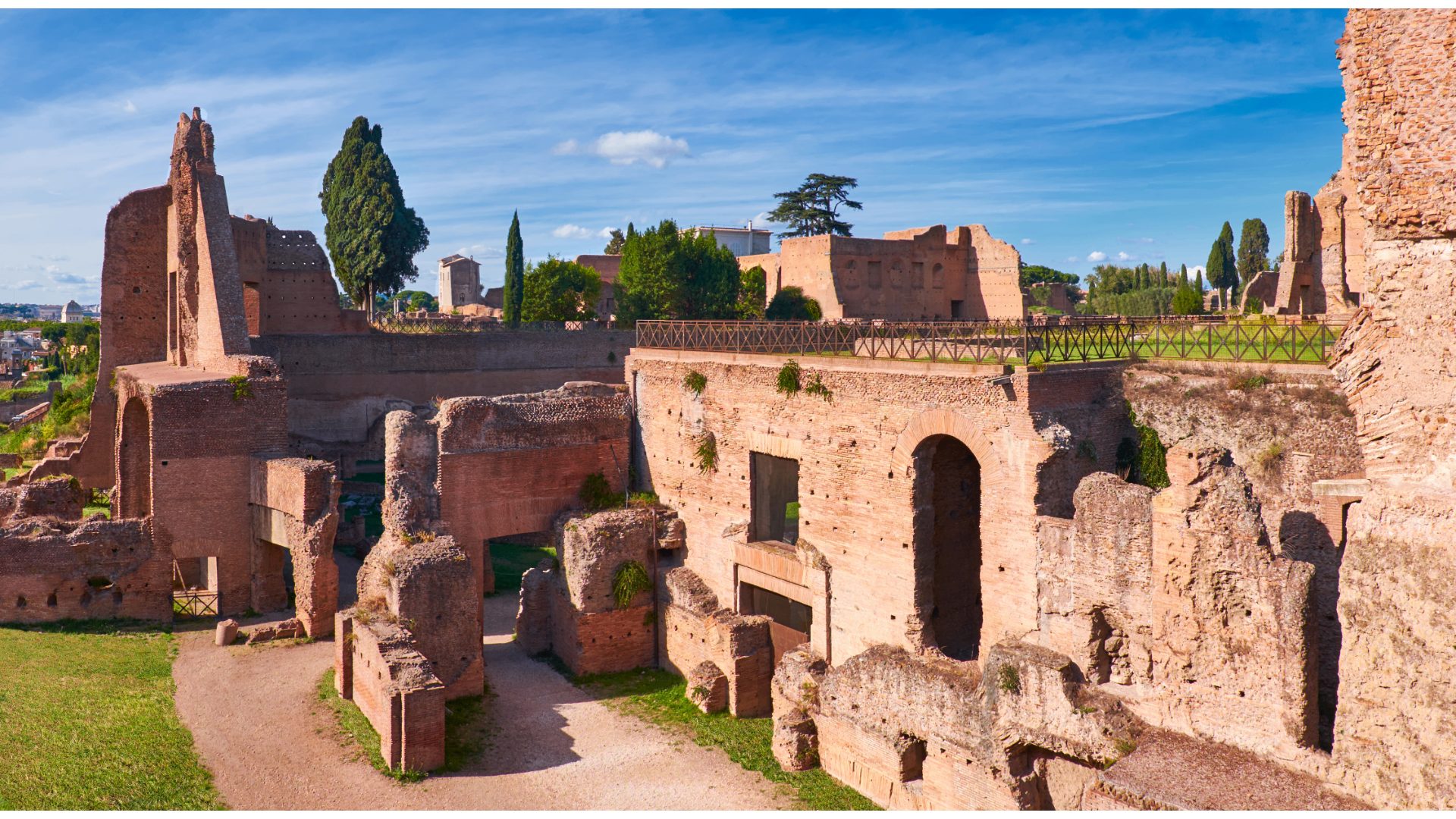
Palatine Hill
Legendary birthplace of Rome and luxurious home of emperors
ExploreQuick Planning Guide
⏱️ Time Needed
30–45 minutes
💰 Cost
Free (coin-operated light box may be available)
🎫 Reservation
Not required
♿ Accessibility
Fully wheelchair accessible
📅 Best Time
09:00–11:00 or 17:30
👨👩👧👦 Family Friendly
Excellent — children love the illusion
🌡️ Weather
Indoor, all weather
Nearby Attractions
Pantheon3-minute walk
Trevi Fountain5-minute walk
Doria Pamphilj Gallery5-minute walk
Il Gesù — the other Jesuit church8-minute walk
Piazza Venezia8-minute walk
Largo di Torre Argentina8-minute walk
You May Also Like
Chiesa del GesùPantheonGalleria Doria PamphiljFeatured In These Itineraries
Classic Rome in 3 DaysHidden Gems of RomeFree Rome ItineraryEssential Tips
- ✓ Stand on the yellow marble disc for the perfect illusion
- ✓ A coin-operated light box may be available to see the colours
- ✓ Walk toward the altar to watch the fake dome distort
- ✓ Modest dress required — active parish
- ✓ Combine with Il Gesù for full Jesuit Rome