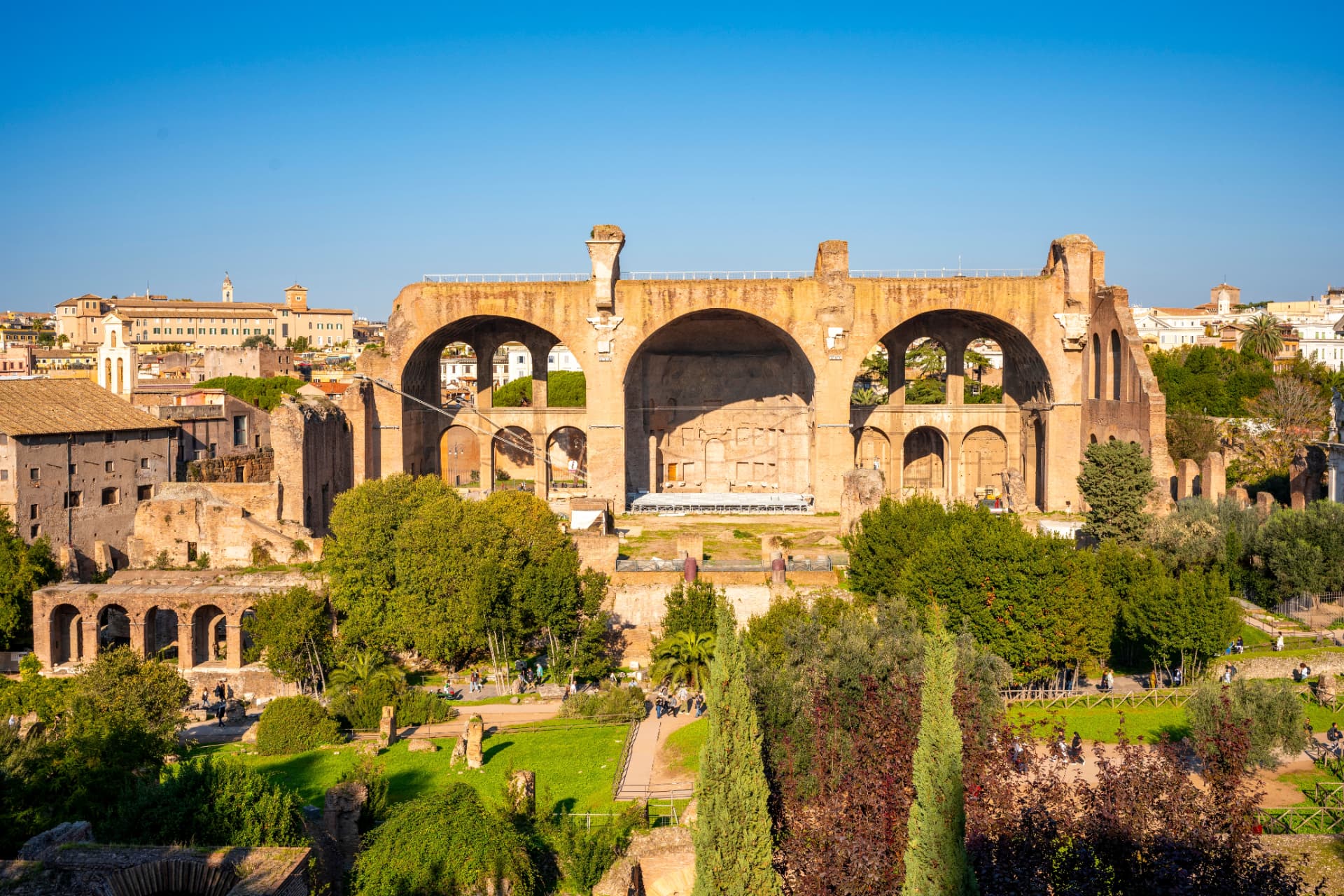
What is the Basilica of Maxentius?
The Basilica of Maxentius (also called the Basilica of Constantine) is the largest building in the Roman Forum. The three huge brick vaults you see on the north side of the Via Sacra are only one aisle of a hall whose central nave rose higher still — the central nave had three cross vaults supported by eight monolithic Corinthian columns — covered by cross vaults resting on giant marble columns.
Emperor Maxentius began it around AD 308. Maxentius’s plan faced east–west, with the main entrance on the east and an apse at the west end. After Constantine defeated him at the Milvian Bridge in 312, Constantine finished it and changed its orientation: he added a new entrance on the Via Sacra side and a second apse on the north. The colossal seated statue of Constantine stood in the original western apse. Like other Roman basilicas, it was a public hall for courts and official business, not a church.
Official page: Official Basilica of Maxentius architecture


 12345+− Leaflet | © OpenStreetMap contributors
- 1. Colosseum
- 2. Entrance: Via Sacra / Arch of Titus side
- 3. Arch of Titus
- 4. Basilica of Maxentius
- 5. Temple of Antoninus and Faustina
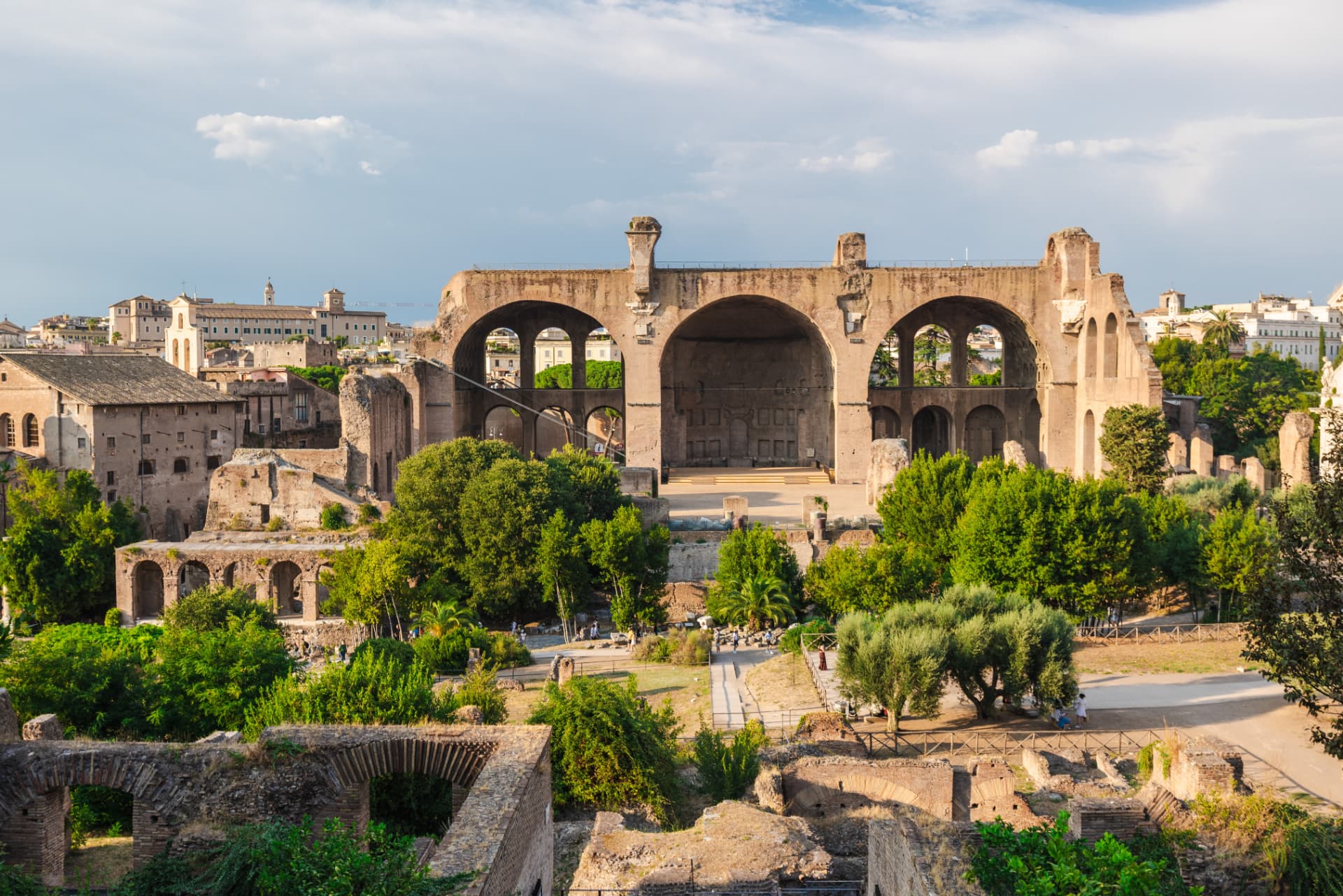
What can you still see today?
Look for three things. First, the coffered vaults: the octagonal sunken panels in the brick ceiling once held stucco decoration and show the scale of the lost nave. Second, the stubs of the nave vault springing from the top of the walls, which let you imagine the full height. Third, the apse at the west end, where the colossal statue of Constantine stood.
Fragments of that statue — the head, hand and feet — were found here in 1486 and are now in the courtyard of the Capitoline Museums, a short walk away. The last surviving giant column from the nave was moved in the 17th century to Piazza di Santa Maria Maggiore, where it still stands.
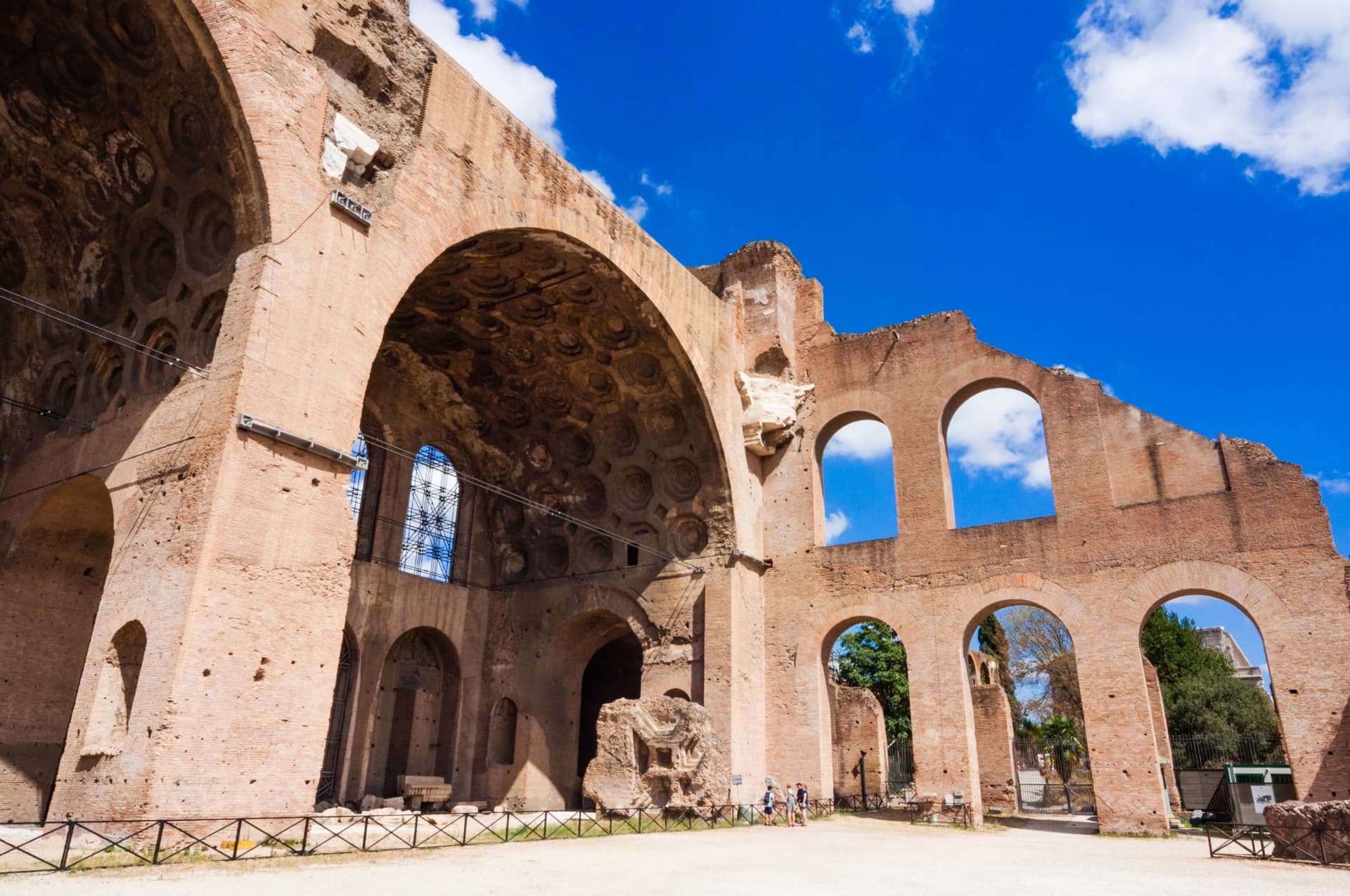
What should you look for in a short stop?
Use the comparison below to distinguish the visible remains, their purpose and what a visit actually includes. The listed features are a selective aid, not a promise that every room or path will be open.
| Where | Look for |
|---|---|
| North aisle vaults | Octagonal coffers in the brick ceiling |
| Top of the walls | Broken springing of the collapsed nave vault |
| West apse | Where Constantine’s colossal statue sat |
| South side on the Via Sacra | Remains of Constantine’s added entrance and porch |
| From the Palatine terraces | The best full view of all three vaults |
Where is the best view of the basilica?
The most complete view is from the Palatine Hill terraces above the Forum, as illustrated by the supplied panorama photograph. From the Via Sacra you can view the surviving vaults and appreciate their scale, though fitting all three into one frame usually needs a wide-angle lens or a step back. Morning and late-afternoon light falls well on the brick; midday light is flat and the area has little shade.
Access to the interior floor of the basilica is sometimes restricted, and the space is used for summer events. Check the official park site for the current situation; even when the floor is fenced, you can see the vaults clearly from the path.
How does the basilica fit into a Forum visit?
It is the second stop on the usual route from the Via Sacra gate near the Colosseum: Arch of Titus first, then the Basilica of Maxentius a few minutes downhill on the right. Allow ten to twenty minutes, then continue toward the Temple of Romulus and the House of the Vestals. The basilica is inside the paid Forum and Palatine area.
Prices, ticket names and time slots are set by the Parco archeologico del Colosseo and change; check the official ticket page before buying.
 Tiqets
Skip-the-line and last-minute Roman Forum tickets — resellers may still have availability; prices are usually higher.
Check prices Klook
Guided tours with entry included — compare with official dates first; prices are usually higher.
Check prices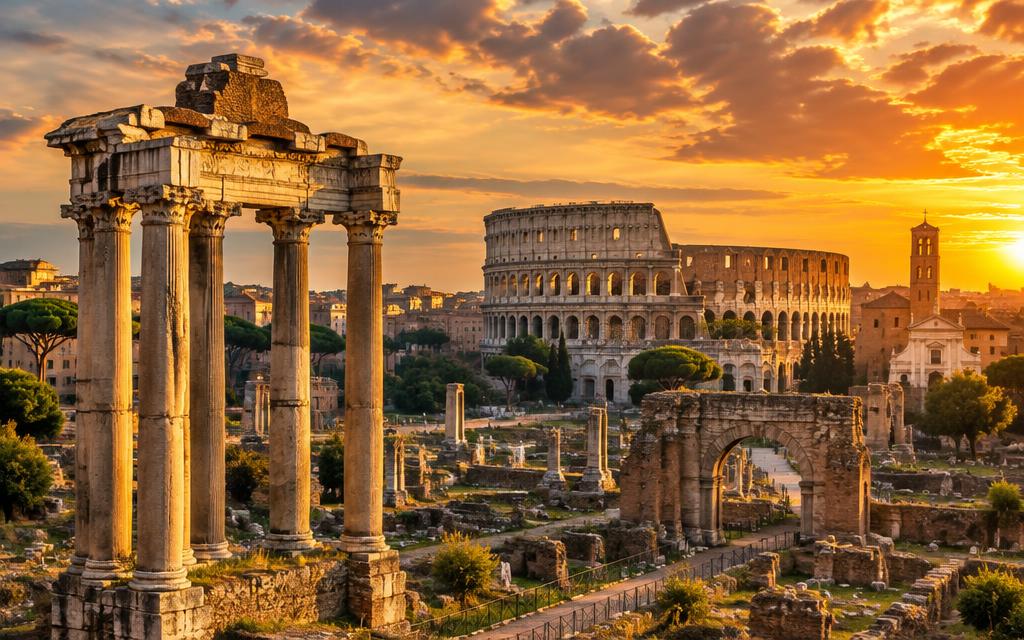 Trip.com
Compare bundles and combo tickets — Colosseum plus Forum, Vatican or hop-on buses in one booking.
Check pricesAffiliate links: we may earn a commission at no extra cost to you. Check each listing's cancellation terms before paying.
Was the Basilica of Maxentius a church?
No. Here “basilica” means a large Roman public hall associated with civic and legal business, not a Christian church. The immense vaults belong to a building designed to hold people under a monumental roof. Later churches adopted the basilica name and aspects of the hall form.
At the ruins, separate the surviving north aisle from the lost central nave. The three vaults are not the complete original building. Use the Palatine-view photograph for the overall arrangement and the ceiling close-up for the coffers. Do not infer the original nave height simply from the surviving aisle.
Official sources
Reviewed October 2026. Ticket names, prices, hours and open areas change — always confirm on the official pages.
Frequently asked questions
- Do you need a ticket to see the Basilica of Maxentius?
- To see it up close, yes. It stands inside the fenced Roman Forum and Palatine area, covered by the standard Colosseum combined ticket or a Forum-focused ticket. From Via dei Fori Imperiali you can see parts of its back wall for free, but the vaults are best viewed from the Via Sacra or the Palatine terraces.
- Why is it called both Maxentius and Constantine?
- Maxentius started building it around AD 308, but Constantine defeated him in 312 and completed it, adding a new entrance and a colossal statue of himself. Ancient and modern sources use both names. On park signs and maps you will usually see Basilica of Maxentius, sometimes with Constantine added in brackets.
- Where is the giant statue of Constantine now?
- The surviving marble pieces of the colossal seated statue, including the huge head, hand and feet, are displayed in the courtyard of the Palazzo dei Conservatori, part of the Capitoline Museums. They were found in the basilica’s apse in 1486. The Capitoline Museums need a separate ticket from the Forum and Colosseum.
- How long should you spend at the Basilica of Maxentius?
- Ten to twenty minutes is enough to walk past the vaults, find the apse and read the on-site panels. Add a few minutes on the Palatine terraces for the classic full view. Most visitors see it right after the Arch of Titus on the way downhill through the Roman Forum toward the Temple of Saturn.
Next steps
- Roman Forum in Rome: What to See, History and Visiting Tips
- Domus Tiberiana: Imperial Palace, Museum and Roman Forum Views
- Santa Maria Antiqua: Ancient Frescoes and How to Visit
- Arch of Septimius Severus: History and Reliefs Explained
- Temple of Antoninus and Faustina: The Roman Temple That Became a Church