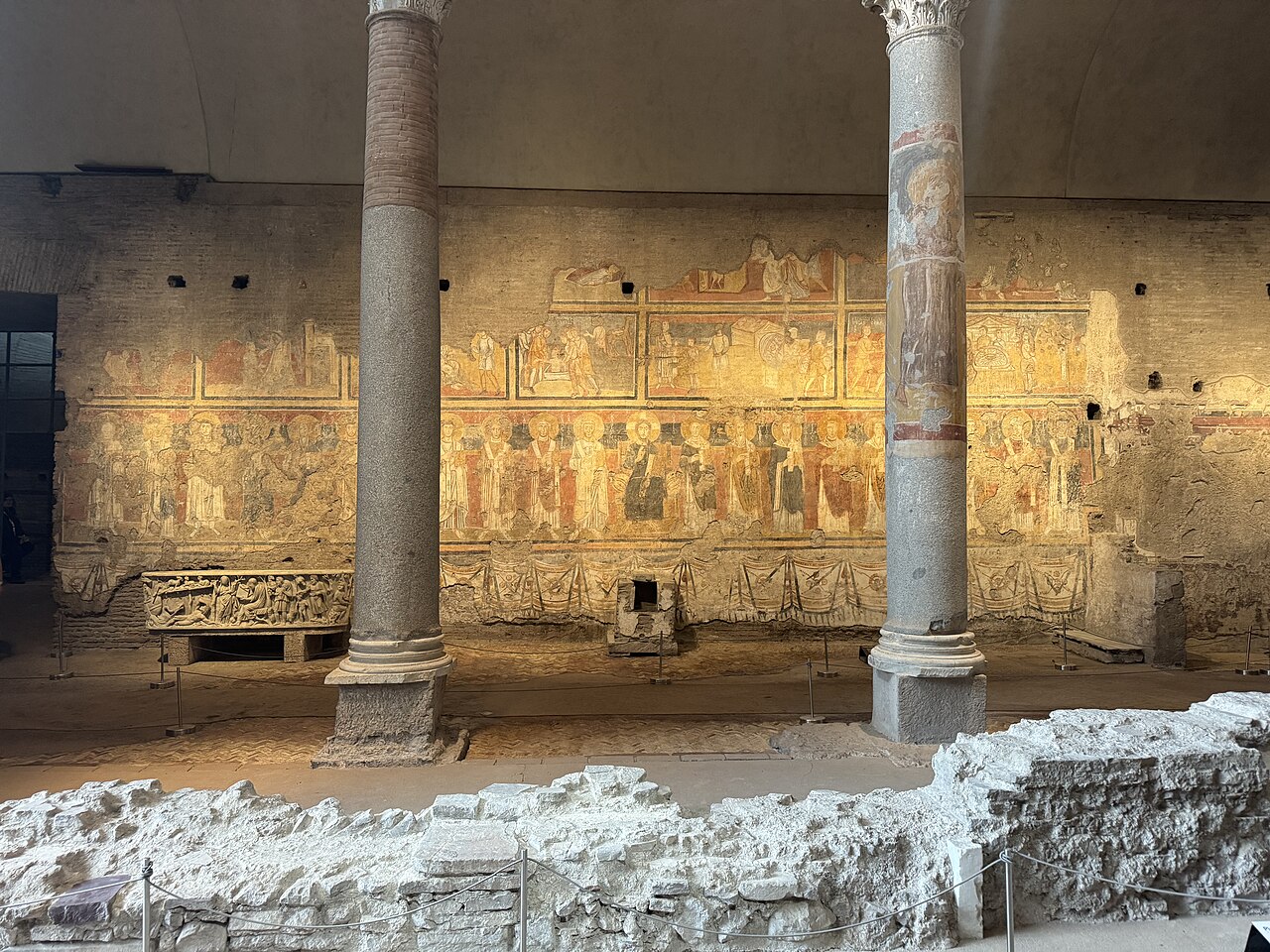
What is Santa Maria Antiqua?
Santa Maria Antiqua is the oldest Christian church in the Roman Forum, set inside an imperial-era building at the foot of the Palatine Hill. It was in use from the 6th century, and its walls are covered with paintings from the 6th to the 9th centuries, with even earlier layers on the palimpsest wall — a rare survival of early medieval art in Rome.
After a 9th-century earthquake damaged the area, the church was abandoned and later covered by debris and newer buildings. Being sealed away from later redecoration helped many paintings survive, but modern excavation and long conservation work are why they can be seen today. It was rediscovered in 1900 and reopened to visitors after a long restoration.
Official page: Official Santa Maria Antiqua monument and admission


 12345+− Leaflet | © OpenStreetMap contributors
- 1. Santa Maria Antiqua
- 2. Temple of Vesta
- 3. House of the Vestals
- 4. Domus Tiberiana
- 5. Temple of Caesar
What should you see inside?
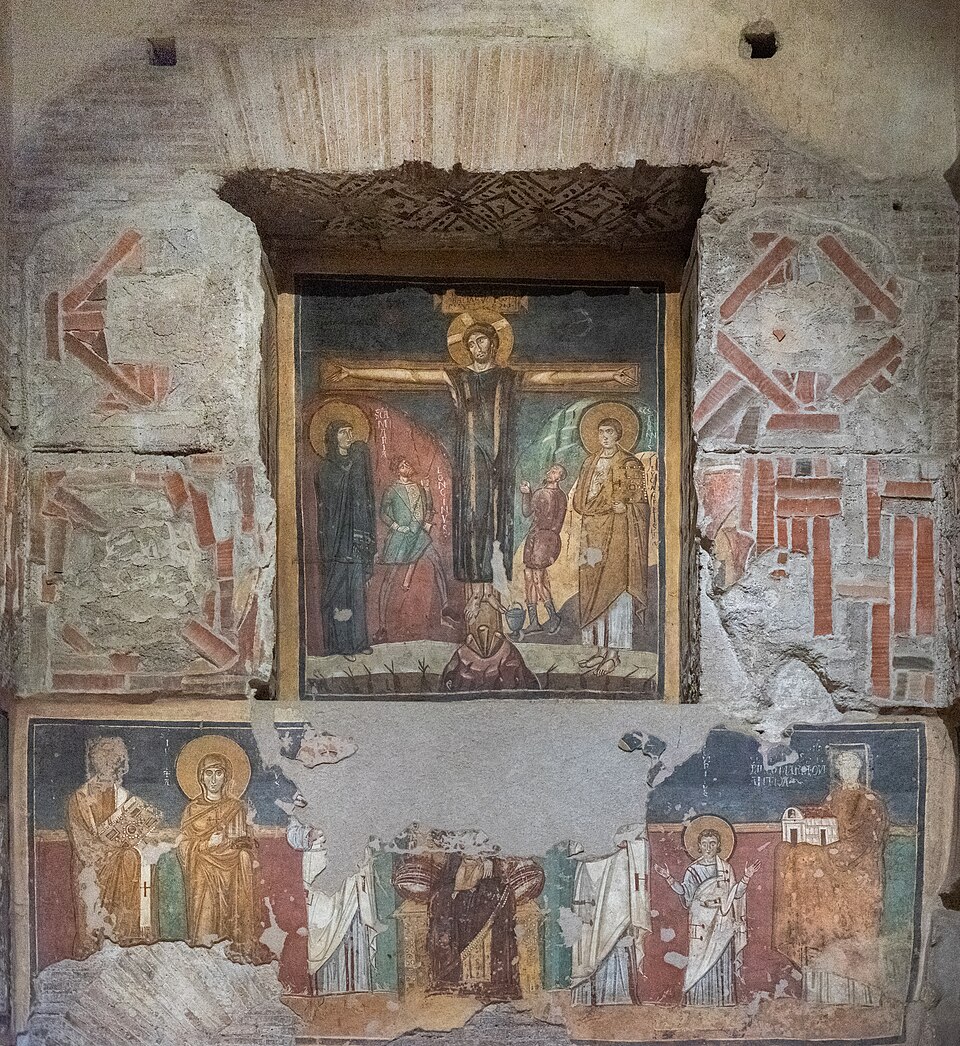
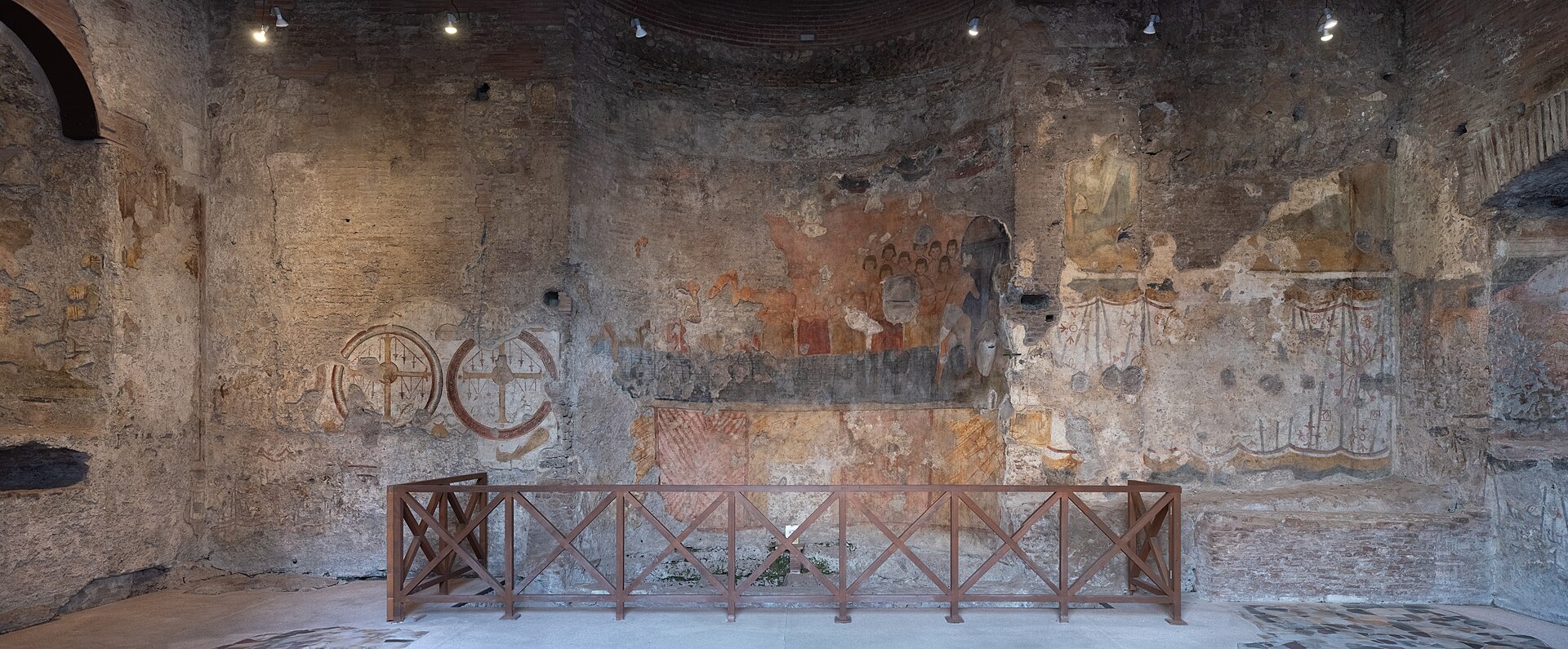
Look for the so-called palimpsest wall near the altar, where several layers of painting from different centuries overlap and you can see one generation painting over another. Then find the Chapel of Theodotus to the left of the altar: a Crucifixion with Christ in a long robe, and portraits of the donor family, including square halos, which art historians generally read as marking people who were alive when it was painted.
The side walls carry long rows of saints, and next to the church is the small Oratory of the Forty Martyrs, with faded scenes of soldiers who froze to death for their faith.
What should you look for in a short visit?
Use the comparison below to distinguish the visible remains, their purpose and what a visit actually includes. The listed features are a selective aid, not a promise that every room or path will be open.
| Where | Look for |
|---|---|
| Near the altar | The palimpsest wall with overlapping layers |
| Left of the altar | Chapel of Theodotus, Crucifixion and donor family |
| Donor portraits | Square halos for living people |
| Side walls | Rows of saints and Old Testament scenes |
| Next door | Oratory of the Forty Martyrs |
How do you visit Santa Maria Antiqua?
The church is inside the Roman Forum, near the Temple of Castor and Pollux and the House of the Vestals. Because the frescoes are fragile, access is controlled. The official monument page names the Forum Pass SUPER and Full Experience tickets as products that include Santa Maria Antiqua. Opening days and capacity arrangements can change, so check the official site before you go rather than assuming a standard Forum ticket gets you in.
Inside it is dim and cool, and photography rules may apply. Allow twenty to thirty minutes.
Prices, ticket names and time slots are set by the Parco archeologico del Colosseo and change; check the official ticket page before buying.
 Tiqets
Skip-the-line and last-minute Roman Forum tickets — resellers may still have availability; prices are usually higher.
Check prices Klook
Guided tours with entry included — compare with official dates first; prices are usually higher.
Check prices Trip.com
Compare bundles and combo tickets — Colosseum plus Forum, Vatican or hop-on buses in one booking.
Check pricesAffiliate links: we may earn a commission at no extra cost to you. Check each listing's cancellation terms before paying.
What should you prioritise if you only see three fresco details?
Prioritise the layered palimpsest wall, the Crucifixion in the Chapel of Theodotus and the rows of saints. Together they show repeated repainting, a particular donor’s commission and the larger decorative programme. The goal is to distinguish different kinds of evidence, not to identify every faded figure in one visit.
Use the captions on this page to identify the supplied photographs before entering, then use on-site labels for the current room arrangement. Let your eyes adjust and observe the surviving layers without touching the walls. Follow current photography instructions; this guide does not promise flash, tripod or unrestricted access.
Official sources
Reviewed October 2026. Ticket names, prices, hours and open areas change — always confirm on the official pages.
Frequently asked questions
- Is Santa Maria Antiqua included in the Colosseum ticket?
- Not with the standard ticket. The official monument page names the Forum Pass SUPER and Full Experience tickets as including Santa Maria Antiqua. Access is controlled to protect the frescoes, and opening days can change. Check the Parco archeologico del Colosseo website for current arrangements before booking your visit.
- Why are the frescoes in Santa Maria Antiqua so well preserved?
- After a ninth-century earthquake the church was abandoned and gradually covered by debris and later buildings. That kept many walls away from later redecoration for about a thousand years. Burial alone did not guarantee survival: excavation from 1900 and decades of conservation work explain why the early medieval frescoes can be seen today.
- What is the palimpsest wall?
- It is a section of wall near the altar where painters added new frescoes on top of older ones several times, from before the church to the eighth century. Upper layers have partly fallen away, revealing fragments of several paintings at once. It is one of the clearest places to see how church decoration changed over time.
- How long should you spend at Santa Maria Antiqua?
- Twenty to thirty minutes is usually enough to see the palimpsest wall, the Chapel of Theodotus, the rows of saints and the Oratory of the Forty Martyrs next door. If entry is by time slot, plan the rest of your Forum route around it. Your eyes need a minute to adjust, because the interior is kept quite dim.
Next steps
- Roman Forum in Rome: What to See, History and Visiting Tips
- Domus Tiberiana: Imperial Palace, Museum and Roman Forum Views
- Arch of Septimius Severus: History and Reliefs Explained
- Temple of Antoninus and Faustina: The Roman Temple That Became a Church
- Curia Julia: Inside the Senate House of Ancient Rome