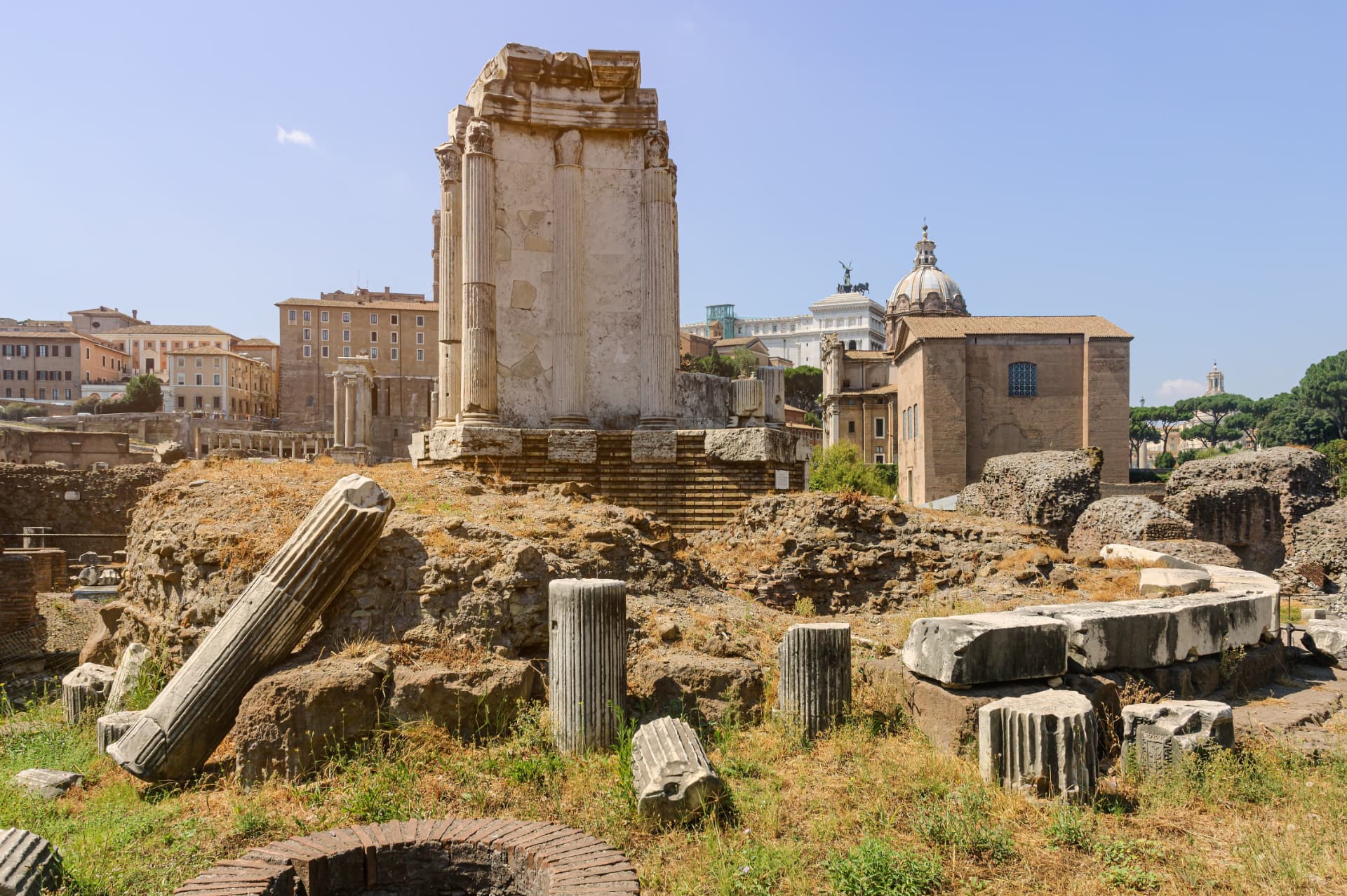
What were the Temple of Vesta and the House of the Vestals?
The Temple of Vesta was a small round temple at the eastern end of the Roman Forum where a sacred fire was kept burning for Vesta, goddess of the hearth. Romans believed the safety of the city depended on that flame never going out. Right behind it stood the House of the Vestals, the large residence of the priestesses who guarded it.
Both sit side by side between the Temple of Caesar and the Palatine slope, so you see them together in one stop.


 12345+− Leaflet | © OpenStreetMap contributors
- 1. Temple of Vesta
- 2. House of the Vestals
- 3. Temple of Caesar
- 4. Temple of Antoninus and Faustina
- 5. Arch of Titus
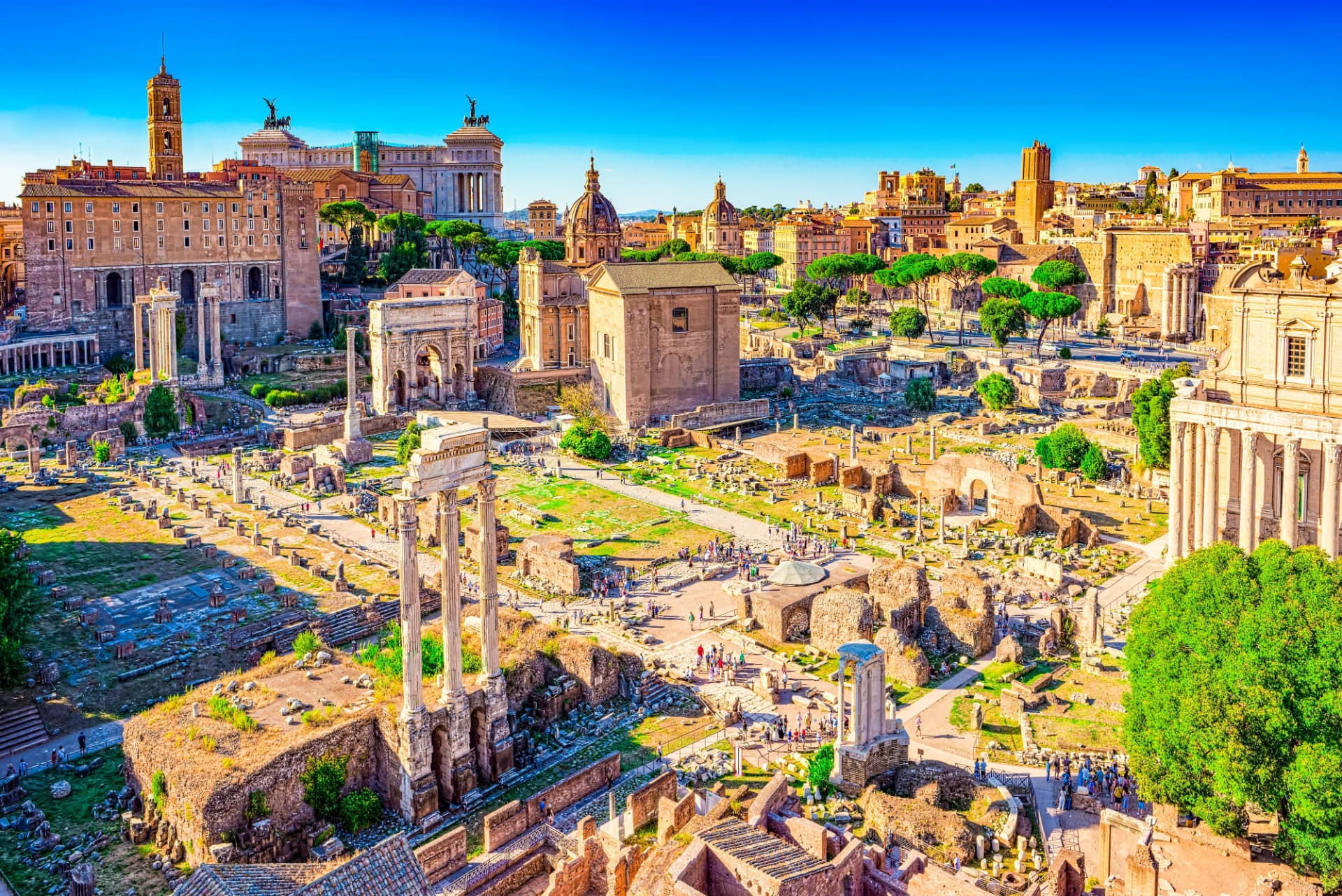
Who were the Vestal Virgins?
The Vestals were a small college of priestesses, traditionally six, chosen as young girls from Roman families and bound to serve for thirty years. They tended the fire, guarded sacred objects kept in the temple and prepared ritual materials used in state ceremonies.
They had privileges few Roman women had, including legal independence and honoured seats at public events. The penalties for failure were severe: letting the fire go out or breaking their vow of chastity could bring harsh punishment. The cult ended in the late 4th century, when traditional religions were banned.
What survives of the Temple of Vesta?
The round shape goes back to the earliest days of Rome and probably echoes early round huts. The building was destroyed and rebuilt several times, often after fires. What you see today is a curved section with fluted columns that was partly reconstructed in the 1930s from ancient fragments, so it gives an idea of the shape rather than the full original temple.
What can you see in the House of the Vestals?
The house was built around a long rectangular courtyard with pools, surrounded by rooms on several floors. Today you walk along the edge of that courtyard and see the remaining pools and garden beds. The highlight is the row of statue bases and portrait statues of senior Vestals placed along the courtyard; several inscriptions still honour individual priestesses.
Some statues and bases are original and others are copies or repositioned, and access to parts of the courtyard can vary. Check the official park site for current arrangements.
What should you look for in a short stop?
| Where | Look for |
|---|---|
| Temple of Vesta | The round plan and fluted columns of the rebuilt section |
| House courtyard | Long pools and garden beds of the central court |
| Along the courtyard | Statues and inscribed bases of senior Vestals |
| Next to the temple | Three columns of the Temple of Castor and Pollux |
| From the Palatine | The best overview of the round temple and courtyard |
How do they fit into a Forum visit?
Both are in the middle of the eastern Forum, just off the Via Sacra between the Arch of Titus and the Temple of Caesar. Allow fifteen to twenty-five minutes for the temple and courtyard together. They are inside the paid Forum and Palatine area, and the Palatine terraces above give the best overview.
Prices, ticket names and time slots are set by the Parco archeologico del Colosseo and change; check the official ticket page before buying.
 Tiqets
Skip-the-line and last-minute Roman Forum tickets — resellers may still have availability; prices are usually higher.
Check prices Klook
Guided tours with entry included — compare with official dates first; prices are usually higher.
Check prices Trip.com
Compare bundles and combo tickets — Colosseum plus Forum, Vatican or hop-on buses in one booking.
Check pricesAffiliate links: we may earn a commission at no extra cost to you. Check each listing's cancellation terms before paying.
Official sources
Reviewed October 2026. Ticket names, prices, hours and open areas change — always confirm on the official pages.
Frequently asked questions
- Can you go inside the Temple of Vesta?
- No. The temple is a partial reconstruction of a curved section, and you view it from the paths around it. Even in ancient times only the Vestals could enter the inner part. You can walk close enough to see the columns and round plan, and the courtyard of the House of the Vestals is next to it.
- Are the Temple of Vesta and House of the Vestals included in the Colosseum ticket?
- They are inside the Roman Forum, so a ticket covering the Forum and Palatine area includes them, such as the standard Colosseum combined ticket. Ticket types and included sites change, so check the official Parco archeologico del Colosseo website before you book. There is no separate ticket just for these two sights.
- How many Vestal Virgins were there?
- Traditionally there were six Vestals at a time. They were chosen as girls and served for thirty years: ten learning, ten performing the duties and ten teaching younger priestesses. After their service they were free to leave and marry, though many stayed. The senior priestess was known as the Vestalis Maxima.
- How long should you spend at the House of the Vestals?
- Fifteen to twenty-five minutes covers the round temple and a walk around the courtyard with its statues. If you enjoy reading inscriptions or want photos, allow a little longer. Add a stop on the Palatine terraces later, because the view from above shows the shape of the courtyard and temple far better.
More Roman Forum guides
- Roman Forum in Rome: What to See, History and Visiting Tips
- Domus Tiberiana: Imperial Palace, Museum and Roman Forum Views
- Santa Maria Antiqua: Ancient Frescoes and How to Visit
- Arch of Septimius Severus: History and Reliefs Explained
- Temple of Antoninus and Faustina: The Roman Temple That Became a Church
- Curia Julia: Inside the Senate House of Ancient Rome
- Temple of Saturn: The Roman Forum’s Famous Columns Explained
- Basilica of Maxentius: What to See at the Roman Forum’s Largest Basilica
- Arch of Titus: History, Reliefs and What to Look For
- Colosseum, Roman Forum and Palatine Hill in One Day: Best Order and Route
- Roman Forum vs Imperial Forums: What’s the Difference?
- Roman Forum Map: Main Sights and a Self-Guided Walking Route
- What to See in the Roman Forum: Highlights Explained for First-Time Visitors
- Roman Forum History: What It Was and Why It Became Ruins
- Roman Forum Tickets: Visiting With or Without the Colosseum
- Forum Pass SUPER: What It Includes and Is It Worth It?
- Roman Forum Guided Tour vs Self-Guided Visit: Which Should You Choose?
- Can You See the Roman Forum for Free? Viewpoints and Admission Explained
- Roman Forum Entrances: Where to Enter and Which Gate to Choose
- How Long to Spend at the Roman Forum and Palatine Hill?
- Best Time to Visit the Roman Forum: Weather, Crowds and Opening Hours
- Roman Forum with Kids: A Short Route and What to Look For
- Roman Forum Accessibility: Uneven Paths, Step-Free Routes and Visitor Facilities