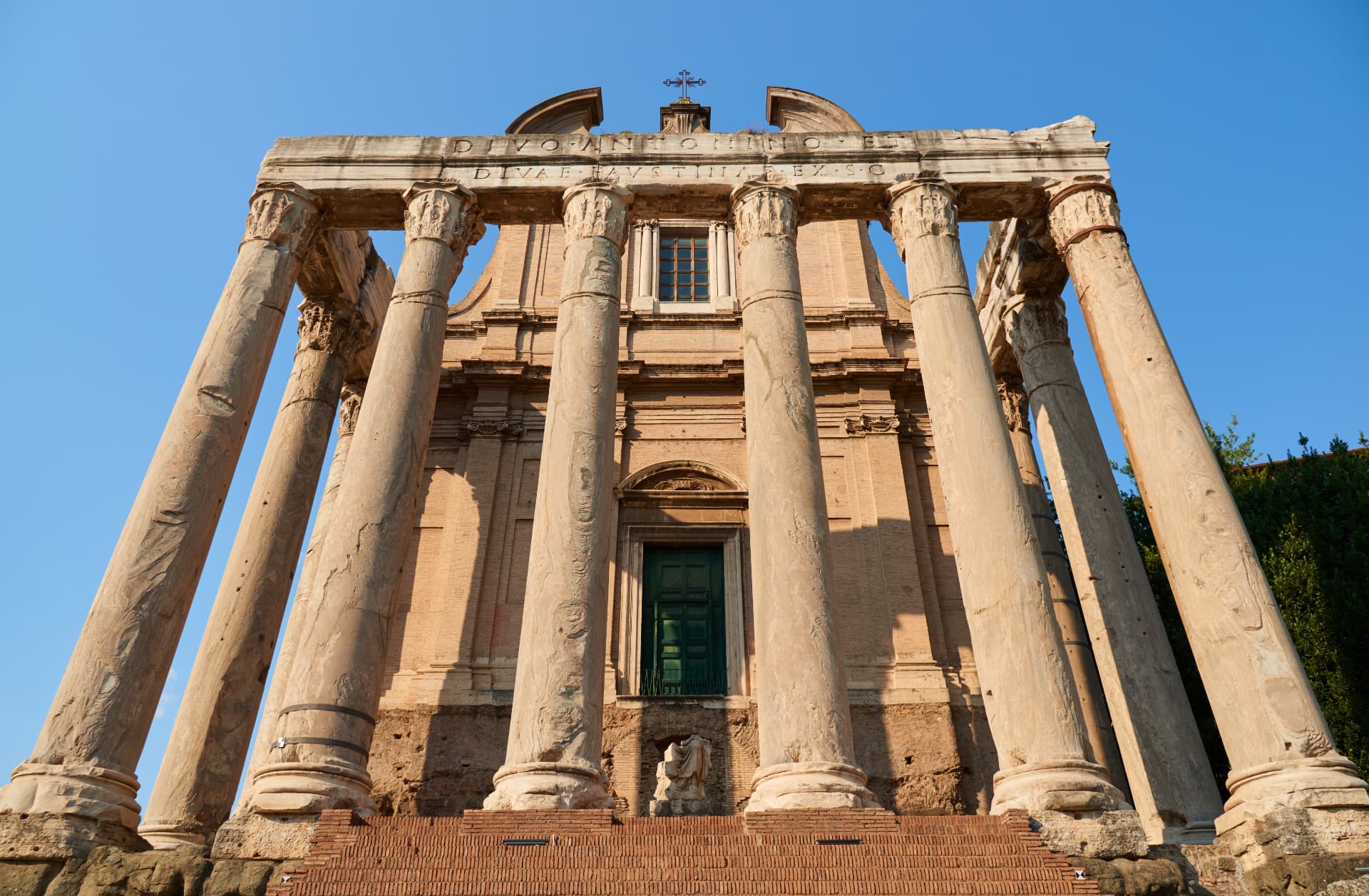
What is the Temple of Antoninus and Faustina?
It is one of the best-preserved temples in the Roman Forum: a porch of ten tall marble columns on the Via Sacra with a Baroque church facade rising behind them. Emperor Antoninus Pius built it in AD 141 for his wife Faustina after she died and was declared a goddess. When Antoninus himself died in 161, the Senate rededicated it to both of them.
You can read that history in the inscription: the lower line honours the deified Faustina, and the upper line, added later, honours the deified Antoninus. EX S C means it was done by decree of the Senate.
Official page: Official Temple of Antoninus and Faustina


 12345+− Leaflet | © OpenStreetMap contributors
- 1. Temple of Antoninus and Faustina
- 2. Entrance: Largo della Salara Vecchia
- 3. Temple of Caesar
- 4. Basilica of Maxentius
- 5. Curia Julia (Senate House)
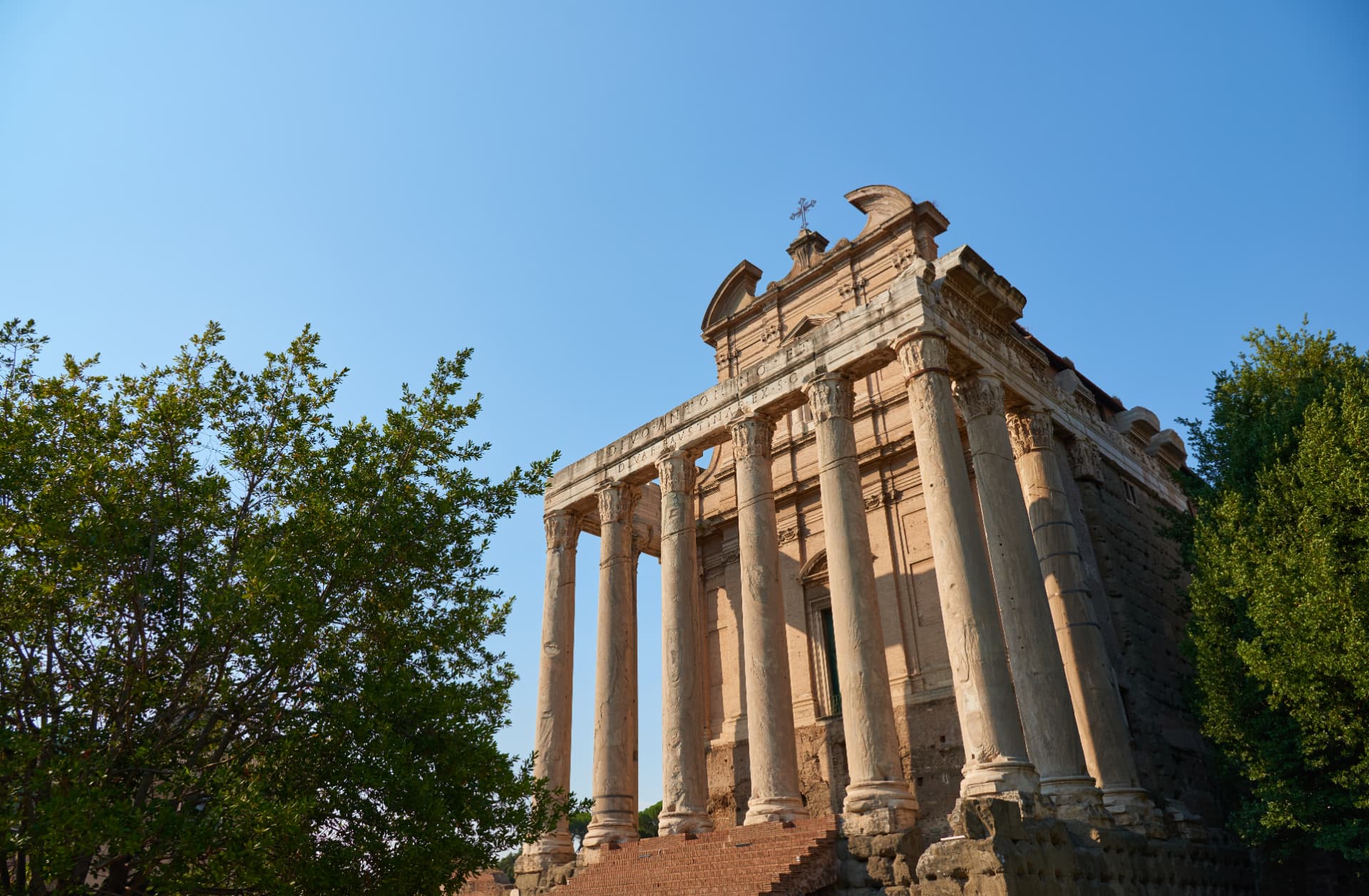
Why is there a church inside the temple?
In the Middle Ages the temple was turned into the church of San Lorenzo in Miranda, and the walls of the ancient cella became the church’s walls. Continued use as a church helped the building survive, while many unused Forum temples lost their stone to later builders — though churches too were altered and robbed over time. The facade you see behind the columns was added in the early 1600s.
The church interior is not part of the normal Forum visit and is rarely open to the public, so plan to see the temple from outside.
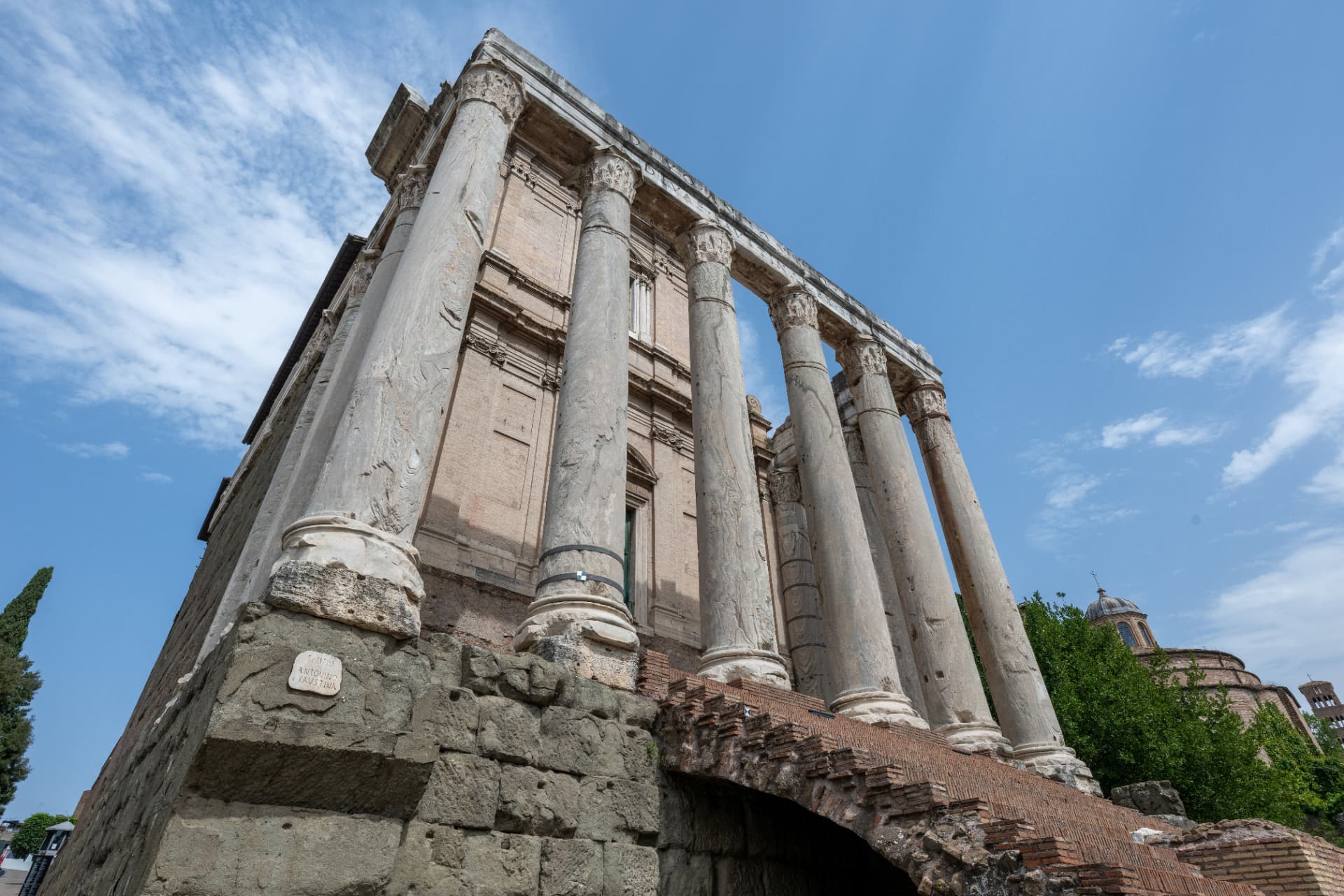
What should you look for in a short stop?
Look high on the columns for deep diagonal grooves. A traditional interpretation, repeated in guidebooks rather than proven by records, explains them as marks from ropes used in a failed attempt to pull the columns down for building material. Also notice the frieze above the columns on the sides, carved with griffins and decorative candelabra, and the doorway set high above today’s ground level, which shows how much the Forum floor has been dug away since medieval times.
| Where | Look for |
|---|---|
| Entablature | Two-line inscription to Antoninus and Faustina |
| Upper columns | Deep grooves, often linked to failed demolition |
| Side frieze | Griffins and candelabra carvings |
| Church door | Set high above today’s Forum ground level |
| Staircase | Modern brick rebuilding of the original steps |
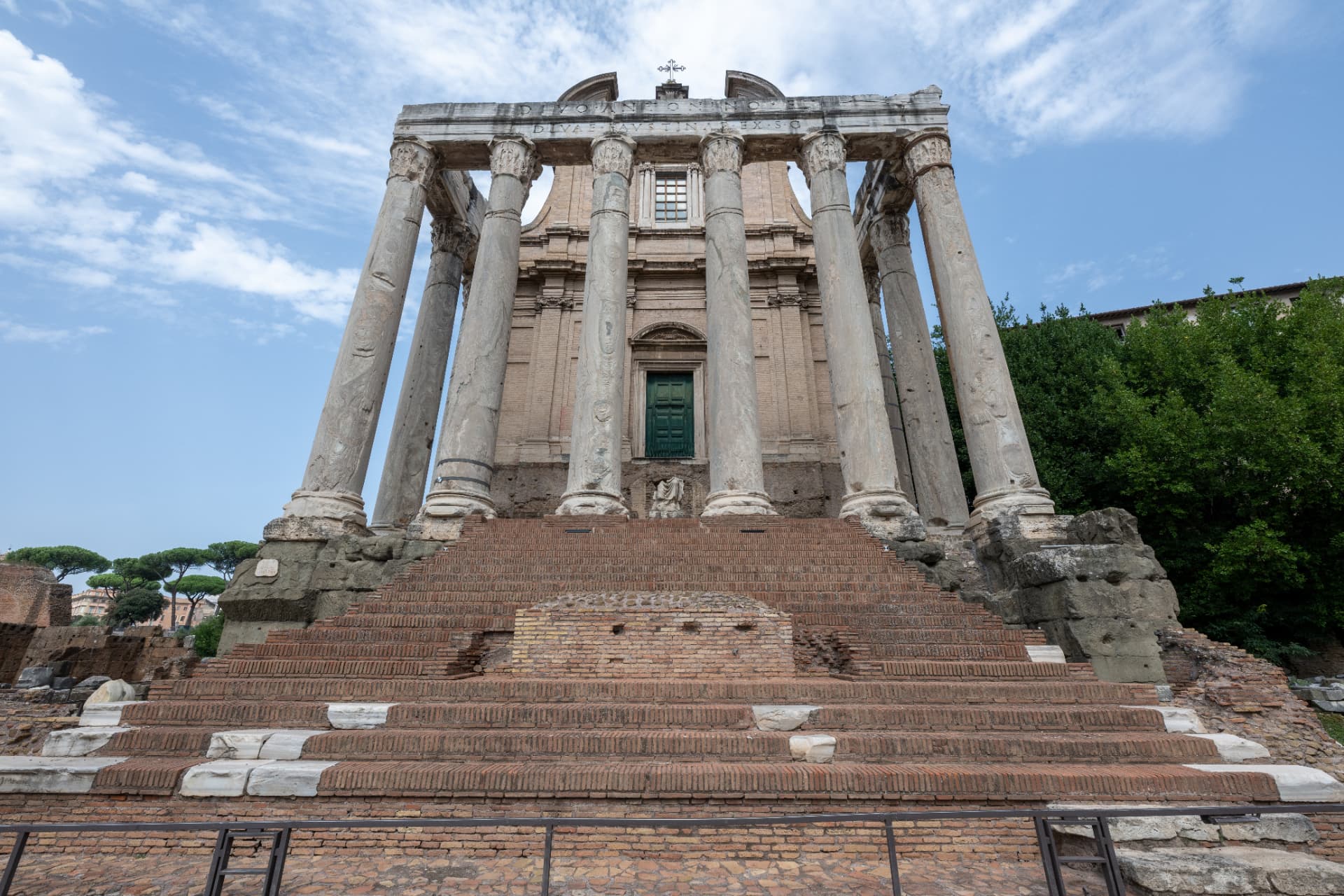
How does it fit into a Forum visit?
The temple faces the Via Sacra on the north side of the Forum, close to the Largo della Salara Vecchia entrance and opposite the Temple of Caesar and the Regia. Ten minutes is usually enough. It is inside the paid Forum and Palatine area, though you can glimpse the back of the building from Via dei Fori Imperiali.
Prices, ticket names and time slots are set by the Parco archeologico del Colosseo and change; check the official ticket page before buying.
 Tiqets
Skip-the-line and last-minute Roman Forum tickets — resellers may still have availability; prices are usually higher.
Check prices Klook
Guided tours with entry included — compare with official dates first; prices are usually higher.
Check prices Trip.com
Compare bundles and combo tickets — Colosseum plus Forum, Vatican or hop-on buses in one booking.
Check pricesAffiliate links: we may earn a commission at no extra cost to you. Check each listing's cancellation terms before paying.
How do you tell the Roman temple from the later church?
Read the building from front to back: the columns and dedication belong to the Roman temple; the church facade rises behind them within the reused structure. The raised doorway and rebuilt stairway help explain changing ground levels. You can understand that relationship from the Forum path without entering the church.
Compare the frontal photo with the side view. The front makes the two inscriptions easier to locate, while the side shows the podium and porch depth. Do not use the grooves on the columns as proof of a particular demolition attempt: the rope explanation is a traditional interpretation, not a securely documented event.
Official sources
Reviewed October 2026. Ticket names, prices, hours and open areas change — always confirm on the official pages.
Frequently asked questions
- Can you go inside the Temple of Antoninus and Faustina?
- Usually not. The building is now the church of San Lorenzo in Miranda, and its interior is not part of the normal Roman Forum visit and is rarely open to the public. You see the temple from the Via Sacra in front, where the columns, inscription and church facade are all clearly visible from the path.
- Why is the Temple of Antoninus and Faustina so well preserved?
- It was converted into a church in the Middle Ages, and continued use helped protect it from the stone robbing that affected many unused Forum temples. Its ancient walls became the church walls, and the columns were left standing in front. The facade behind the columns was added in the early seventeenth century, giving the building its unusual mix.
- What do the grooves on the columns mean?
- The deep diagonal cuts high on several columns are commonly explained as marks from ropes or chains used in an attempt to pull the columns down for reuse as building material. The attempt failed, and the columns stayed in place. The explanation is traditional rather than documented in detail, but the marks are easy to spot from the path.
- Is the Temple of Antoninus and Faustina included in the Colosseum ticket?
- It stands inside the Roman Forum, so a ticket covering the Forum and Palatine area includes it, such as the standard Colosseum combined ticket. There is no separate ticket just for the temple. Ticket types and included sites change, so check the official Parco archeologico del Colosseo website before you book your visit.