 City History Museum · Palazzo Braschi
Museum of Rome
Rome's city-history museum in a Neoclassical palace facing Piazza Navona — Caligula's red granite columns, papal carriages, festival paintings and 100,000+ works.
1.5–2 hours€13 / €7.50 reduced100,000+ worksCaligula's columnsPiazza San Pantaleo 10, 00186 RomaOpen on MapPlan Your Visit
Compare tickets, tours and stays — booking ahead usually gives more choice
Get TicketsBook a TourHotels NearbyBy AllTrips Editors••9 min readThe Museum of Rome (Museo di Roma) is the city's official history museum, hidden in plain sight at the southern end of Piazza Navona. It occupies Palazzo Braschi, the last great Roman palace built for papal nepotism — commissioned in 1791 by Pope Pius VI for his nephew Duke Luigi Braschi Onesti and designed by Cosimo Morelli. Inside, over 100,000 works document Roman life from the Middle Ages to the early 1900s: papal carriages, 18th-century festival paintings of Piazza Navona flooded as a lake, rescued church frescoes, costumes, photographs, and the spectacular monumental staircase flanked by two huge red Egyptian granite columns taken from Emperor Caligula's villa at Anzio. Ordinary admission is €13 (€7.50 reduced); since February 2026 residents of Rome and the Metropolitan City enter free with valid ID — and it's one of the calmest museums on Piazza Navona.
📋 In This Guide
Duration
1.5–2 hours
Cost
€13 / €7.50 reduced
Photos
Yes — no flash
Highlight
Caligula's columns
Why Visit the Museum of Rome?
Most visitors to Piazza Navona walk straight past it. The Museum of Rome at Palazzo Braschi is the only museum in the city dedicated entirely to post-ancient Rome — the medieval, Renaissance, Baroque and Belle Époque city most travellers never really see. Add Caligula's columns, gilded papal carriages and an unbeatable Piazza Navona address, and you have one of the best-value rainy-day stops in the historic centre.
Caligula's Granite Columns
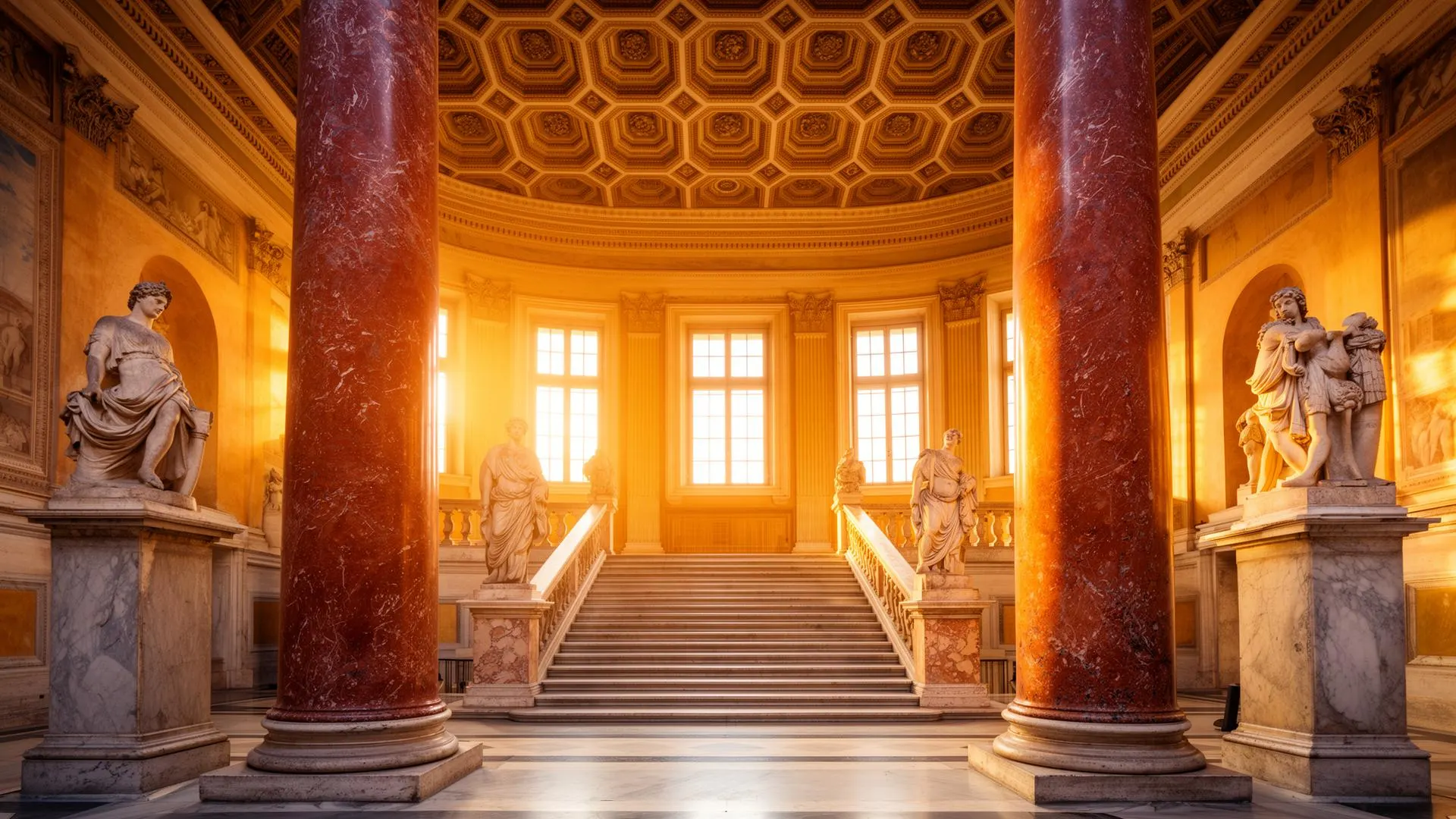
Two enormous red Egyptian granite columns from the villa of Emperor Caligula at Anzio, reused in the 1790s for the monumental Neoclassical staircase.
Palazzo Braschi
The last great Roman palace built for papal nepotism — commissioned in 1791 by Pope Pius VI for his nephew, designed by Cosimo Morelli.
100,000+ Works
Papal carriages, festival paintings, rescued frescoes, costumes, photography — Rome's most complete city-history collection.
Calm on Piazza Navona
The square outside is shoulder-to-shoulder; inside the museum you can have entire rooms to yourself, even in August.
What to See Inside
The Monumental Staircase
Cosimo Morelli's Neoclassical scalone is the showpiece of the building — wide marble steps rising under a coffered ceiling, flanked by two enormous columns of red Egyptian granite taken from Emperor Caligula's villa at Anzio. Stand on the landing to take it in: this is one of the great staircases of Rome, built right at the end of the papal era.
Papal Carriages Hall
On the first floor, the gilded ceremonial berlina of the Braschi family shares a hall with the spectacular Chigi state coach — the kind of vehicles that paraded across Piazza Navona for papal feast days, drawn by six matched horses.
Festival Paintings
A series of large 18th-century paintings shows Piazza Navona flooded for the summer regattas, fireworks at Castel Sant'Angelo, the giant catafalques built for papal funerals, and the great Carnival processions on Via del Corso — Rome at its most theatrical.
Rescued Church Frescoes
When Rome became capital of Italy in 1871, dozens of medieval and Renaissance churches were demolished for the new boulevards. Their frescoes were detached and brought here — tender fragments of Madonnas, saints and donor portraits from a Rome that no longer exists.
Costume & Textile Galleries
Upper floors. An extensive wardrobe of Roman dress from the 18th century to the Belle Époque — silk gowns, papal court liveries, folk costumes from the surrounding Lazio countryside, and rare children's clothing.
Photography Gallery
A revelation: early photographs of Rome between 1850 and 1920 showing the city before and after the Italian unification — the Tiber before its embankments, the buried Forum, the demolition of the Spina di Borgo.
Temporary Exhibitions
The ground floor and basement spaces host major rotating shows — recent years have brought retrospectives of Roman painters, Pasolini photography, and Roman portraiture. Almost always included in the standard ticket; check the website before you go.
Caligula's Columns — Roman Spolia in Action
The two huge red Egyptian granite columns flanking the staircase are not Neoclassical decoration. They are 1st-century AD Roman — quarried at Aswan in upper Egypt, shipped to Italy under Emperor Caligula, and used to decorate his vast seaside villa at Anzio south of Rome, where he was born.
By the late 18th century the villa was a ruin. When Pope Pius VI commissioned Palazzo Braschi for his nephew, his architect Cosimo Morelli needed dramatic columns for the staircase. The two largest surviving Caligula columns were dug out of the Anzio ruins, transported to Rome by sea and river, and erected here in the 1790s — completely intact, after almost seventeen hundred years in a different role.
This is a textbook example of spolia, the Roman habit of reusing ancient material in new buildings. The whole staircase is essentially a 1790s neoclassical envelope around a pair of imperial Roman objects — the kind of layered history that makes Rome itself.
Palazzo Braschi — The Last Papal-Nepotism Palace
For three centuries, papal Rome built itself on nepotism: every new pope put his nephews in charge of the church and built them a palace. The Farnese, the Borghese, the Pamphilj, the Chigi — most of the great Roman palaces are nephew-palaces. Palazzo Braschi, commissioned in 1791 by Pope Pius VI for his nephew Duke Luigi Braschi Onesti, is the last of them.
The architect Cosimo Morelli from Imola designed a vast Neoclassical block facing Piazza Navona, with a monumental staircase, frescoed reception rooms and a private theatre. Construction was interrupted in 1798 when French revolutionary armies occupied Rome and exiled Pius VI; the palace was finally completed in 1804 under Napoleonic supervision.
The Italian state took it over after unification in 1871, and it served for decades as government offices — including, under Mussolini, the headquarters of the Fascist Party Federation. In 1949 the palace was restored to the city of Rome and converted into the museum that opened in 1952.
Look up at the ceilings as you go: many of the original late-18th-century stuccoes and grisaille paintings of the Braschi ducal apartments survive, perfectly preserved.
Palazzo Braschi & the Museum of Rome Through History
1450sOriginal Palazzo Orsini
An earlier palace of the Orsini family stands on the site at the south end of Piazza Navona, then still known as the 'Circus Agonalis' over the buried Stadium of Domitian.
1791Pope Pius VI Commissions Palazzo Braschi
Pope Pius VI (Giovanni Angelo Braschi) buys the site for his nephew, Duke Luigi Braschi Onesti, and commissions the architect Cosimo Morelli to build a vast Neoclassical palace — the last great Roman palace built for papal nepotism.
1792–1798Caligula's Columns Installed
Two enormous red Egyptian granite columns from the villa of Emperor Caligula at Anzio are transported to Rome and reused for the monumental staircase — one of the most spectacular surviving examples of Roman spolia.
1804Palace Completed
After interruption during the Napoleonic invasion, the palace is finally completed under Cosimo Morelli's plans — Neoclassical façades, monumental staircase, frescoed reception rooms.
1871Italian State Acquisition
After Rome becomes capital of unified Italy, the palace is acquired by the Italian state and used as government offices, including the Ministry of the Interior under Mussolini.
1949Restored as a Museum
After the Second World War, the city of Rome receives the palace and begins the conversion into a museum dedicated to the city's history.
1952Museo di Roma Opens
The Museum of Rome officially opens to the public, gathering paintings, sculpture, costumes and rescued church frescoes documenting Roman life from the Middle Ages to the modern era.
1990sMajor Restoration
A long restoration campaign cleans the Neoclassical interiors, reorganises the collections and modernises display systems.
2002Reopening
The fully restored museum reopens with new chronological hang and improved lighting; the temporary-exhibition vocation that defines the museum today is established.
2014MIC Card Launched
Rome introduces the €5 annual MIC Card for residents, giving free access to all city-run museums including the Museo di Roma — quietly making it one of the best-value cultural cards in Europe.
2022Stadium of Domitian Connection
The buried Stadium of Domitian under Piazza Navona, just metres from the museum, opens new visitor circuits — perfect to combine with Palazzo Braschi.
2026Free Entry for Residents
Since February 2026, residents of Rome and the Metropolitan City get free admission to the Museum of Rome, subject to identification requirements — while Piazza Navona itself heaves with tour groups, the museum stays one of the calmest world-class history museums in central Rome.
Tickets & Hours 2026
🕐 Opening Hours
- Tue–Sun: 10:00 – 19:00 (last entry 18:00)
- Closed: Mondays, 1 January, 1 May, 25 December
- Christmas Eve & New Year's Eve: 10:00 – 14:00
- Hours can vary on holidays — check museidiroma.it
💶 Ordinary Admission
- Full: €13
- Reduced: €7.50 for eligible EU citizens aged 6–25, EU citizens over 65, active teachers and other qualifying categories
- Advance sale: €1 surcharge where applicable
- Free: Under 6, disabled + companion, eligible MIC Card holders, and — since February 2026 — residents of Rome and the Metropolitan City (valid ID required)
- Skip-the-line: from €15 online
- Audio guide: €5 (5 languages)
Temporary exhibitions are priced and ticketed separately from ordinary admission — combined tickets and supplements vary by show, so check what's currently on before assuming it's included.
The MIC Card (€5/year) is for residents of Rome, people with temporary residency, and eligible students — not sold freely to any visitor. For those who qualify, it gives access to the Civic Museum network, though inclusions, special exhibitions and eligibility conditions vary by card type. Prices on this page checked August 2026 — always confirm the current price list at museodiroma.it or museiincomuneroma.it before you go, as they can change with temporary exhibitions.
Best Time to Visit
Best of Day
10:00 right at opening — the Caligula staircase is empty for photos. Late afternoon (16:00–17:30) also calm and beautifully lit.
Best Day
Tue–Fri are quietest. Closed Mondays. Avoid free Sundays at major Rome museums (queues form). Saturday afternoons get temporary-exhibition crowds.
Best Season
Year-round — perfect rainy-day stop in winter, blissfully air-conditioned refuge in August. Christmas Piazza Navona market right outside.
Visitor Tips
Entrance: The museum entrance is on Piazza San Pantaleo behind the palace — not on Piazza Navona itself. Look for the small Museo di Roma sign on the side façade.
Bag check: Free cloakroom — large bags, umbrellas and tripods must be left there.
Photography: Allowed without flash. The staircase is the most photographed spot.
Audio guide vs app: The €5 audio guide is solid; the free Roma Capitale Musei app on your phone covers the highlights well.
Food: No café inside. Cross to Piazza Navona for coffee, or walk 2 minutes to Via del Governo Vecchio for excellent pizza by the slice.
Combine smart: Use the same day to visit the Stadium of Domitian (€10) directly under Piazza Navona — together they tell the full story of the square from Domitian to today.
Vs Other Rome City-History Museums
| Museum | Focus | Cost | MIC Card | Best For |
|---|---|---|---|---|
| Museo di Roma (Palazzo Braschi) | Medieval to 1900s Rome | €13 | ✓ Free (eligible residents) | Papal carriages, Caligula's columns, festival paintings |
| Museo di Roma in Trastevere | Roman folk life & customs | €10 | ✓ Free | Trastevere working-class history, Pasolini photography |
| Capitoline Museums | Ancient sculpture + paintings | €16 | ✓ Free | She-Wolf, Dying Gaul, Marcus Aurelius |
| Museo Napoleonico | Napoleonic Bonaparte family in Rome | Free | ✓ Free | Niche but charming — opposite side of Tiber |
| Centrale Montemartini | Ancient sculpture in former power station | €11 | ✓ Free | Marriage of antiquity and industrial archaeology |
Common Mistakes to Avoid
Coming on a Monday
Closed Mondays all year — same as most Rome city museums. Plan for Tue–Sun, ideally Tue–Fri.
Looking for the entrance on Piazza Navona
The museum entrance is on Piazza San Pantaleo, behind the palace — not on the Navona façade. Walk around the corner.
Confusing it with the Capitoline
The Museum of Rome is the modern-city museum (medieval to 1900s). The Capitoline is the ancient-Rome museum (sculpture + Renaissance art). Both are city museums, both on the MIC Card.
Assuming the temporary exhibition is included
The rotating shows are often more spectacular than the permanent collection, but exhibition admission and any supplement are priced separately and vary by show — always check what's on and the current price before you go.
Skipping the upper floors
Most visitors stop at the carriages. The costume galleries, photography rooms and original Braschi apartments upstairs are half the museum.
Paying full price if you qualify for free entry
Since February 2026, residents of Rome and the Metropolitan City get free admission with valid ID. Eligible MIC Card holders (residents, temporary residents, qualifying students) also enter free. Check whether you qualify before paying full price.
Colosseum & Forum Tickets Nearby
The Museum of Rome is a perfect calm warm-up before the timed-entry giants. The Colosseum and Roman Forum are 15 minutes away by bus 87 along Corso Vittorio Emanuele — both require advance booking in 2026.
Colosseum Priority Entrance
Best for: First-time visitors
~2 hoursSkip-the-line access to the Colosseum with entry to Roman Forum and Palatine Hill included. Perfect for first-time visitors.
- Skip-the-line entry
- Colosseum access
- Roman Forum included
- Palatine Hill included
🎟️ Compare Prices:
TiqetsKlookTrip.comColosseum Guided Tour
Best for: History enthusiasts
~3 hoursExpert-led tour with professional guide sharing gladiator history, architecture secrets, and ancient Roman stories.
- Professional English-speaking guide
- Skip-the-line entry
- In-depth historical commentary
- Small group experience
🎟️ Compare Prices:
TiqetsKlookTrip.comColosseum Arena & Underground
Best for: Unique experience seekers
~3.5 hoursWalk where gladiators fought on the arena floor and explore the underground chambers where they awaited their fate.
- Arena Floor access
- Underground chambers access
- Roman Forum & Palatine Hill
- Expert guided tour included
🎟️ Compare Prices:
TiqetsKlookTrip.comPair Your Visit With
Piazza Navona
The square outside the front door — Bernini's Four Rivers Fountain on the site of the Stadium of Domitian.
Palazzo Altemps
3-min walk — the Ludovisi Collection of ancient sculpture (Galatian Suicide, Ares restored by Bernini) in a Renaissance palace.
Pantheon
5-min walk — the best-preserved building of antiquity, now €5 entry. Combine for an ideal half-day.
Highlights at a Glance
- Monumental staircase with red Egyptian granite columns from Caligula's villa at Anzio
- Gilded papal carriages of the Braschi and Chigi families
- 18th-century festival paintings of Piazza Navona flooded as a summer lake
- Medieval and Renaissance frescoes rescued from demolished Roman churches
- Belle Époque costume and textile collection
- Photography gallery documenting Rome's transformation 1850–1920
- Rotating temporary exhibitions — admission and pricing vary by show
- Free for eligible Rome/Metropolitan City residents since Feb 2026, and for eligible MIC Card holders
How to Get There
By Bus
Lines 30, 40, 46, 62, 64, 70, 81, 87, 130F, 186, 492, 628 stop on Corso Vittorio Emanuele (1-min walk to the museum entrance on Piazza San Pantaleo).
By Metro
- Spagna or Barberini (Line A): 15-min walk through the Tridente
- No direct Metro — bus or walking is best from Termini (bus 64)
On Foot
From Piazza Navona: 30 seconds (just round the corner of the southern end). From the Pantheon: 5 min via Corso del Rinascimento. From Campo de' Fiori: 5 min via Via dei Baullari. From St Peter's Square: 15 min across Ponte Vittorio Emanuele II.
Where to Stay Near Museum of Rome
Looking for convenient accommodation near Museum of Rome? Stay within walking distance to make the most of your visit.
Hotels Near This AttractionTop Rated HotelsBudget-Friendly OptionsLuxury HotelsCentral locations with easy access to Museum of Rome and other attractionsFrequently Asked Questions
What is the Museum of Rome in 2026?
The Museum of Rome (Museo di Roma) is the city's official history museum, housed in the Neoclassical Palazzo Braschi at the southern end of Piazza Navona. Over 100,000 works — paintings, sculptures, photographs, costumes, papal carriages and rescued frescoes — tell the story of Roman life from the Middle Ages to the early 1900s, in a palace built for the nephew of Pope Pius VI.
How much does it cost in 2026?
Ordinary admission is €13 full, €7.50 reduced, free under 6. Since February 2026, residents of Rome and the Metropolitan City of Rome get free admission (valid ID/residency proof required). The MIC Card, for residents, temporary residents and eligible students, also gives free entry. Temporary exhibitions are priced separately and admission or supplements can vary — check the current price list on museidiroma.it or museiincomuneroma.it before you go. Prices checked August 2026.
What are the opening hours?
Tuesday–Sunday 10:00–19:00, last entry 18:00. Closed Mondays, 1 January, 1 May and 25 December. Best visiting windows in 2026 are 10:00–12:00 and 16:00–17:30. Most visitors spend 1.5–2 hours; allow 2 hours plus a full hour for a temporary exhibition.
What are the must-see highlights?
The monumental staircase with two huge red Egyptian granite columns from the villa of Emperor Caligula at Anzio; the gilded papal carriages of the Braschi and Chigi families; the 18th-century festival paintings of Piazza Navona flooded for summer regattas; the rescued medieval and Renaissance frescoes from demolished Roman churches; the costume and textile galleries; and the temporary exhibition rooms — check what is showing, as inclusion and any supplement vary by exhibition.
Is it the same as the Capitoline Museums?
No. The Museum of Rome focuses on the modern city — medieval to Belle Époque Rome. The Capitoline Museums on Capitoline Hill focus on ancient Roman sculpture (the She-Wolf, the Dying Gaul) and Renaissance painting. Both are part of the Rome municipal museum system and both are included under the MIC Card for eligible residents.
What is the connection with Caligula?
The two enormous red Egyptian granite columns flanking the monumental staircase came from the imperial villa of Emperor Caligula at Anzio, south of Rome, where they had probably stood since the 1st century AD. Pope Pius VI had them transported to Rome in the 1790s and reused for his nephew's new Neoclassical staircase — one of the most spectacular examples of Roman spolia in the city.
What is the MIC Card and is it worth it?
The MIC Card costs €5 per year and is reserved for residents of Rome, people with temporary residency, and eligible students — it is not sold freely to any visitor with proof of address. For those who qualify, it gives access to the Civic Museum network (Capitoline, Centrale Montemartini, Ara Pacis, Trajan's Markets and more), though exact inclusions, special exhibitions and eligibility conditions vary by card type — check museiincomuneroma.it. Since February 2026, eligible Rome and Metropolitan City residents also get free admission to the Museo di Roma directly, with valid ID.
Is it accessible?
Yes — there is a lift to all upper floors, accessible toilets and step-free routes. The monumental staircase is climbed once on entry but the lift is available throughout. Wheelchairs are loaned free at the cloakroom.
How do I get there?
Bus 30, 40, 46, 62, 64, 70, 81, 87, 130F, 186, 492, 628 to Corso Vittorio Emanuele/Navona (1-min walk). No direct Metro — Spagna or Barberini (Line A) are 15 minutes away on foot. From the Pantheon: 5 min. From Campo de' Fiori: 5 min. From St Peter's Square: 15 min across Ponte Vittorio Emanuele II.
Related Attractions
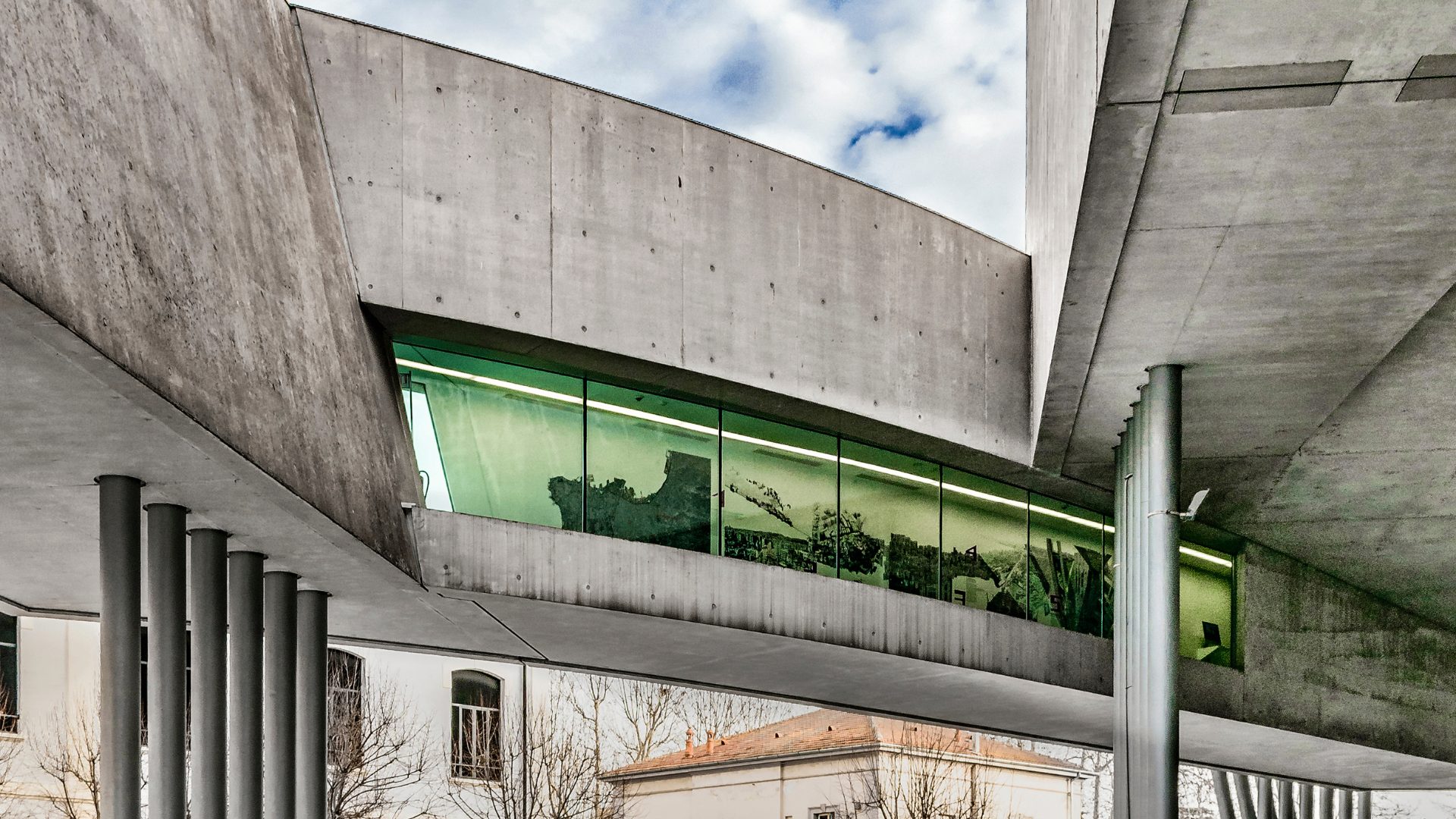
MAXXI Museum
Zaha Hadid's stunning contemporary art and architecture museum
Explore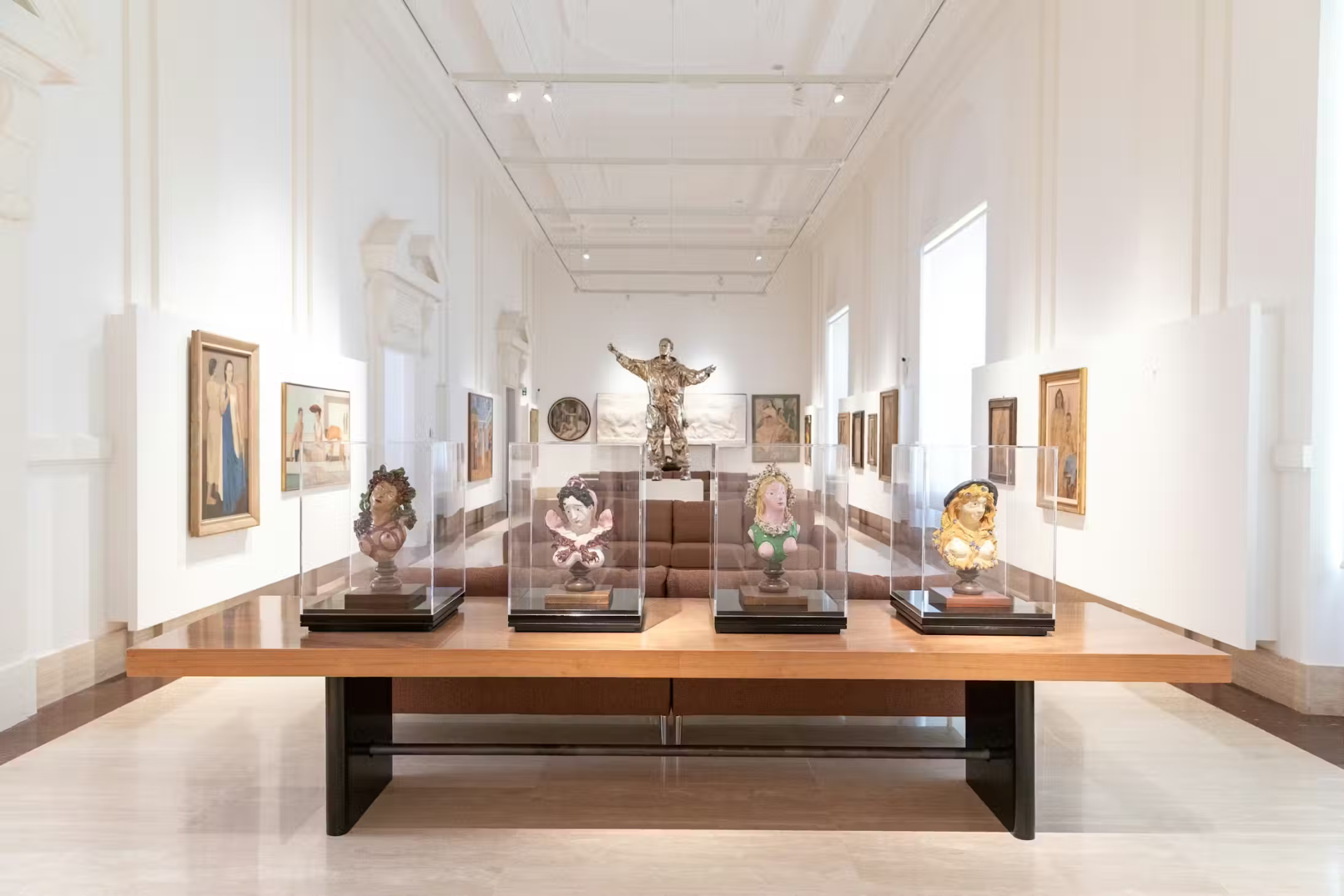
Palazzo Merulana
Hidden gem with 20th-century Italian masterpieces
Explore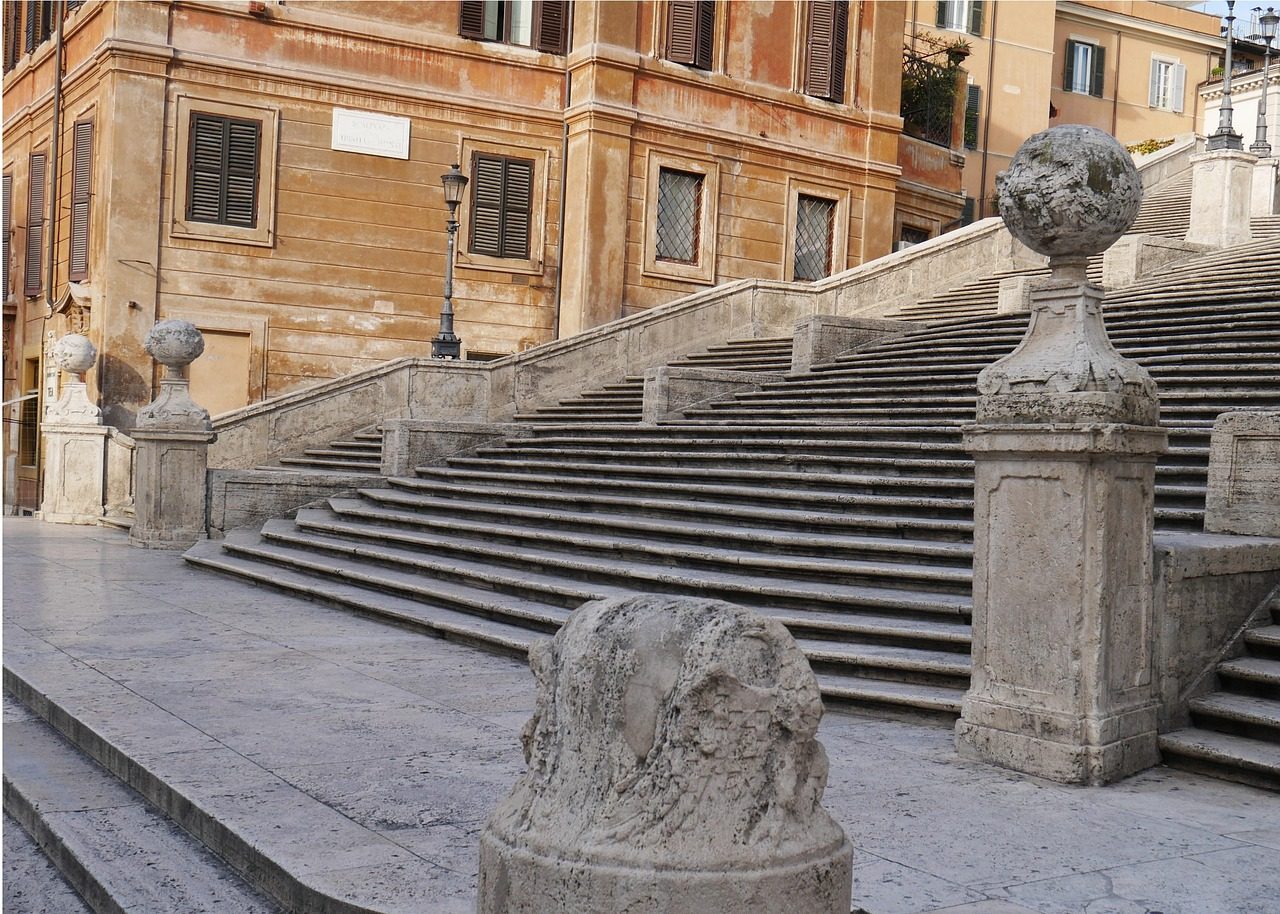
Keats-Shelley House
Where poet John Keats died—Romantic poetry memorabilia at Spanish Steps
Explore
Cinecittà Studios
Hollywood on the Tiber—legendary film studios
Explore
Temple of Venus and Roma
Rome's largest ancient temple—Emperor Hadrian's masterpiece
Explore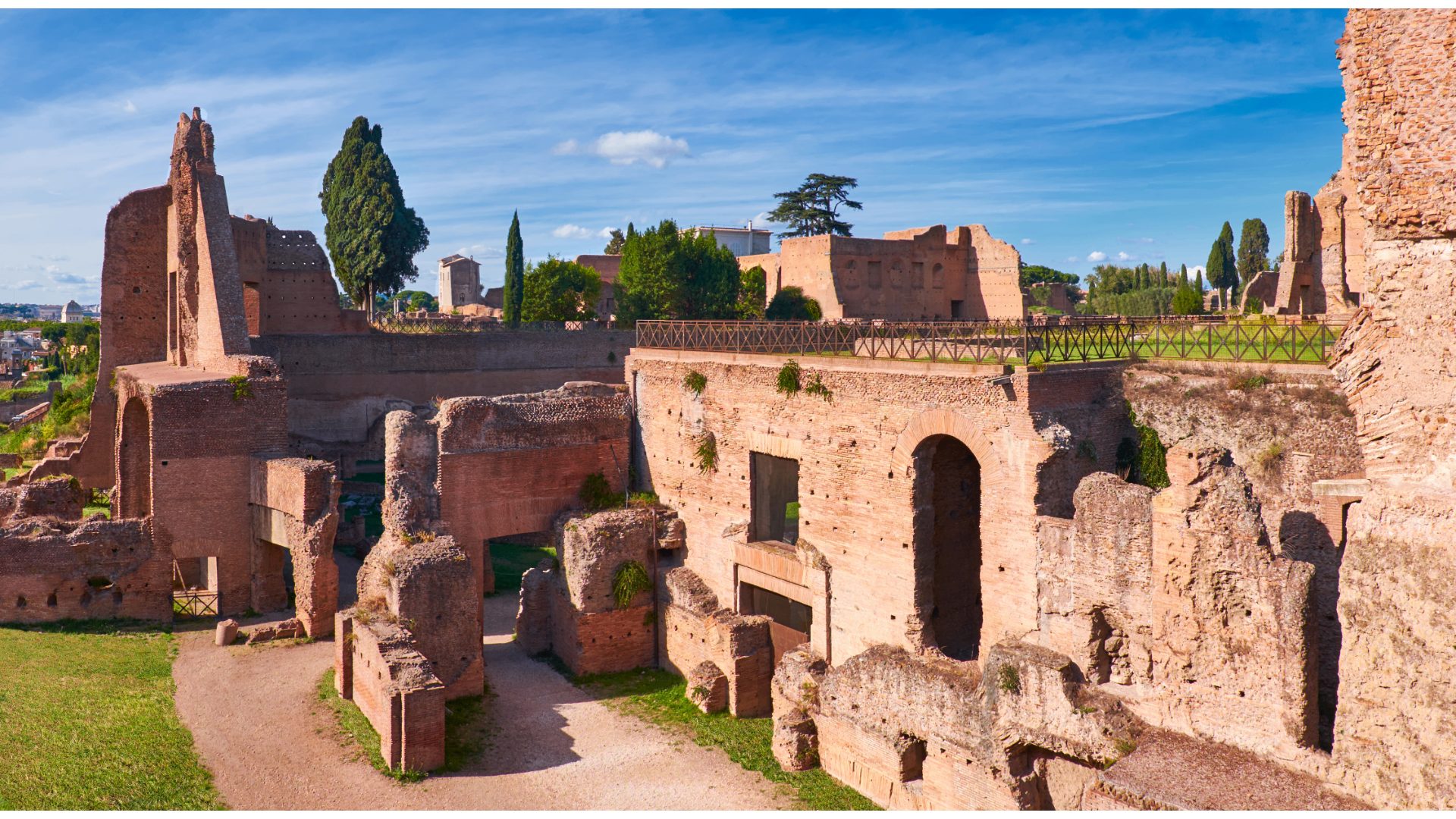
Palatine Hill
Legendary birthplace of Rome and luxurious home of emperors
ExploreQuick Planning Guide
⏱️ Time Needed
1.5–2 hours
💰 Cost
€13 full / €7.50 reduced (ordinary admission)
🎫 Reservation
Optional — useful in summer
♿ Accessibility
Lift, step-free, wheelchairs at cloakroom
📅 Best Time
10:00–12:00 or 16:00–17:30
👨👩👧👦 Family Friendly
Yes — carriages thrill kids
🌡️ Weather
Indoor — perfect rainy-day stop
Nearby Attractions
Piazza Navonafront door
Stadium of Domitianunder the piazza
Pasquino talking statue1-min walk
Campo de' Fiori5-min walk
Pantheon5-min walk
Castel Sant'Angelo12-min walk
Featured In These Itineraries
Hidden Gems of RomeClassic Rome 3-DayRainy Day in RomeEssential Tips
- ✓ Closed Mondays — never come on a Monday
- ✓ Rome/Metropolitan City residents: free admission since Feb 2026 (bring ID)
- ✓ Don't miss the Caligula granite columns on the staircase
- ✓ Temporary exhibitions are priced separately — check before you go
- ✓ Combine with Stadium of Domitian under Piazza Navona