 Temporarily closed for restoration
Stadio di Domiziano
Underground remains of Domitian's ancient athletics stadium beneath Piazza Navona. The archaeological area is currently closed for restoration; no confirmed reopening date has been announced.
Closed for restoration30,000 capacity (historic)Capitoline Games venueVia di Tor Sanguigna 3, 00186 Roma RMOpen on MapPlan Your Visit
Compare tickets, tours and stays — booking ahead usually gives more choice
Book a TourHotels NearbyThe Stadio di Domiziano (Stadium of Domitian) is the ancient Roman stadium hidden 4.5 metres beneath Piazza Navona — and the reason the piazza has its distinctive elongated oval shape. Inaugurated by Emperor Domitian in 80 AD as the first permanent venue in Rome for Greek-style athletic competitions (agones), the 276 × 106 metre arena seated 30,000 spectators and from 86 AD hosted the Certamen Capitolinum, the quadrennial Capitoline Games — Rome's official answer to the Olympics. The standing brick arches and athlete corridors were never demolished; instead they became the foundations of the medieval and baroque buildings that line the modern piazza. The archaeological area is currently closed for restoration and no confirmed reopening date has been announced. Check the official Sovrintendenza Capitolina announcement before travelling.
Why visit the Stadio di Domiziano?
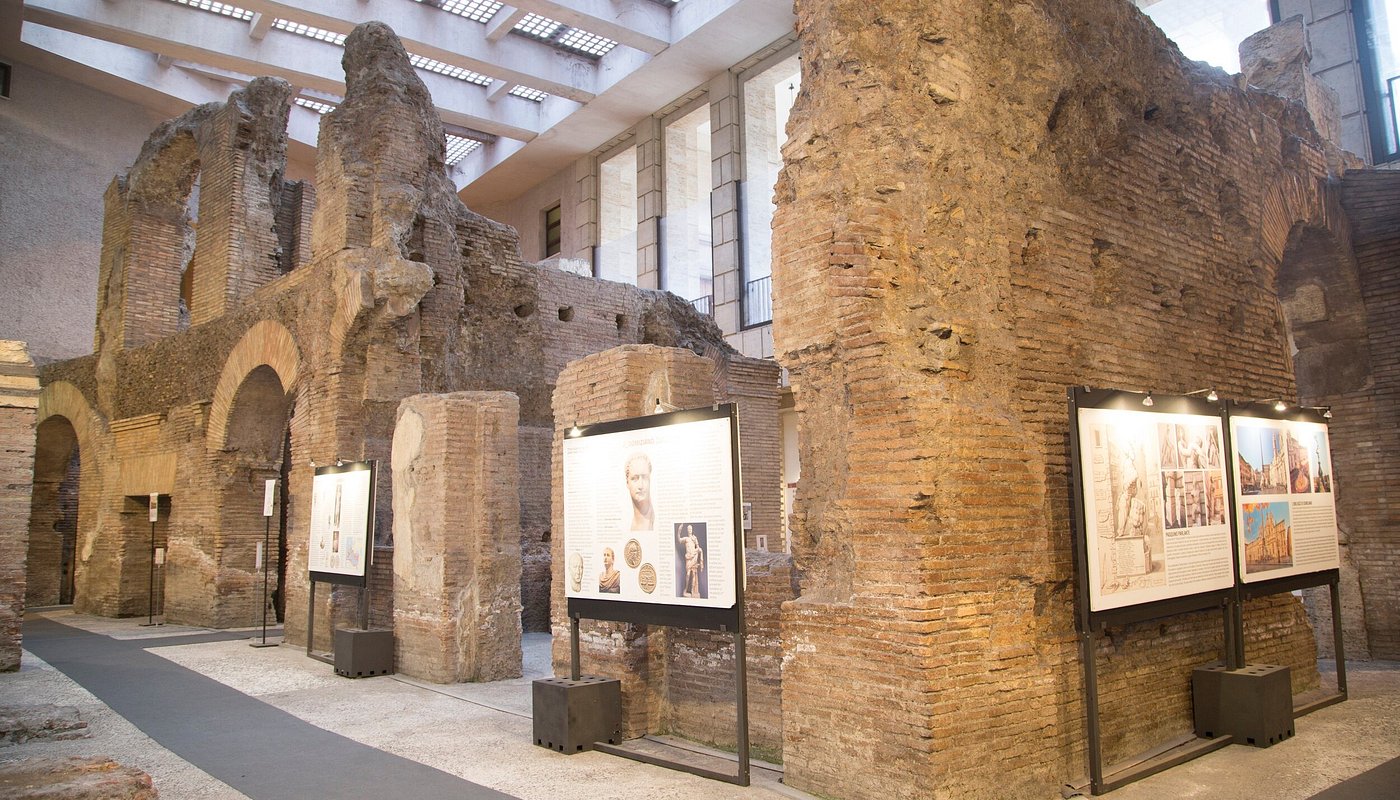
Walking through the ruins of Domitian's Stadium reveals one of Rome's most satisfying urban secrets: Piazza Navona is shaped like a stadium because it literally is a stadium. You stand inside a 2,000-year-old arena that has never been demolished — only built over. No other site in Rome explains so clearly how the modern city is the ancient city, continuously inhabited.
- The reason Piazza Navona is oval: the elongated oval outline of Rome's most famous baroque square is the original 1st-century stadium, preserved exactly. The single best example of urban continuity in the city.
- Rome's first permanent stadium: built specifically for Greek-style athletic games (agones) — foot races, wrestling, boxing, discus — and the venue of the prestigious quadrennial Capitoline Games from 86 AD.
- Original 1st-century brickwork: the massive arches that supported 30,000 spectators are still standing, preserved as the foundations of the medieval houses and baroque palaces above.
- Currently closed for restoration: the underground museum is not open to visitors and no confirmed reopening date has been announced. Check official Sovrintendenza Capitolina updates before planning a visit.
Quick facts
Built
80 AD by Domitian
Capacity
30,000 spectators
Dimensions
276 × 106 metres
Depth
4.5m below street level
Status
Closed for restoration
Reopening
Not yet announced
Hosted
Capitoline Games
Location
Beneath Piazza Navona
Table of Contents
Jump to any section of the itinerary
A brief history
In 80 AD, the same year his brother Titus inaugurated the Colosseum, the new emperor Domitian began construction of a permanent stadium in the Campus Martius for Greek-style athletic competitions. The Colosseum was for Roman blood-sport — gladiators, animal hunts, executions. The Stadium of Domitian was for the agones: nude athletic events on the Greek model that conservative Romans like Pliny the Elder considered scandalously un-Roman. Domitian, a passionate philhellene, was making a deliberate cultural statement — Rome would now host both kinds of games.
The stadium was 276 metres long and 106 metres wide, with a curved short end (north) and an open straight short end (south, where the entry processions emerged from the Campus Martius). The seating tiers, supported on radial brick arches in opus latericium, accommodated 30,000 spectators. In 86 AD Domitian inaugurated the Certamen Capitolinum — the Capitoline Games, a quadrennial festival in honour of Jupiter Capitolinus with three branches: athletic (in the Stadium), equestrian (in the Circus Maximus) and musical/poetic (in the adjacent Odeum). The Capitoline Games became one of the most prestigious athletic festivals in the Mediterranean world and continued well into the late imperial period.
When the Colosseum was damaged by fire in 217 AD, gladiatorial events were occasionally staged at the Stadium of Domitian while repairs were carried out — an exception, not the norm. The stadium was built for and normally used exclusively for Greek-style athletic competitions, and gladiators did not train there. It continued in its athletic function for nearly four centuries. After the collapse of Roman power and the sacks of 410 (Visigoths) and 455 (Vandals), the stadium fell into disuse. Marble seating, statues and decorative elements were progressively stripped for medieval construction; the brick substructures, however, were too useful as foundations and were never demolished.
By the 12th–15th centuries, medieval houses, oratories and small palaces were built directly on top of the standing arches. The arena floor became a public open space known as Campus Agonis — the Field of Competition, from the original Greek agōn — which in Italian dialect contracted to 'n'agone' → 'Navone' → Navona. The adjacent church of Sant'Agnese in Agone preserves the original Latin phrase intact. In 1477 Pope Sixtus IV transferred Rome's main public market to the Campus Agonis — the market remained until 1869.
Between 1644 and 1655, Pope Innocent X Pamphilj transformed the medieval marketplace into the baroque masterpiece we see today: Borromini's Sant'Agnese in Agone (1652), Bernini's Fountain of the Four Rivers (1651), the Pamphilj palace closing the south end. The stadium's outline was preserved exactly. From 1652 to 1866, every August Sunday the drains were closed and the piazza deliberately flooded to a shallow depth for summer entertainment and cooling — a charming echo of the stadium's spectator function, rather than a re-enactment of formal naval battles.
Mussolini-era street works on Via di Tor Sanguigna in 1936–1937 accidentally exposed the original curved north short end of the stadium with several arches still standing to their original height. After decades of conservation, the underground museum opened in 2014 with multimedia exhibits. The archaeological area is currently closed for restoration, with no confirmed reopening date announced. Visitors should check the official Sovrintendenza Capitolina announcement before travelling.
The Stadium through the centuries
80 ADStadium inaugurated
Emperor Domitian completes the stadium as part of his major rebuilding programme after the fire of 80 AD. It is Rome's first permanent venue for Greek-style athletic games (agones) — a deliberate cultural statement of philhellenism.
86 ADCapitoline Games founded
Domitian establishes the Certamen Capitolinum, a quadrennial festival in honour of Jupiter Capitolinus with athletic, equestrian and musical/poetic branches — Rome's official answer to the Olympic Games.
96 ADDomitian assassinated
Domitian is murdered in a palace conspiracy. The Senate decrees damnatio memoriae, but the stadium and Capitoline Games survive untouched and remain politically important under Trajan and the later emperors.
217 ADTemporary gladiatorial use
After a fire severely damages the Colosseum during the reign of Macrinus, gladiatorial events are occasionally held at Domitian's Stadium and other venues while the Colosseum is restored — the stadium was not normally used for gladiatorial training or combat.
4th century ADAthletic games continue
The Capitoline Games remain one of the most prestigious athletic festivals in the Mediterranean world even after Constantine's Christianisation of the empire. The stadium is still in active use as late as the late 4th century.
5th century ADDecline and stripping
After the collapse of Roman power and the Visigothic and Vandal sacks of Rome (410, 455 AD), the stadium falls into disuse. Marble seating, statues and decorative elements are stripped for reuse in medieval buildings; the brick substructures remain.
8th–12th centuryMedieval reuse begins
Small houses, oratories and workshops are built into the standing arches of the stadium. The arena floor becomes a public open space known as 'Campus Agonis' — the Field of Competition, from the original Greek <em>agōn</em>.
1477Public market established
Pope Sixtus IV transfers Rome's main public market from the Capitoline to the Campus Agonis (now Piazza Navona). The market remains here until 1869, when it moves to Campo de' Fiori.
1644–1655Bernini and Pamphilj transformation
Pope Innocent X Pamphilj transforms the medieval marketplace into a baroque masterpiece: Borromini's Sant'Agnese in Agone (1652), Bernini's Fountain of the Four Rivers (1651), the Pamphilj palace closing the south end. The stadium's outline is preserved exactly.
1652–1866Summer flooding tradition
Every August Sunday, the drains of Piazza Navona are closed and the piazza is deliberately flooded to a shallow depth for summer entertainment and cooling. Roman aristocracy and ordinary citizens enjoy the shallow pool in the stadium-shaped square — a charming echo of the stadium's original spectator function, rather than a re-enactment of formal naval battles.
1936–1937First archaeological exposure
Mussolini-era street works on Via di Tor Sanguigna accidentally expose the original curved north short end of the stadium with several arches still standing to their original height. The remains are conserved but not opened to the public.
2014Underground museum opens
After decades of conservation work, the Stadio di Domiziano underground museum opens to visitors with multimedia exhibits, full virtual reconstruction, accessible lift and walkways, and audio guides in seven languages — one of Rome's most modern small museums.
2026Closed for restoration
The underground archaeological area is closed for restoration works. No confirmed reopening date has been announced — check official Sovrintendenza Capitolina communications for updates.
What to see at the Stadio di Domiziano
Stadium Substructures
- Massive 1st-century brick arches (opus latericium) that supported the seating tiers for 30,000 spectators.
- The original radial corridors used by athletes and spectators to access the seating banks.
- A preserved section of the curved north short end — the only part of the stadium where original walls still stand to several metres of height.
- The foundation footprint that defined the modern outline of Piazza Navona and is still legible in every building above.
Archaeological Layers
- Medieval houses built directly into the standing Roman arches — visible at multiple points in the museum.
- Renaissance modifications (15th–17th century) where the brickwork was reinforced for the buildings of the modern piazza above.
- Evidence of more than 1,800 years of continuous urban reuse of the same load-bearing structure.
- The 4.5-metre vertical section showing the rise of street level over Roman, medieval, Renaissance and modern Rome.
Multimedia Experience
- Full virtual reconstruction of the stadium at its 1st-century peak — projected 360° in the central exhibition room.
- Animated reconstructions of the Greek-style athletic events: foot race (stadion, dolichos, hoplitodromos), wrestling, boxing, pankration, discus, javelin and long jump.
- Period costume, athletic equipment and the oak crown awarded to victors — interactive displays.
- Multi-language audio guide narrating the stadium's history and the Capitoline Games (English, Italian, French, Spanish, German, Portuguese, Russian).
Connection to Piazza Navona
- A scale model showing the modern piazza overlaid on the ancient stadium — the single clearest visual explanation in any Rome museum of how a buried monument can shape an entire neighbourhood.
- Display panels explaining why Bernini's Fountain of the Four Rivers and Della Porta's twin fountains are positioned exactly along the line of the ancient spina.
- Photographs of the 17th–19th century naval mock-battles when the piazza was deliberately flooded each August.
- The museum is currently closed for restoration; this multimedia display is unavailable until the site reopens.
The Capitoline Games — Rome's answer to the Olympics
The Certamen Capitolinum (Capitoline Games), founded by Domitian in 86 AD, were the most ambitious cultural project of his reign. The model was explicit: Rome would have its own quadrennial festival modelled on the Greek Olympic, Pythian, Nemean and Isthmian games — the so-called Periodos or 'Circuit' of the four great Greek athletic festivals. Winners would receive an oak crown rather than money, in deliberate imitation of Greek athletic tradition.
The festival had three branches. The athletic events took place in the Stadium of Domitian: the foot races (the stadion over 200m, the dolichos over 4,000m, the hoplitodromos in armour), wrestling, boxing, the brutal pankration (a no-holds-barred combat sport), the discus, the javelin and the long jump. The equestrian events — chariot races and horse races — took place in the Circus Maximus. The musical and poetic events — Greek and Latin oratory, Greek and Latin verse, lyre singing, kithara playing, choral music — took place in the Odeum of Domitian, the smaller covered theatre that stood just south of the stadium under what is now the curved facade of Palazzo Massimo alle Colonne.
The Capitoline Games attracted competitors from across the Greek-speaking eastern Mediterranean as well as from Rome and the Latin west. Inscriptions across the empire record victories in the Capitolia as one of the most prestigious additions an athlete could make to his career — comparable to an Olympic victory. The festival continued into the late 4th century, well after Constantine's Christianisation of the empire, and was finally suppressed only at the very end of the western Roman period.
The multimedia exhibits in the underground museum reconstruct the events vividly — the costumes, the equipment, the rituals, the announcements, the oak-crown ceremony. Stand in the original brick corridor that 1st-century athletes used to enter the arena and the historical imagination does the rest.
Domitian the philhellene — why the emperor built it
Domitian (emperor 81–96 AD), the youngest son of Vespasian and brother of Titus, has had a famously bad press — the historians Tacitus and Suetonius both wrote under his successors and depicted him as a paranoid autocrat. Modern scholarship has substantially rehabilitated him: his reign was one of the most stable and architecturally productive of the early empire, with major rebuilding of central Rome after the fires of 64 (under Nero), 69 (the year of four emperors) and 80 (under Titus).
He was also a passionate philhellene — a lover of Greek culture, athletics, music and poetry. The Colosseum, inaugurated by his brother Titus in 80 AD, had been built specifically for Roman blood-sport: gladiatorial combat, animal hunts, public executions. Domitian wanted Rome also to have a permanent venue for Greek-style athletic competition — the agones — which conservative Romans like the elder Pliny considered scandalously un-Roman because it involved nudity and was modelled on Greek rather than Italic tradition.
His response was to build two purpose-designed venues in the Campus Martius: the Stadium of Domitian for the athletic competitions and the Odeum of Domitian for the musical and poetic competitions. Together they hosted the Capitoline Games from 86 AD. Domitian himself attended every edition of the Games and personally awarded the oak crowns to the victors. The cultural statement was unmistakable: Rome would not just import Greek games as occasional spectacle — it would host them in permanent purpose-built venues, on equal footing with the Colosseum.
The strategy succeeded. The Capitoline Games continued for more than three centuries after Domitian's assassination in 96 AD, and the Stadium of Domitian survived as Rome's principal Greek-style athletic venue until the collapse of the western empire. Domitian himself was condemned to damnatio memoriae by the Senate after his murder — but his stadium and his Games remained politically and culturally untouchable. The single most lasting trace of his reign is the shape of Piazza Navona above.
Stadio di Domiziano vs other underground Rome sites
| Feature | Stadio di Domiziano | Domus Aurea | San Clemente |
|---|---|---|---|
| Era of main monument | 80 AD (Domitian's stadium) | 64–68 AD (Nero's palace) | 2nd–4th c. (Mithraeum + basilica) |
| Depth | 4.5m below piazza | 9m below Oppian Hill | 10m, three levels |
| Visit format | Unavailable while closed | 75-min mandatory guided tour | Self-guided + audio guide |
| Entry 2026 | Closed for restoration | €26 with educational visit and VR; Friday–Sunday | €10 (€5 reduced) |
| Open days | Currently closed — no date announced | Saturdays & Sundays only | Mon–Sun (Sun PM only) |
| Wheelchair access | Unconfirmed while closed | Limited — first 3 rooms only | None — 60+ steep steps |
| Best for | Urban continuity + ancient sport | Imperial luxury + VR | Layered urban Rome + frescoes |
| Status | Temporarily closed for restoration | Open weekends | Open |
Verdict: the archaeological area of the Stadio di Domiziano is currently closed for restoration and no reopening date has been announced, so it cannot be planned into a trip at the moment. Piazza Navona above it remains free to visit at any hour. For underground Rome right now, the Domus Aurea and San Clemente are the reliable options.
Current status
The Stadio di Domiziano underground museum is currently closed for restoration and no confirmed reopening date has been announced. Please check the official Sovrintendenza Capitolina announcement for the latest status before including it in your itinerary. Piazza Navona above ground remains open and free to visit at any time.
Getting there
Walking from the centre (best)
Piazza Navona is in the absolute heart of the historic centre. From the Pantheon 5 minutes west; from Campo de' Fiori 10 minutes north; from Piazza Venezia 15 minutes north-west. The museum entrance is at Via di Tor Sanguigna 3, on the north side of the piazza behind the Fountain of the Four Rivers — a small modern doorway, easy to walk past.
Bus
Buses 30, 70, 81, 87, 130F, 492, 628 all stop on Corso del Rinascimento or Lungotevere — 3–5 minutes' walk from the entrance. Bus 40 Express from Termini stops at Largo di Torre Argentina, 10 minutes' walk south.
Tram & Metro
Tram 8 from Trastevere stops at Largo di Torre Argentina, 10 minutes' walk. The closest metro stations — Spagna (Line A) and Barberini (Line A) — are both 15 minutes' walk; the historic centre is not directly served by the metro.
Find the entrance
The museum entrance is a small modern doorway with a discreet 'Stadio di Domiziano' banner at Via di Tor Sanguigna 3, on the curved north short end of Piazza Navona behind the Fountain of the Four Rivers. The site is currently closed for restoration, so the entrance is not accessible to visitors — but Piazza Navona above remains open.
Common mistakes to avoid
Walking past the entrance
The entrance is a small modern doorway at Via di Tor Sanguigna 3, on the north side of the piazza behind the Fountain of the Four Rivers. There is no grand archaeological gate — look for the discreet 'Stadio di Domiziano' sign. Most visitors walk over the stadium without realising it is there.
Visiting the piazza first
The piazza makes much more visual sense after you have seen the stadium below. Visit the underground museum first, then emerge into Piazza Navona — you will see Bernini's fountains, the curved buildings and the elongated oval shape with completely different eyes.
Skipping the multimedia projection
The central 360° projection of the stadium reconstruction is the highlight of the museum, but it is easy to walk past if you head straight for the brick arches. Time your visit to catch the full 8-minute cycle — it transforms the experience of the rest of the rooms.
Confusing it with the Crypta Balbi
Two small underground museums in the historic centre are sometimes confused: the Stadio di Domiziano (under Piazza Navona) and the Crypta Balbi (under Via delle Botteghe Oscure). They are different sites with different tickets — the Crypta Balbi covers later Roman and medieval Rome and is part of the Museo Nazionale Romano.
Assuming the museum is open
The underground archaeological area is currently closed for restoration, with no confirmed reopening date. Check the official Sovrintendenza Capitolina announcement before travelling so you are not caught out on arrival.
Not checking official closure updates
Because the site is closed for restoration with no confirmed reopening date, relying on outdated guidebooks or third-party ticket sites can lead to disappointment. Check the official Sovrintendenza Capitolina announcement directly before planning your visit.
Insider tips from locals
Visit Piazza Navona anyway
While the underground museum is closed, Piazza Navona above remains fully open and free — the Fountain of the Four Rivers, Sant'Agnese in Agone and the elongated oval shape of the square are all still there to enjoy.
Walk the curved facade of Palazzo Massimo alle Colonne
Walk 3 minutes south on Corso del Rinascimento to see Palazzo Massimo alle Colonne (Baldassare Peruzzi, 1532) — its curved facade follows the line of the Odeum of Domitian, the smaller theatre that hosted the musical and poetic competitions of the Capitoline Games. The fossilised cavea is hiding in plain sight.
Eat lunch at Cul de Sac or Fraschetteria Brunetti
Skip the tourist traps directly on Piazza Navona. Cul de Sac (Piazza Pasquino, 3 minutes south) is a Roman wine-bar institution; Fraschetteria Brunetti (Via Tor Sanguigna 5, near the closed museum) does excellent panini in original Roman style.
Check official reopening updates
Before planning a Rome itinerary that includes the Stadio di Domiziano, check the official Sovrintendenza Capitolina announcement for the latest status — no reopening date has been confirmed.
Consider alternative underground sites nearby
While the Stadio is closed, other underground archaeological sites in Rome such as the Domus Aurea and San Clemente remain open and offer a similar 'underground Rome' experience.
Practical visitor tips
Find the Entrance
The museum entrance at Via di Tor Sanguigna 3 is easy to miss. Look for a small modern doorway with discreet signage on the north side of the piazza, behind the Fountain of the Four Rivers.
Photography Tips
Lighting is atmospheric but dim. Use a phone with good low-light capability. The brick arches photograph beautifully — no flash or tripod allowed.
Underground First
Visit the underground museum first, then emerge into Piazza Navona with fresh eyes. You will see the square completely differently knowing what lies beneath.
Watch the Multimedia
Don't skip the central 360° projection — it brings the ancient stadium to life and is the single best way to visualise the scale of what you are walking through.
Where to Stay Near Stadio di Domiziano
Looking for convenient accommodation near Stadio di Domiziano? Stay within walking distance to make the most of your visit.
Hotels Near This AttractionTop Rated HotelsBudget-Friendly OptionsLuxury HotelsCentral locations with easy access to Stadio di Domiziano and other attractionsFrequently Asked Questions
What is the Stadio di Domiziano?
The Stadio di Domiziano (Stadium of Domitian) was the first permanent stadium in the city of Rome, built by Emperor Domitian and inaugurated in 80 AD as the venue for Greek-style athletic competitions (agones). It measured 276 × 106 metres, seated approximately 30,000 spectators and hosted foot races, wrestling, boxing, the discus, the javelin and the long jump. Its elongated oval arena is preserved today in the exact shape of Piazza Navona above, which was built directly on the stadium's foundations during the medieval period.
Why is Piazza Navona shaped like a stadium?
Because it literally is a stadium. Medieval and Renaissance buildings were constructed directly on top of the standing remains of Domitian's Stadium, using its outer walls as foundations and its arena floor as the new street level. The piazza preserves the stadium's original 276-metre-long elongated oval with one curved short end (north) and one straight end (south, closed by the Pamphilj palace), and even the central spina is fossilised in the line of fountains by Bernini and Della Porta. It is one of the world's most striking examples of urban continuity.
Is the Stadio di Domiziano open in 2026?
No — the archaeological area is currently closed for restoration and no confirmed reopening date has been announced. Check the official Sovrintendenza Capitolina announcements before travelling for the latest status.
What can you see underground?
You walk 4.5 metres below modern street level among the original 1st-century brick substructures of the stadium — the massive arches that supported the seating tiers, the radial corridors used by athletes and spectators, the foundations of the seating banks, and a preserved section of the curved north short end (the only part of the stadium where original walls still stand to several metres). Multimedia exhibits include a full virtual reconstruction of the stadium at its 1st-century peak, animations of the athletic events, period costume and equipment, and a model showing how the modern piazza sits exactly on the ancient outline.
What were the Capitoline Games?
The Certamen Capitolinum (Capitoline Games), founded by Domitian in 86 AD, were Rome's official answer to the Olympic Games — a quadrennial festival held in honour of Jupiter Capitolinus, with three branches of competition: athletic (in the Stadium of Domitian), equestrian (in the Circus Maximus) and musical/poetic (in the Odeum, the smaller theatre Domitian built next door on the site of today's Palazzo Massimo alle Colonne). Winners received an oak crown rather than money, in deliberate imitation of Greek athletic tradition. The games continued well into the late imperial period and were among the most prestigious in the Mediterranean world.
Where is the entrance?
The museum entrance is at Via di Tor Sanguigna 3, on the north side of Piazza Navona, just behind the Fountain of the Four Rivers and around the curved short end of the piazza. It is a small modern doorway with discreet signage, easy to walk past — look for the 'Stadio di Domiziano' banner on the wall. The closest bus stops are along Corso del Rinascimento; the closest tram is line 8 at Largo di Torre Argentina (10 minutes' walk).
When will the museum reopen?
The site is closed for restoration with no confirmed reopening date. Visitors should check the official Sovrintendenza Capitolina announcement before planning a visit.
Is the Stadio di Domiziano good for children?
Yes — particularly good for ages 7+. The multimedia reconstructions of athletes competing, the scale model of the stadium with the piazza overlaid above it, and the fact that you are walking inside an actual ancient stadium make it one of the most child-friendly Roman archaeological sites. Audio guides have a children's version. Strollers can be brought down via the lift. Visit length (45–60 minutes) suits family attention spans well.
Is the museum wheelchair accessible?
The site is currently closed for restoration, so accessibility arrangements cannot be confirmed. Check the official Sovrintendenza Capitolina announcement for accessibility details once the site reopens.
Can I take photos inside?
Yes, photography for personal use is permitted (no flash, no tripod, no commercial use). The atmospheric lighting on the brick arches makes for excellent shots — bring a phone with night mode (iPhone 12+, Pixel 6+) for the best results. The multimedia projection room is the brightest section. Photography in the bookshop is forbidden.
Why did Domitian build the stadium?
Domitian (emperor 81–96 AD) was a passionate philhellene — a lover of Greek culture, athletics, music and poetry. The Colosseum (inaugurated by his brother Titus in 80 AD) had been built specifically for Roman blood-sport entertainment: gladiatorial combat and animal hunts. Domitian wanted Rome also to have a permanent venue for Greek-style nude athletic competition (which Roman conservatives like Pliny the Elder considered scandalously un-Roman). The stadium and the adjacent Odeum were his deliberate cultural statement — Rome would now host both the Roman games of the Colosseum and the Greek games of the Capitoline festival.
What happened to the stadium after the Roman Empire?
The stadium remained in use for athletic events through the 4th century. After Roman power collapsed in the 5th century, the structure was gradually stripped of its marble seating, statues and decorative elements for use in medieval Roman buildings. The standing brick arches and substructures, however, were never demolished — they were too useful as foundations. By the 12th–15th centuries, medieval houses, churches and small palaces were built directly on top, using the ancient walls as load-bearing structure. The arena floor became the public market square ('Campus Agonis' → 'Navone' → 'Navona'), and the curved outline of the stadium became the curved outline of the piazza we see today.
Why is the piazza called 'Navona'?
The name 'Navona' is a corruption of the Latin <em>in agone</em> ('in the place of athletic competition'), referring to the Greek-style games (Greek <em>agōn</em>) that Domitian hosted here. In medieval Italian this became 'in agone' → 'n'agone' → 'Navone' → 'Navona'. The adjacent church of Sant'Agnese in Agone preserves the original phrase intact. The popular folk etymology connecting the name to <em>navi</em> ('ships') and the 17th-century practice of flooding the piazza for summer entertainment is charming but historically secondary — the flooding tradition came centuries after the name was already established.
Why was Piazza Navona flooded in the past?
From the 17th to the 19th century, the central drains of Piazza Navona were closed in August and the piazza was deliberately flooded to a shallow depth — turning the stadium-shaped square into a shallow pool used for summer entertainment and cooling, where Roman aristocracy in carriages and ordinary Romans on foot would enjoy the water. The tradition was inaugurated by the Pamphilj family (whose palace closes the south end of the piazza) in 1652 and continued every August Sunday until 1866, when the cobblestones were re-levelled and the drains reopened. It is a charming historical echo of the stadium's original function as a public spectacle, though it was recreational flooding rather than a re-enactment of formal naval battles.
Can I still visit Piazza Navona while the museum is closed?
Yes — Piazza Navona itself remains fully open and free to visit, with the Fountain of the Four Rivers, Sant'Agnese in Agone and the surrounding cafés. Only the underground archaeological area beneath the piazza is currently closed for restoration. Nearby sights such as the Pantheon (5 minutes' walk), Sant'Ivo alla Sapienza and Palazzo Altemps remain open and make good substitutes for the underground visit.
Are there any nearby Domitian-era sites?
Yes. The Odeum of Domitian — the smaller covered theatre for the musical and poetic competitions of the Capitoline Games — stood just south of the stadium under what is now the Palazzo Massimo alle Colonne (a curved palace by Baldassare Peruzzi, 1532, whose facade follows the line of the Odeum's curved cavea). The Pantheon, rebuilt by Hadrian a generation after Domitian, is 5 minutes east. The Stadium of Domitian and the Odeum together formed the largest cultural complex of late 1st-century Rome — visiting the underground museum and then walking the curved facade of Palazzo Massimo brings the whole complex to life.
Related Attractions
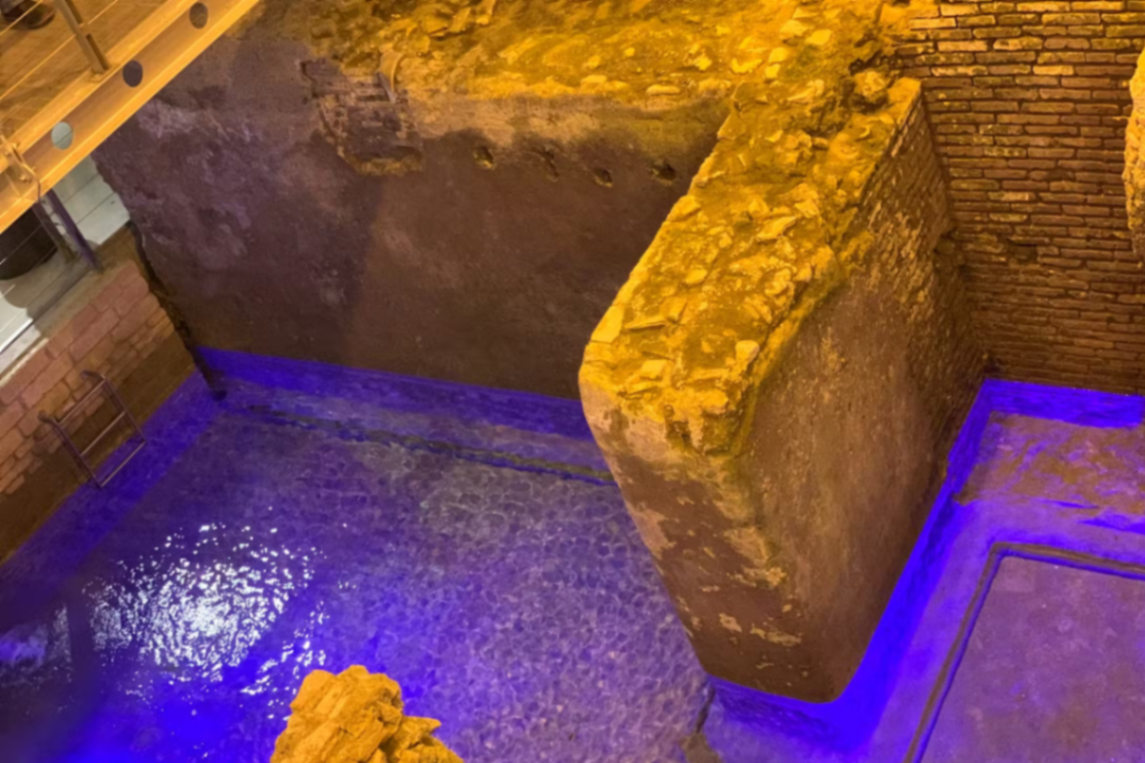
Vicus Caprarius
Ancient ruins linked to the Aqua Virgo aqueduct beneath the Trevi district
Explore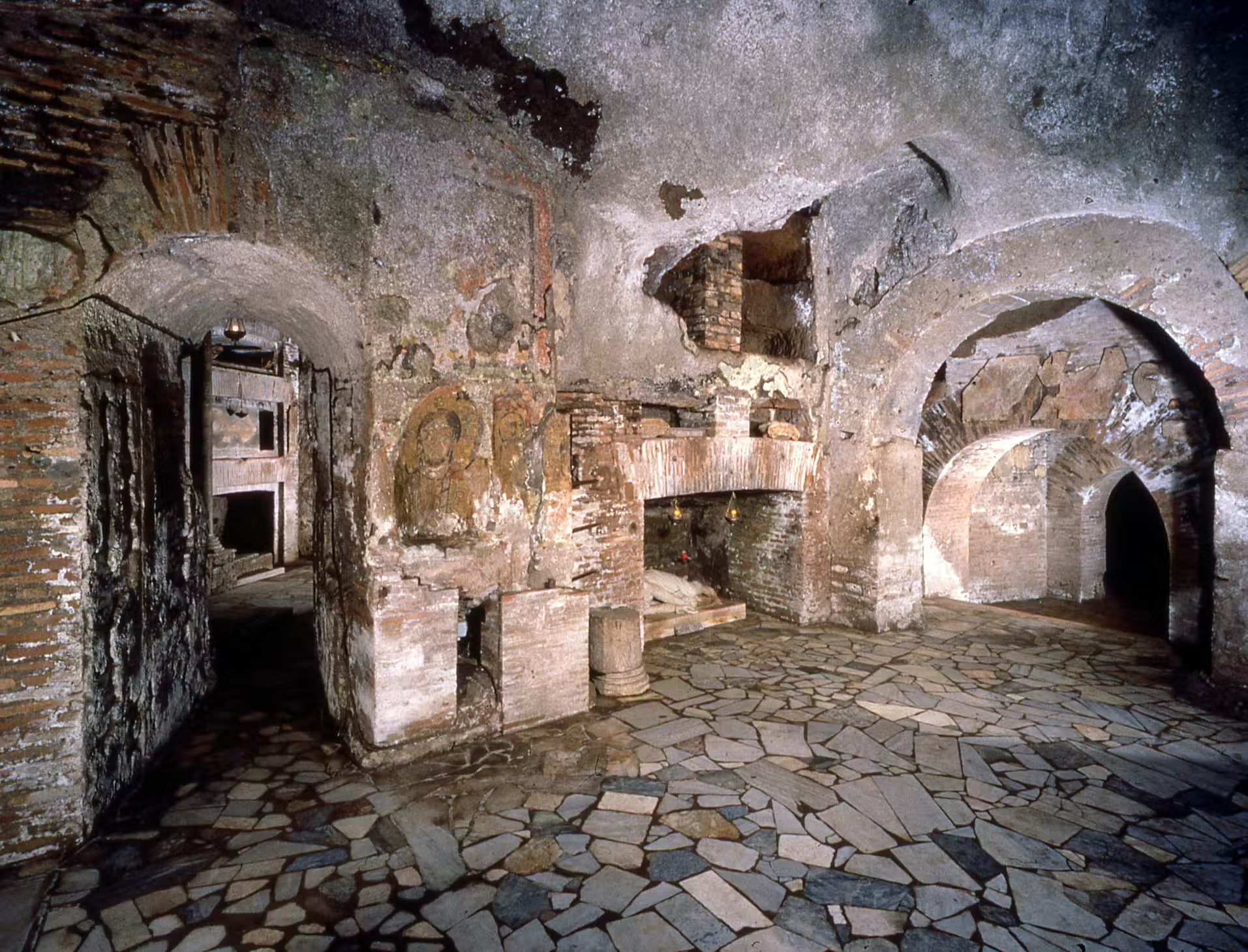
Catacombs of Saint Callixtus
Rome's largest Christian catacombs—20km of tunnels, 16 popes
Explore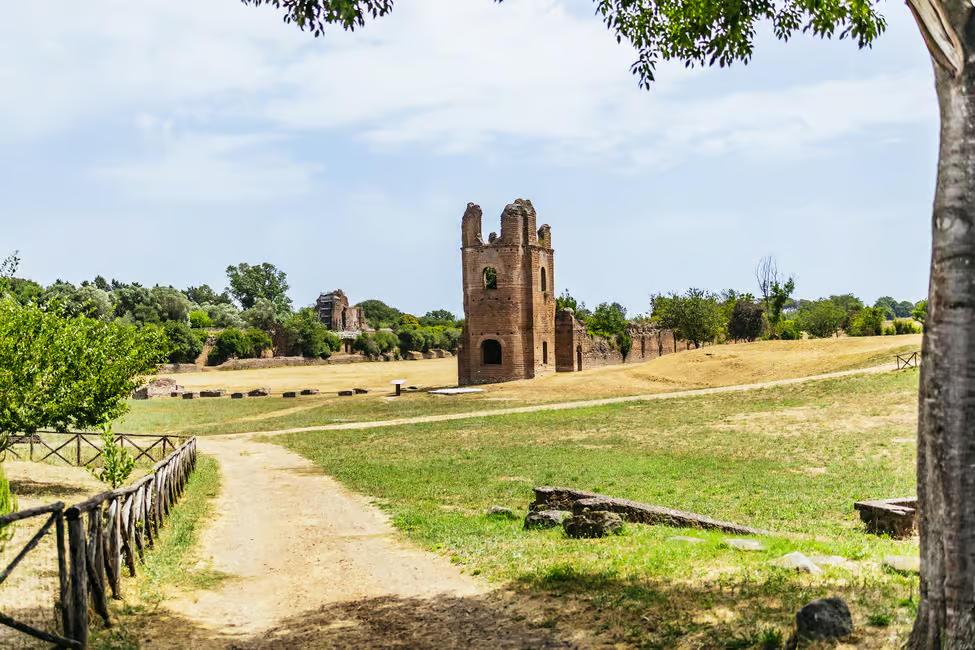
Appian Way
The Queen of Roads—walk on 2,300-year-old Roman paving stones
Explore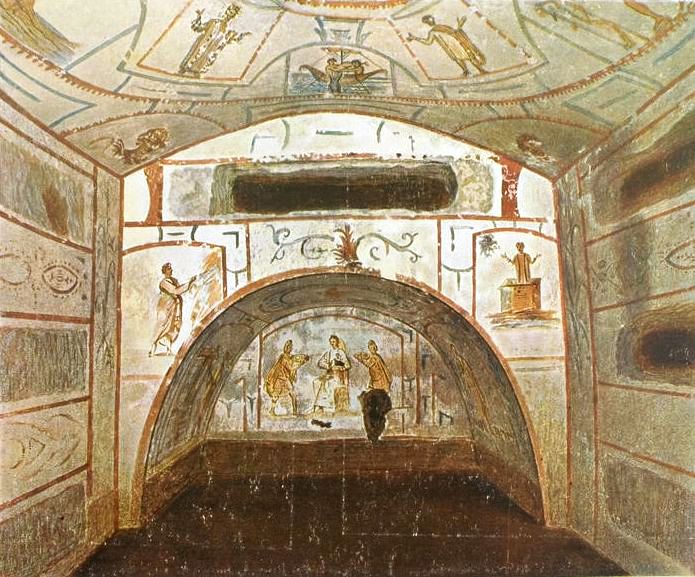
Catacombs of Marcellinus & Peter
900+ painted biblical scenes—Rome's finest early Christian frescoes
Explore
Orto Botanico
12-hectare botanical paradise with Japanese garden
Explore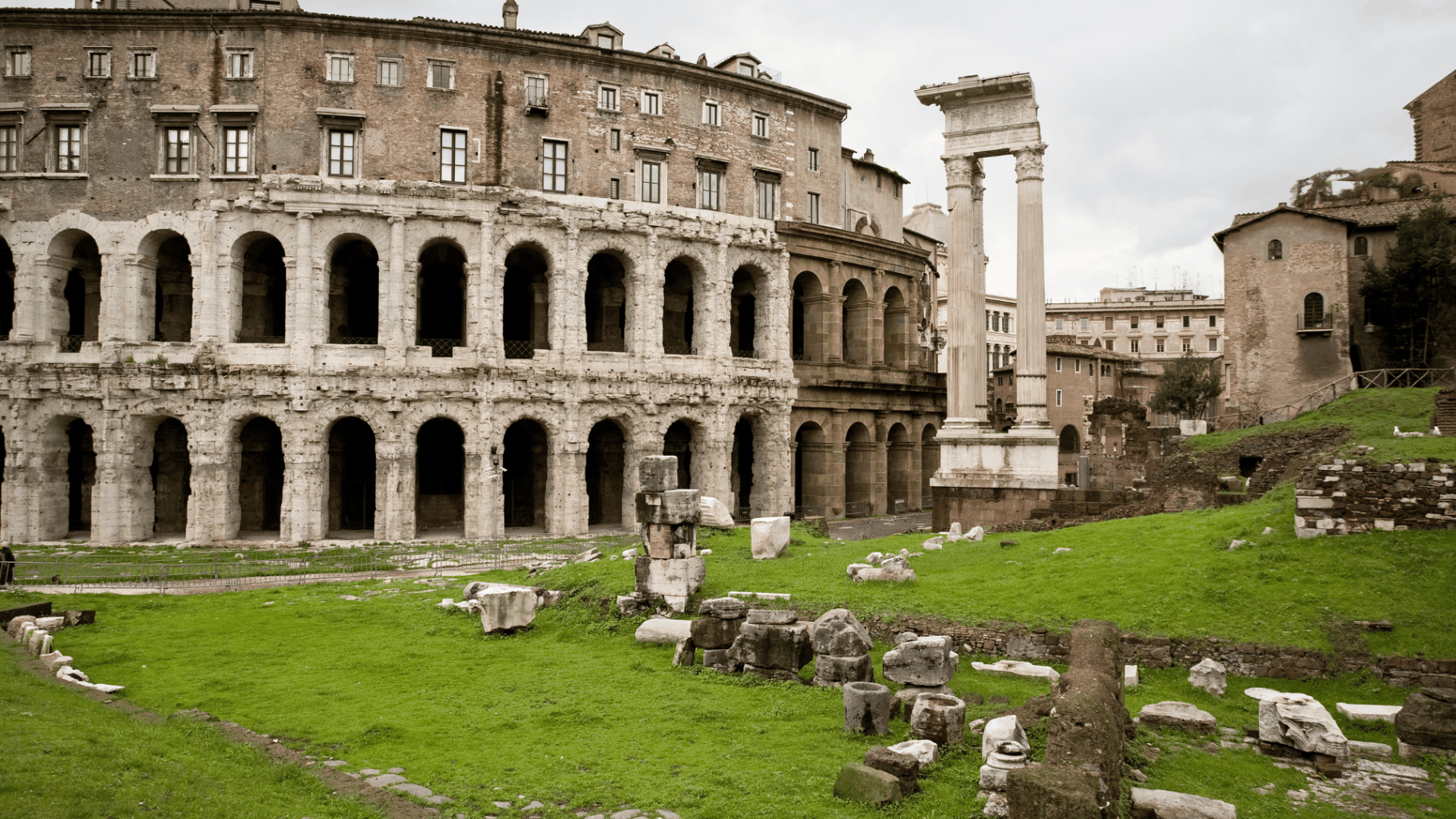
Theatre of Marcellus
Ancient Roman theater that inspired the Colosseum
ExploreQuick Planning Guide
⏱️ Time Needed
N/A — closed for restoration
💰 Cost
N/A — closed, no ticketing currently active
🎫 Reservation
N/A — site closed
♿ Accessibility
Unconfirmed while closed
📅 Best Time
Check official reopening announcement
👨👩👧👦 Family Friendly
N/A — site closed
🌡️ Weather
N/A — site closed
Nearby Attractions
Piazza Navonadirectly above
Pantheon5-minute walk
Sant'Ivo alla Sapienza — Borromini courtyard3-minute walk
Palazzo Altemps — Ludovisi sculptures5-minute walk
Sant'Agostino — Caravaggio's Madonna of the Pilgrims5-minute walk
Campo de' Fiori10-minute walk
Featured In These Itineraries
Hidden Gems of RomeClassic Rome in 3 DaysRome Rainy DayEssential Tips
- ✓ Currently closed for restoration — no confirmed reopening date
- ✓ Check the official Sovrintendenza Capitolina announcement before travelling
- ✓ Piazza Navona above remains open and free to visit
- ✓ Entrance was at Via di Tor Sanguigna 3, on the north side of the piazza
- ✓ Consider nearby open sites such as the Pantheon in the meantime