11 Underground Rome Sites: Catacombs, Crypts and Hidden Ruins
Updated · 14 min read · By the AllTrips Rome editorial team
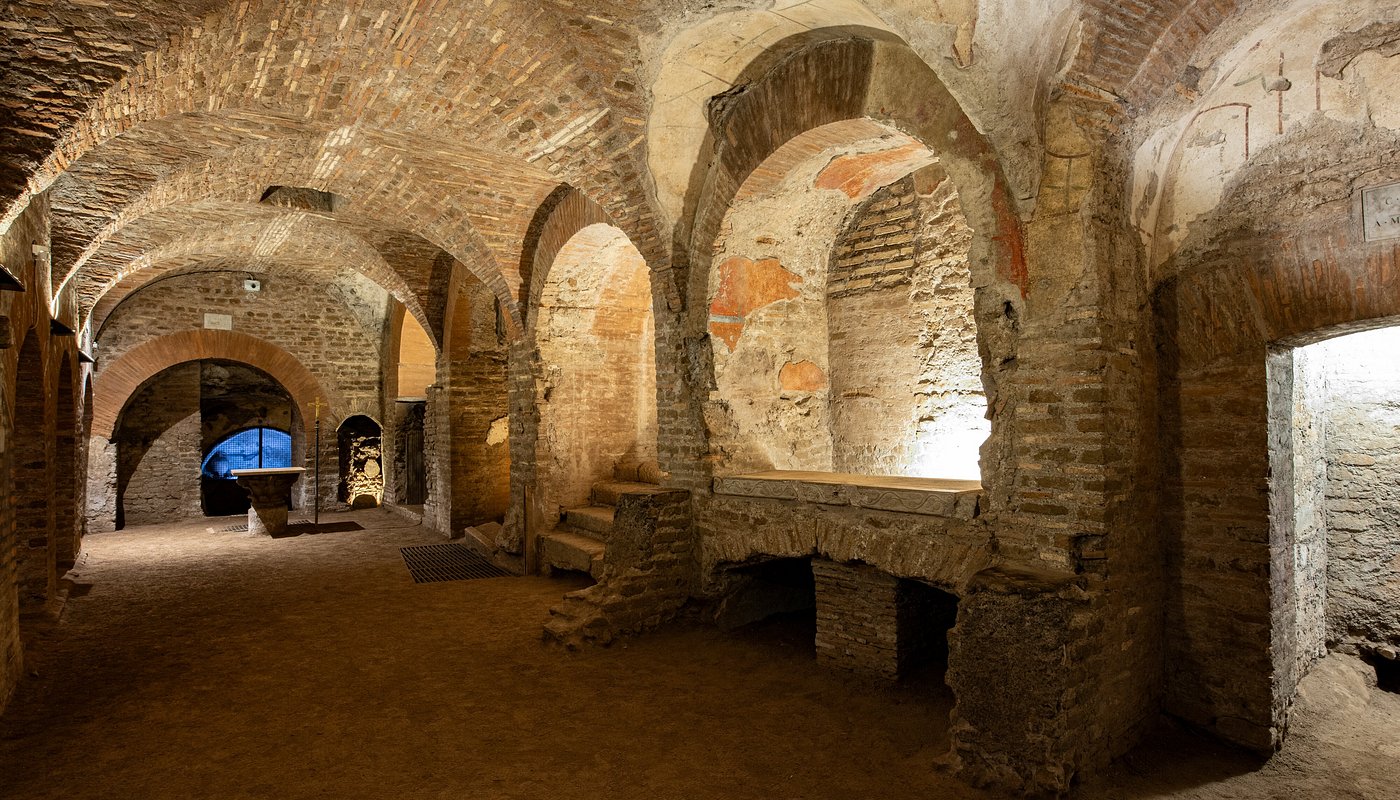
Much of modern Rome sits several metres above the city the emperors knew — the depth varies from place to place, and a surprising amount of that buried layer is open to visitors. Underneath modern streets there are catacombs run by the Pontifical Commission for Sacred Archaeology, an imperial palace, a bone-lined crypt, a Persian mystery temple, an aqueduct cistern and the state prison of the Republic.
The problem is that these sites are managed by completely different bodies — the Vatican, the Italian state, the Dominicans, the Capuchins, private foundations — with different prices, booking systems and opening days. This guide compares the eleven most worthwhile ones on the six things that actually decide your plan: price, duration, accessibility, atmosphere, location and whether you must book ahead.
Underground Rome at a glance
| Site | Price 2026 | Duration | Booking | Access | Where |
|---|---|---|---|---|---|
| Basilica di San Clemente and its Mithraeum (three levels) | Upper basilica free; €10 for the underground levels including the Mithraeum (€5 reduced) | 60–90 minutes total including the upper basilica; the booked underground excavations slot itself is about 30 minutes | Book ahead | Steep stairs down two levels; no step-free route to the lower excavations | Via Labicana, about 5 minutes' walk from the Colosseum |
| Domus Aurea (Nero's Golden House) | €26 educational visit with VR; a limited €18 admission-only option is offered at specified times | About 75–90 minutes | Book ahead | Hard hats required, uneven surfaces, the official site lists it as an accessible area, but ask about the specific visit route when booking | Oppian Hill, directly above the Colosseum |
| Catacombs of Priscilla | €10 on site, €7 children and reduced categories, free for young children; buying the ticket online adds a €2 surcharge — check the current tariff when booking | About 45 minutes (guided tour included) | Book ahead | Stairs and uneven tunnel floors; not step-free | Via Salaria 430, about 4 km north of the centre |
| Catacombs of San Sebastiano | €10 adult, €7 reduced (7–16 and students under 25), free under 7 | 1–1.5 hours including the basilica | Recommended | Stairs; not step-free | Via Appia Antica 136 |
| Catacombs of San Callisto | €10 adult, €7 reduced (7–15, students under 25), free under 7 | About 45–60 minutes | Recommended | Long staircases and sloping galleries; not step-free | Via Appia Antica 110–126 |
| Catacombs of Domitilla | €10 full, €7 reduced | 45–60 minutes (guided tour) | Recommended | Stairs into the tunnels; not step-free | Via delle Sette Chiese 282, near the Appian Way |
| Catacombs of Sant'Agnese | Catacombs €10 adult, €7 reduced; the basilica above has its own separate arrangements | About 40–50 minutes underground | Recommended | Stairs; the basilica is easier to reach than the tunnels | Via Nomentana, bus 90 from Termini |
| Capuchin Crypt (Bone Chapel) | €10 adult, €6.50 reduced (audio guide included); buying online on the official site adds €1.50 per ticket | 45–60 minutes with the museum | Recommended | The museum has lift access; the crypt has three steps and motorised wheelchairs cannot enter | Via Veneto, 5 minutes from Piazza Barberini |
| Vicus Caprarius — the City of Water | €4 full, €2.50 reduced, €1 for ages 14–17, free under 14 (audio guide €3.50) | 30–45 minutes | Book ahead | The first room is reachable by lift; the lower cisterns need stairs | Vicolo del Puttarello 25, two minutes from the Trevi Fountain |
| Mamertine Prison (Carcer Tullianum) | €10 adult, €5 reduced | 30–45 minutes | Walk-in OK | Steep stairs into the lower chamber | Clivo Argentario, on the slope between the Forum and the Capitoline |
| Case Romane del Celio | €8 standard, €6 reduced; online purchases currently add a €2 service fee | 45–75 minutes | Walk-in OK | More than 20 rooms across two underground levels; stairs throughout | Clivo di Scauro, Caelian Hill, about 10 minutes from Colosseo metro |
Prices and access last checked 25 September 2026 against the official sites. Prices and rules change — reduced and free categories vary by site, so always confirm on the official or ticket page before travelling. Official visitor links: Parco Archeologico del Colosseo (Domus Aurea), Catacombs of Priscilla, Catacombe di Roma (San Callisto, San Sebastiano, Domitilla), Vicus Caprarius.
Underground Rome sites on the map
The sites cluster in three areas: the centre (San Clemente, Domus Aurea, Case Romane, the Mamertine Prison, Vicus Caprarius and the Capuchin Crypt), the Appian Way (San Callisto, San Sebastiano and Domitilla) and the northern districts (Priscilla and Sant'Agnese). Plan one area per half day.


 📍
📍
📍
📍
📍
📍
📍
📍
📍
📍
📍
+− Leaflet | © OpenStreetMap contributors
📍
📍
📍
📍
📍
📍
📍
📍
📍
📍
📍
+− Leaflet | © OpenStreetMap contributorsMap data © OpenStreetMap contributors. Pins are placed approximately; check each site's official page for the exact entrance.
The 11 sites, one by one
1. Basilica di San Clemente and its Mithraeum (three levels)
- Price:
- Upper basilica free; €10 for the underground levels including the Mithraeum (€5 reduced)
- Duration:
- 60–90 minutes total including the upper basilica; the booked underground excavations slot itself is about 30 minutes
- Booking:
- Timed-entry booking required for the excavations
- Access:
- Steep stairs down two levels; no step-free route to the lower excavations
- Location:
- Via Labicana, about 5 minutes' walk from the Colosseum
- Atmosphere:
- Layered and dripping — you physically walk down through three centuries at a time
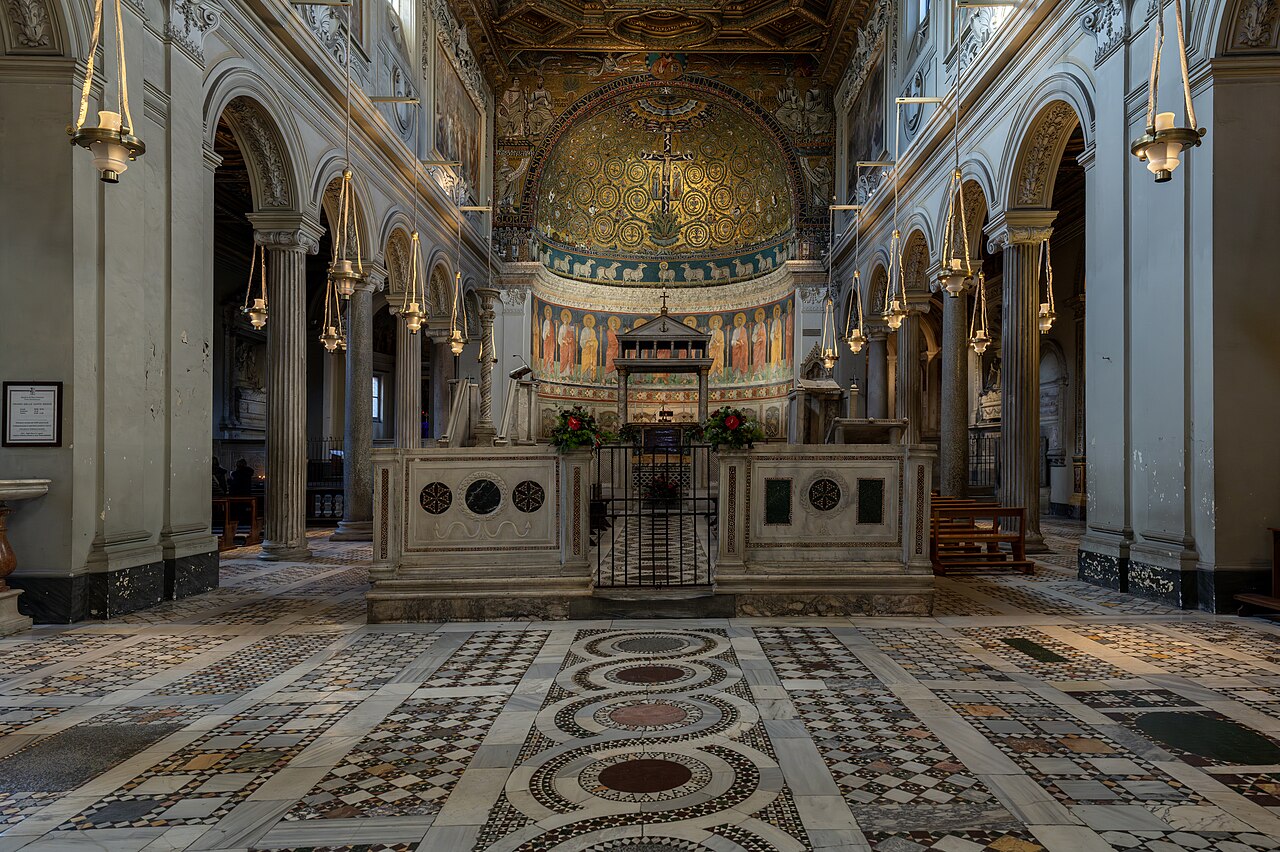
San Clemente is the single best introduction to underground Rome because it explains the whole idea in one building. The 12th-century basilica at street level is free and holds the golden Tree of Life apse mosaic. Four metres below it sits a 4th-century early-Christian church with 9th–11th-century frescoes, including the Sisinnius cycle. Below that again lie 1st-century Roman buildings and the 2nd-century Mithraeum.
The Mithraeum is the deepest chamber of the complex and one of the most complete Mithraic temples you can visit in central Rome: a narrow vaulted hall with the stone benches where initiates reclined and an altar carved with Mithras killing the bull. It is reached on the same excavations ticket, so treat it as the climax of the San Clemente visit rather than a separate stop.
The basilica and excavations are run by the Irish Dominicans, not the Italian state, so the Roma Pass is not valid here and the underground ticket is bought separately. Like most underground sites it is cool and can be humid year-round — bring a light layer even in summer.
Best for: First-timers who want to understand how Rome was built on top of itself, and anyone curious about Rome's pre-Christian mystery cults
Check tickets & availabilityFull Basilica di San Clemente and its Mithraeum guide2. Domus Aurea (Nero's Golden House)
- Price:
- €26 educational visit with VR; a limited €18 admission-only option is offered at specified times
- Duration:
- About 75–90 minutes
- Booking:
- Advance booking required — visits run on limited days with fixed slots
- Access:
- Hard hats required, uneven surfaces, the official site lists it as an accessible area, but ask about the specific visit route when booking
- Location:
- Oppian Hill, directly above the Colosseum
- Atmosphere:
- Cathedral-scale and cold; a buried imperial palace rather than a ruin in the sun
The Domus Aurea is the largest underground site on this list: the surviving wing of Nero's palace, built after the fire of AD 64, buried under Trajan's baths and now explored on a guided route through vaulted corridors. The Octagonal Room and the Renaissance graffiti left by artists who lowered themselves in on ropes are the highlights.
Part of the educational visit includes a VR segment reconstructing specific rooms as they looked in Nero's day; it is one element of the guided route, not the whole experience, and it is not part of the cheaper admission-only option. Ticket options and the purchase route are published by the Parco Archeologico del Colosseo on its official Domus Aurea page (parcocolosseo.it) — book through the route shown there, as days and times are limited and this is the one site you should book first when planning.
Best for: Visitors who want the single most spectacular underground experience in Rome
Check tickets & availabilityFull Domus Aurea guide3. Catacombs of Priscilla
- Price:
- €10 on site, €7 children and reduced categories, free for young children; buying the ticket online adds a €2 surcharge — check the current tariff when booking
- Duration:
- About 45 minutes (guided tour included)
- Booking:
- Visits are guided only, so book your guided slot in advance; buying the ticket itself online is a separate step that adds €2
- Access:
- Stairs and uneven tunnel floors; not step-free
- Location:
- Via Salaria 430, about 4 km north of the centre
- Atmosphere:
- Quiet, scholarly, far fewer coaches than the Appian Way catacombs
Priscilla is the catacomb to choose if you care about early Christian art. Its 13 km of tunnels contain one of the earliest surviving images of the Virgin and Child (around 230 AD), the Greek Chapel and the Velatio fresco. It is run by the Benedictine sisters of Priscilla under the Pontifical Commission for Sacred Archaeology.
Visits are guided only, in several languages, with group sizes capped for conservation reasons. Photography is not permitted. Metro B1 to Sant'Agnese-Annibaliano leaves a 12-minute walk; buses 63, 92 and 310 stop outside.
Best for: Early Christian art, and travellers who want a catacomb without tour-bus crowds
Check tickets & availabilityFull Catacombs of Priscilla guide4. Catacombs of San Sebastiano
- Price:
- €10 adult, €7 reduced (7–16 and students under 25), free under 7
- Duration:
- 1–1.5 hours including the basilica
- Booking:
- Guided visits only; booking officially recommended
- Access:
- Stairs; not step-free
- Location:
- Via Appia Antica 136
- Atmosphere:
- The original catacomb — the site that gave the word to every other one
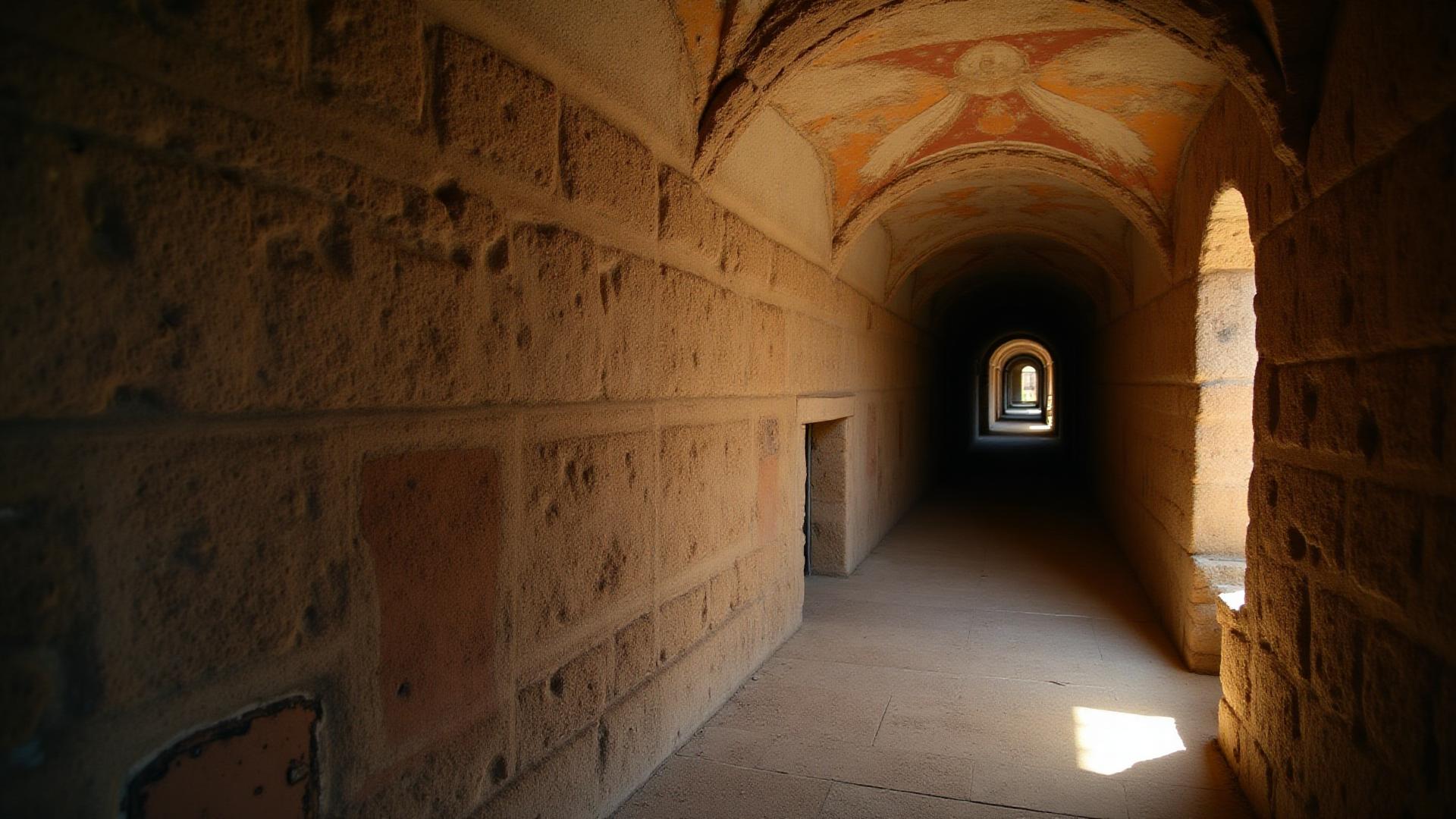
San Sebastiano sits directly on the Appian Way and combines a working basilica above with the tunnels below. The Triclia, where 3rd-century pilgrims scratched invocations to Peter and Paul into the plaster, is the reason historians treat this site as exceptional.
It pairs naturally with the Catacombs of San Callisto ten minutes up the road and with a walk along the ancient basalt paving of the Appia.
Best for: Combining a catacomb with a half-day on the Appian Way
Check tickets & availabilityFull Catacombs of San Sebastiano guide5. Catacombs of San Callisto
- Price:
- €10 adult, €7 reduced (7–15, students under 25), free under 7
- Duration:
- About 45–60 minutes
- Booking:
- Guided only; online tickets improve your chance of an English-language slot
- Access:
- Long staircases and sloping galleries; not step-free
- Location:
- Via Appia Antica 110–126
- Atmosphere:
- The grandest of the Appian catacombs — wide galleries, the Crypt of the Popes
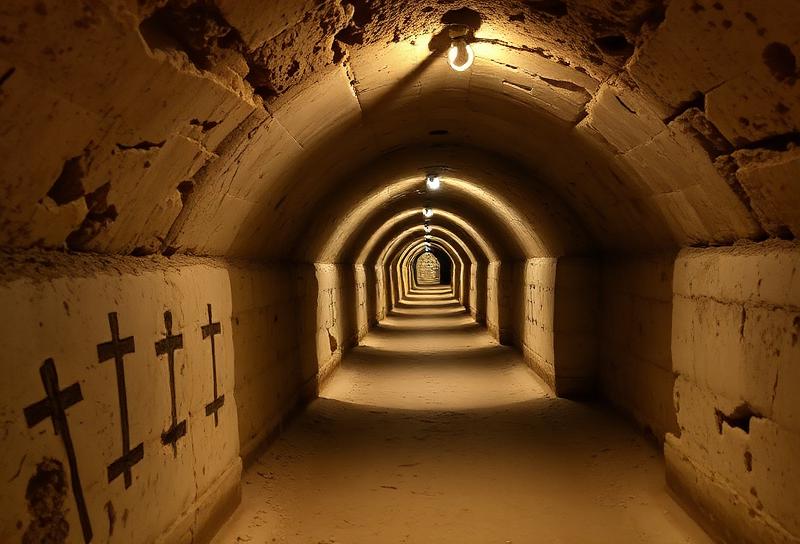
San Callisto is the largest and most visited catacomb complex on the Appian Way, containing the Crypt of the Popes and the tomb of Saint Cecilia. The galleries are broader and better lit than at Priscilla, which makes it the easier choice for nervous first-timers.
Language slots are allocated on arrival unless you pre-book; buying online in advance improves your chances but a specific language is not guaranteed.
Best for: A first catacomb visit with the most famous tombs
Check tickets & availabilityFull Catacombs of San Callisto guide6. Catacombs of Domitilla
- Price:
- €10 full, €7 reduced
- Duration:
- 45–60 minutes (guided tour)
- Booking:
- Guided only; advance booking recommended
- Access:
- Stairs into the tunnels; not step-free
- Location:
- Via delle Sette Chiese 282, near the Appian Way
- Atmosphere:
- The only catacomb with a complete semi-subterranean basilica still standing inside it
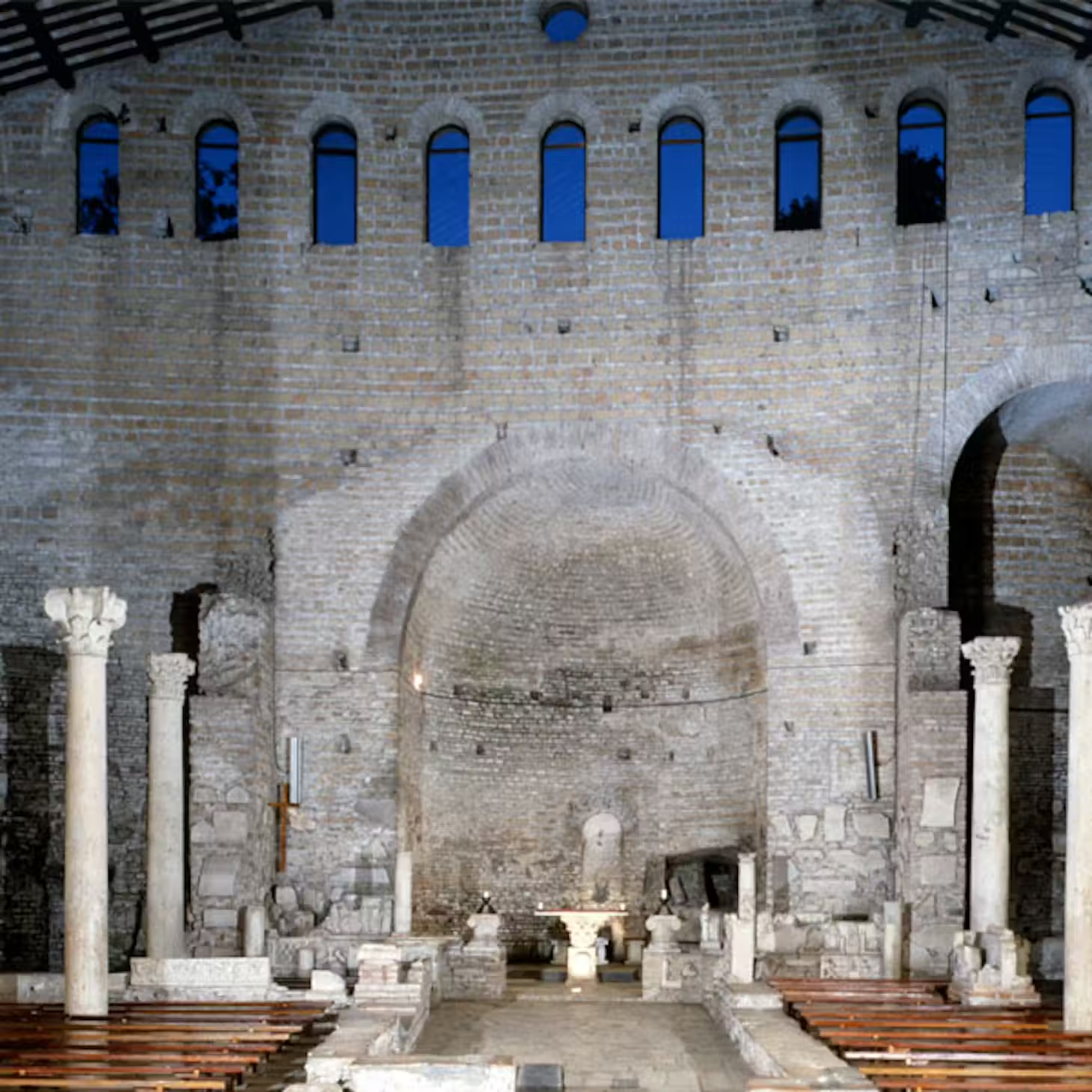
Domitilla is the largest catacomb network in Rome by extent and the only one where you walk into an intact 4th-century underground basilica dedicated to Saints Nereus and Achilleus. Opening days differ from the neighbouring catacombs, so check before combining them.
If you only have time for one Appian-area catacomb and want architecture as well as tunnels, this is the pick.
Best for: Travellers who want scale and a real underground church
Check tickets & availabilityFull Catacombs of Domitilla guide7. Catacombs of Sant'Agnese
- Price:
- Catacombs €10 adult, €7 reduced; the basilica above has its own separate arrangements
- Duration:
- About 40–50 minutes underground
- Booking:
- Guided visits; booking recommended
- Access:
- Stairs; the basilica is easier to reach than the tunnels
- Location:
- Via Nomentana, bus 90 from Termini
- Atmosphere:
- Small, intimate, rarely busy — the least touristed catacomb of the main group
Sant'Agnese fuori le Mura combines the tomb of Saint Agnes, a Byzantine apse mosaic in the basilica and a compact catacomb below. The Mausoleum of Santa Costanza next door, with its 4th-century vault mosaics, is one of Rome's underrated interiors.
Note the distinction that trips people up: church access and the catacomb tour are handled separately, so a free look at the basilica does not include the tunnels.
Best for: Pairing a catacomb with a mosaic-hunting stop away from the crowds
Check tickets & availabilityFull Catacombs of Sant'Agnese guide8. Capuchin Crypt (Bone Chapel)
- Price:
- €10 adult, €6.50 reduced (audio guide included); buying online on the official site adds €1.50 per ticket
- Duration:
- 45–60 minutes with the museum
- Booking:
- Pre-booking recommended — the entrance hall is small
- Access:
- The museum has lift access; the crypt has three steps and motorised wheelchairs cannot enter
- Location:
- Via Veneto, 5 minutes from Piazza Barberini
- Atmosphere:
- The most unsettling site in Rome — chapels decorated with the bones of some 3,700 friars
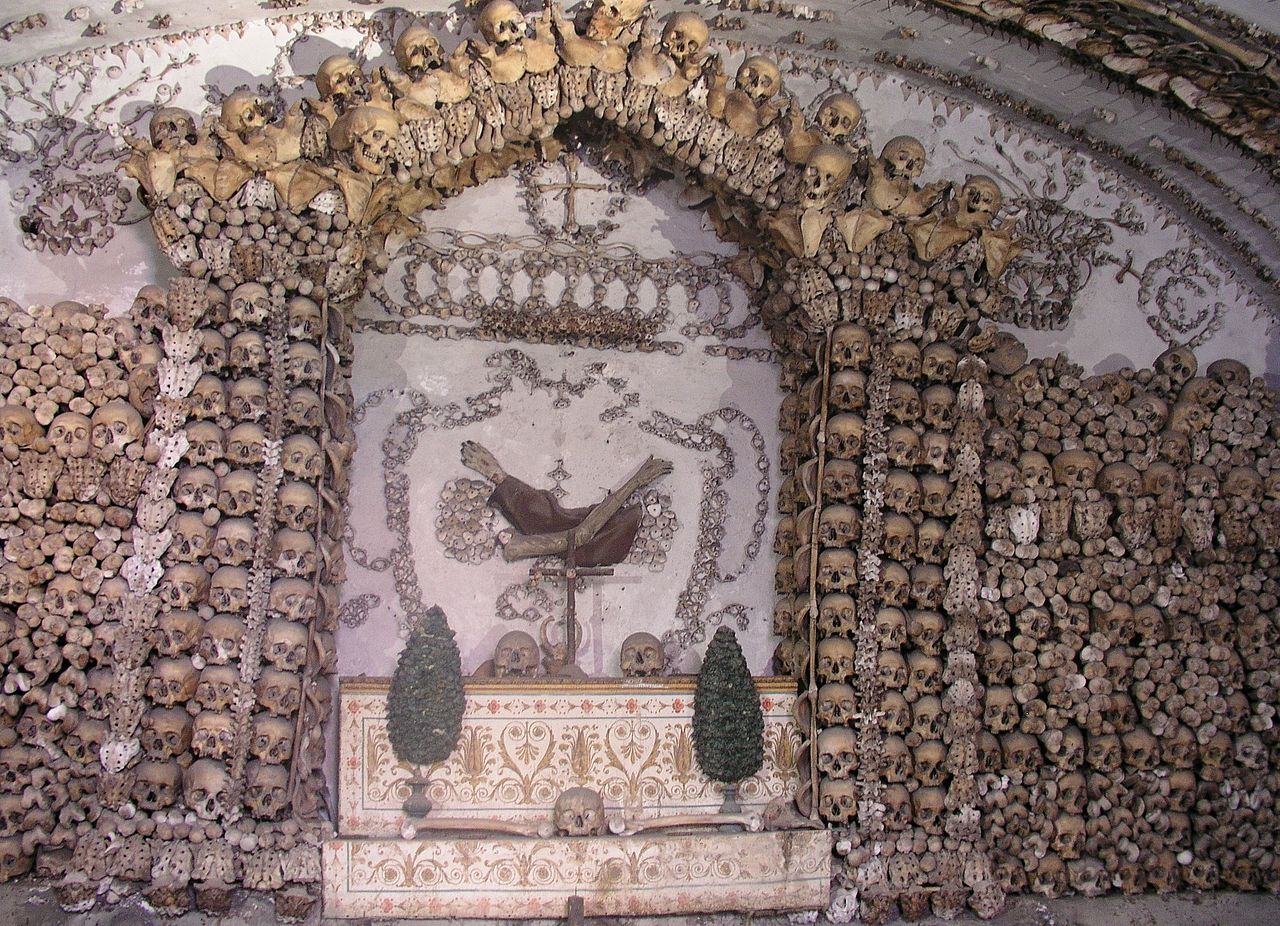
The crypt beneath Santa Maria della Concezione is not a catacomb but an ossuary: five small chapels where the remains of Capuchin friars were arranged into arches, rosettes and chandeliers between the 17th and 19th centuries. The ticket includes the museum that leads to it, and an audio guide.
The official FAQ allows private, non-commercial photos and video; follow any instructions given on site. It is a religious site, so shoulders and knees should be covered and silence is expected.
Best for: A short, central, genuinely memorable stop between Barberini and the Spanish Steps
Check tickets & availabilityFull Capuchin Crypt guide9. Vicus Caprarius — the City of Water
- Price:
- €4 full, €2.50 reduced, €1 for ages 14–17, free under 14 (audio guide €3.50)
- Duration:
- 30–45 minutes
- Booking:
- Reservation mandatory at weekends and public holidays; recommended on weekdays
- Access:
- The first room is reachable by lift; the lower cisterns need stairs
- Location:
- Vicolo del Puttarello 25, two minutes from the Trevi Fountain
- Atmosphere:
- Small, cool and quiet, with water from the Aqua Virgo visible in the basins
Nine metres below the Trevi crowds sits imperial-era residential remains later converted into a wealthy residence, plus a distribution cistern of the Aqua Virgo — the aqueduct that still feeds the fountain above. Finds include a marble head that the venue identifies as Alessandro Helios, recovered from the cistern.
At €4 it is the best-value archaeological site in the centre and the easiest underground stop to slot into a normal sightseeing day.
Best for: A cheap, quick underground stop with no detour from the Trevi Fountain
Check tickets & availabilityFull Vicus Caprarius — the City of Water guide10. Mamertine Prison (Carcer Tullianum)
- Price:
- €10 adult, €5 reduced
- Duration:
- 30–45 minutes
- Booking:
- Optional, but a booked slot avoids waiting at busy periods
- Access:
- Steep stairs into the lower chamber
- Location:
- Clivo Argentario, on the slope between the Forum and the Capitoline
- Atmosphere:
- Claustrophobic and bare — two stacked stone cells at the edge of the Forum
The Carcer Tullianum is the state prison of ancient Rome, traditionally dated to the regal period, where condemned enemies of the Republic were held. The lower chamber, the Tullianum, was originally reached only through a hole in the ceiling. Christian tradition associates it with the imprisonment of Peter and Paul, though the evidence is devotional rather than archaeological.
The multimedia presentation is short and the site is small, which makes it a natural add-on either side of a Forum visit.
Best for: Slotting 30 minutes of underground history into a Roman Forum day
Check tickets & availabilityFull Mamertine Prison guide11. Case Romane del Celio
- Price:
- €8 standard, €6 reduced; online purchases currently add a €2 service fee
- Duration:
- 45–75 minutes
- Booking:
- Not required — self-guided entry, five days a week
- Access:
- More than 20 rooms across two underground levels; stairs throughout
- Location:
- Clivo di Scauro, Caelian Hill, about 10 minutes from Colosseo metro
- Atmosphere:
- Domestic and intimate — frescoed rooms of an actual Roman household
Beneath the Basilica of SS. Giovanni e Paolo lies a 2nd–4th century residential complex with pagan and Christian frescoes still in place. It is self-guided, rarely crowded and the closest you can get to standing inside an ordinary Roman home rather than a monument.
Because it needs no booking and costs €8, it is the best fallback when the Domus Aurea is sold out.
Best for: Frescoes, no booking stress, and a quiet corner of the Caelian Hill
Check tickets & availabilityFull Case Romane del Celio guideTwo more you should know about
Domus Romane at Palazzo Valentini
Excavated aristocratic houses beneath a government palace, presented with light projections and narration rather than raw ruins. Visit time is 60–75 minutes and it runs on timed guided slots — check the official site for current prices and book ahead.
Check ticketsRead the guideStadium of Domitian, under Piazza Navona
The underground remains of the 1st-century stadium whose shape gave Piazza Navona its outline have been closed for restoration. We could not confirm its current status or a reopening date from an official notice, so check with the venue directly before building it into a plan; Vicus Caprarius is the nearest comparable substitute.
How to choose if you only have time for one or two
- One site, first visit: San Clemente. Three eras in one descent, €10, five minutes from the Colosseum.
- Biggest spectacle: Domus Aurea. Book it first — the days and slots are limited.
- Smallest budget: Vicus Caprarius at €4, or the free upper basilica of San Clemente.
- Travelling with teenagers: the Capuchin Crypt, then the Mamertine Prison.
- Half a day out of the centre: San Callisto plus San Sebastiano on the Appian Way.
- Rain, and everything is sold out: Case Romane del Celio — self-guided, no booking, €8.
Practical rules for going underground in Rome
- Underground sites are generally cool and can be humid year-round — bring a light layer even in summer.
- Floors are uneven and often wet. Closed shoes with grip beat sandals everywhere on this list.
- Catacombs and religious crypts enforce covered shoulders and knees, and silence.
- Photography is prohibited in the catacombs; the Capuchin site allows private photos under its official FAQ.
- Group sizes are capped at most sites for conservation reasons, which is why walk-up slots disappear early.
- The Roma Pass does not cover the church-run sites such as San Clemente or the catacombs.
Frequently asked questions
Which underground site in Rome is the best one to visit?
For a first visit, Basilica di San Clemente is the strongest single choice: the free medieval church, the 4th-century basilica below and the Mithraeum at the bottom explain the whole idea of layered Rome for €10. The Domus Aurea is more spectacular but costs €26 with VR and runs on limited days.
How much do Rome's underground sites cost in 2026?
Most sit between €4 and €10. Vicus Caprarius is €4, Case Romane del Celio €8, and San Clemente's excavations, the Capuchin Crypt, the Mamertine Prison and the main catacombs are each around €10. The Domus Aurea is the outlier at €26 for the educational visit with VR, with a limited €18 admission-only option at specified times.
Do I need to book underground Rome sites in advance?
Yes for the Domus Aurea and the San Clemente excavations, which use timed entry, and for Vicus Caprarius at weekends and public holidays, where reservation is mandatory. Catacomb visits are guided and booking is recommended. Case Romane del Celio and the Mamertine Prison can usually be visited without a reservation.
Are Rome's underground sites wheelchair accessible?
Mostly not. Catacombs, the San Clemente excavations and the Case Romane involve stairs and uneven floors. Vicus Caprarius reaches its first room by lift but needs stairs for the lower cisterns. Contact each site directly if step-free access is essential — arrangements change.
Can you visit the catacombs and the Capuchin Crypt on the same day?
Yes, but they are in different parts of the city. The Capuchin Crypt is on Via Veneto in the centre; San Callisto, San Sebastiano and Domitilla are on or near the Appian Way, roughly 30–40 minutes out. A workable day is crypt in the morning, Appian Way catacombs in the afternoon.
Can you take photos in the catacombs?
No. Photography is forbidden in the catacombs of Priscilla and in the other Pontifical Commission sites, . The Capuchin museum and crypt currently allow private, non-commercial photos according to their official FAQ — follow on-site instructions.
Is the Stadium of Domitian under Piazza Navona open?
It has been closed for restoration with no announced reopening date. Check locally before planning around it — Vicus Caprarius near the Trevi Fountain is the closest central alternative.