 Trastevere — free mosaic basilica
Basilica of Santa Maria in Trastevere
A 12th-century gold apse mosaic, Cavallini's Life of the Virgin and 22 recycled Roman columns — on the liveliest piazza in Trastevere, and free to walk into.
15–30 min visitFree12th-c. mosaicsRebuilt 1138Piazza di Santa Maria in Trastevere, 00153 Roma RMOpen on MapPlan Your Visit
Compare tickets, tours and stays — booking ahead usually gives more choice
Book a TourHotels NearbyThe Basilica of Santa Maria in Trastevere stands on the main square of Trastevere and is one of Rome's oldest churches dedicated to the Virgin Mary. Tradition traces a Christian meeting place here to the early 3rd century; the building you enter today was rebuilt from 1138 under Pope Innocent II, who was born in the neighbourhood. Inside, a 12th-century gold apse mosaic shows Christ and the Virgin enthroned side by side, with a band of mosaic panels by Pietro Cavallini (around 1291) below it, and 22 granite columns taken from ancient Roman buildings lining the nave. Entry is free, no ticket or booking is needed, and most visitors need 15 to 30 minutes.
Why visit Santa Maria in Trastevere?
It is the rare Roman sight that costs nothing, takes twenty minutes and still ranks among the city's great medieval interiors. The basilica also anchors the best piazza in Trastevere, which makes it the natural starting point for a walk through the neighbourhood.
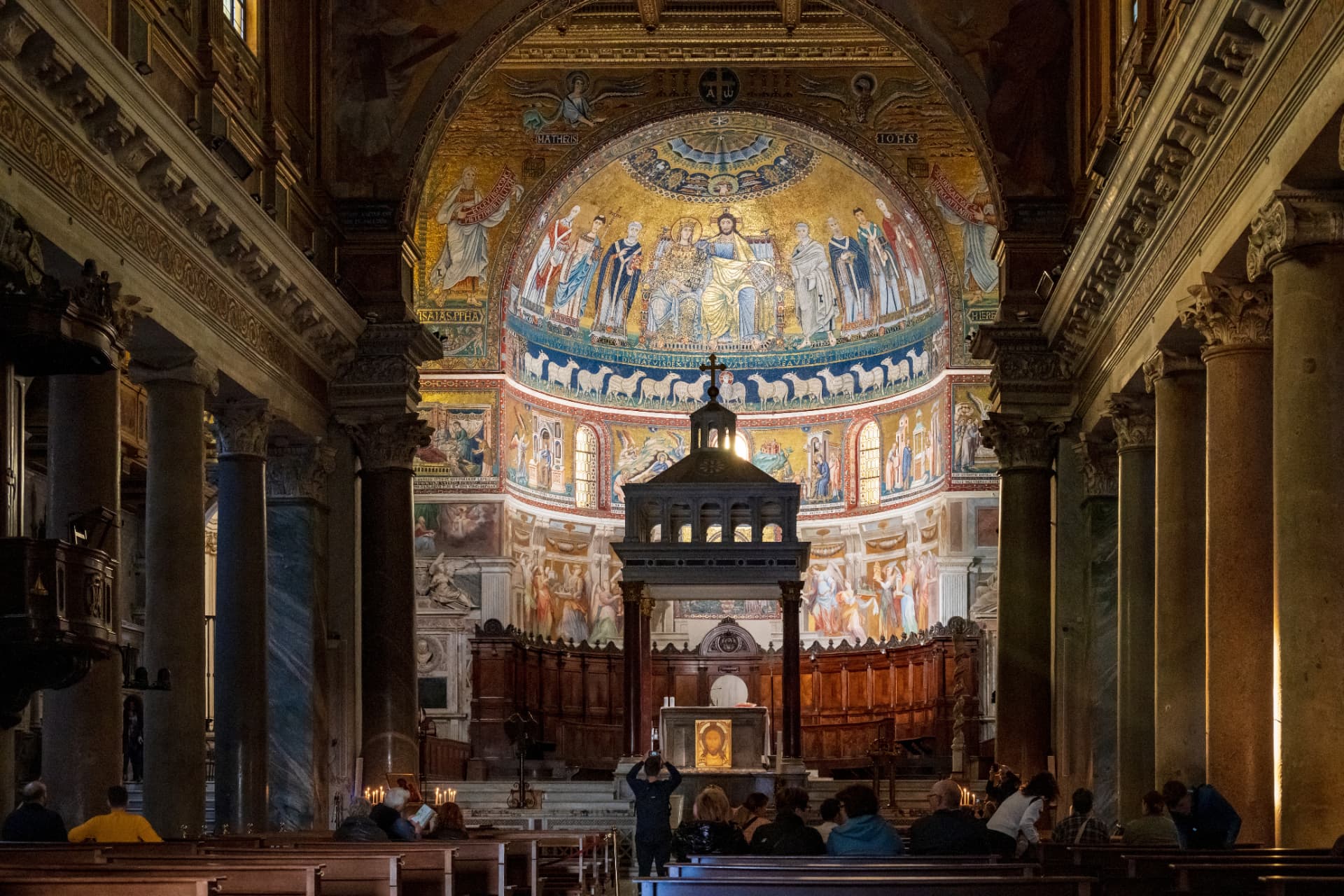
- The apse mosaic: a 12th-century gold-ground composition with Christ and the Virgin enthroned together, saints on either side and a frieze of thirteen lambs below.
- Cavallini's panels: six mosaic scenes from the Life of the Virgin, made around 1291 by the painter who, alongside Giotto, pushed Italian art toward naturalism.
- Recycled ancient Rome: 22 granite columns and their mismatched capitals came from older Roman buildings — you can still see carved pagan heads on some of them.
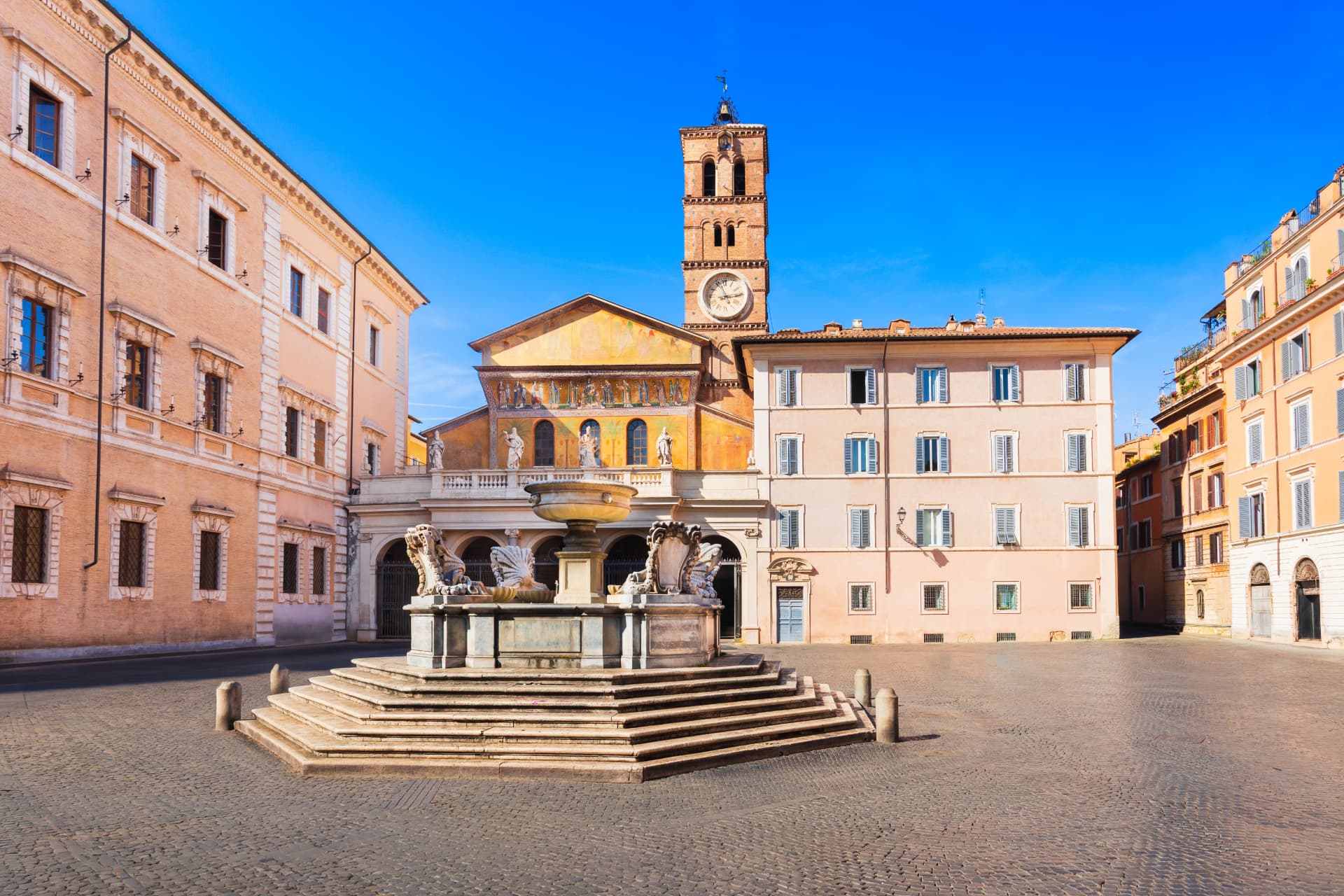
- The piazza: the octagonal fountain outside is one of the oldest in Rome and the square is the social centre of the neighbourhood.
- Free, central and quick: no ticket, no queue, and a natural pairing with Santa Cecilia, San Francesco a Ripa or the climb to Janiculum Hill.
Quick facts
Origins
3rd–4th century foundation
Present basilica
Rebuilt from 1138 under Innocent II
Apse mosaic
12th century
Cavallini mosaics
Life of the Virgin, c. 1291
Columns
Ancient Roman granite columns reused
Entry 2026
Free — no ticket needed
Visit time
15–30 minutes
Location
Piazza di Santa Maria in Trastevere
Table of Contents
Jump to any section of the itinerary
The basilica in photos
A brief history
Trastevere in the imperial period was a crowded district of workers, sailors and immigrants on the right bank of the Tiber, and one of the places where Christianity took root early. Tradition holds that Pope Callixtus I established a Christian meeting place (a titulus) on this site in the early 3rd century, which would make it among the first buildings in Rome used openly for Christian worship. The tradition is ancient, but it is not confirmed by excavation.
A proper basilica is credited to Pope Julius I in the mid-4th century, and the church was restored repeatedly through the early medieval centuries as Trastevere grew. What survives above ground, however, belongs to a single decisive campaign: from 1138 Pope Innocent II, himself a Trastevere man, demolished the old church and rebuilt it on a grand scale, with a wide columned nave, a transept and a deep apse.
The 12th-century apse mosaic belongs to that rebuild. Christ and the Virgin sit together on one throne, an unusually direct statement of Mary's status, with saints to either side and Innocent II himself presenting a model of the church. Around 1291, Pietro Cavallini added six mosaic panels below, showing the Life of the Virgin — modelled faces, real architectural settings, and a clear step away from Byzantine flatness. Two years later Cavallini painted his Last Judgment fresco at Santa Cecilia, ten minutes away.
Later centuries added rather than replaced. Domenichino's coffered wooden ceiling went in around 1617, and Carlo Fontana rebuilt the portico in 1702, sheltering a collection of early Christian inscriptions gathered from the catacombs and the church's own excavations. The facade mosaics of the Virgin with lamp-bearing women were restored in the 19th century, and they remain the image most visitors carry away — lit up above a crowded piazza after dark.
Santa Maria in Trastevere through the centuries
3rd century ADEarliest Christian foundation
Tradition attributes an early Christian meeting place (titulus) on this site to Pope Callixtus I in the early 3rd century — which would make it one of the very first places of public Christian worship in Rome. The tradition is old but not archaeologically confirmed.
4th century ADPope Julius I rebuilds
Pope Julius I (337–352) is credited with building a proper basilica here, replacing the earlier titular foundation. Parts of the plan of this church underlie the present building.
8th–9th centuryPapal restorations
Successive popes, including Gregory IV, restore and enlarge the basilica as Trastevere grows into a dense working district on the right bank of the Tiber.
1138–1148Innocent II's rebuild
Pope Innocent II, himself born in Trastevere, demolishes the old church and rebuilds the basilica in the form seen today — a columned nave using granite columns taken from ancient Roman buildings, with a wide transept and a deep apse.
12th centuryApse mosaic created
The great golden apse mosaic showing Christ and the Virgin enthroned side by side is completed — one of the earliest monumental images of the Coronation-type composition in Rome, and the visual centrepiece of the basilica.
12th centuryRomanesque bell tower
The brick campanile rises beside the facade, crowned by a small mosaic niche of the Virgin and Child. The clock face visible today is a later addition.
c. 1291Cavallini's mosaic cycle
Pietro Cavallini adds a band of mosaic panels below the apse showing scenes from the Life of the Virgin — a landmark in the move of Italian art away from Byzantine convention toward naturalism, made about two years before his Last Judgment fresco at Santa Cecilia.
17th centuryBaroque additions
The portico in front of the facade is rebuilt by Carlo Fontana in 1702, and Domenichino's coffered wooden ceiling (1617) is installed over the nave. The medieval fabric survives largely intact beneath.
19th centuryFacade mosaics restored
The mosaics on the upper facade — the Virgin enthroned with a procession of lamp-bearing women — are restored. They are the feature that makes the church unmistakable from across the piazza, especially when lit at night.
2026An active parish basilica
The basilica remains a working parish church at the centre of Trastevere life, free to enter, with Mass celebrated daily. Opening hours and access during services vary — check locally.
What to see inside
The 12th-century apse mosaic
- Christ and the Virgin enthroned together on a single throne against a gold ground — an unusually direct image of Mary crowned beside her son.
- Flanking saints include Peter, Cornelius, Julius and Calepodius on one side, Callixtus and Laurence with Pope Innocent II holding a model of the church on the other.
- Below the main scene runs a frieze of thirteen lambs — Christ at the centre, the apostles approaching from the two holy cities.
- Binoculars or a camera zoom genuinely help: the mosaic sits high above the altar and rewards close looking.
Cavallini's Life of the Virgin (c. 1291)
- A band of six mosaic panels below the apse, showing scenes from the life of the Virgin from the Nativity to the Dormition.
- By Pietro Cavallini, the leading Roman painter of the late 13th century and a parallel figure to Giotto in the move toward naturalism.
- Note the modelled faces and the real architectural settings — a decisive break from flat Byzantine convention.
- Made about two years before his Last Judgment fresco at nearby Santa Cecilia in Trastevere.
The ancient Roman columns
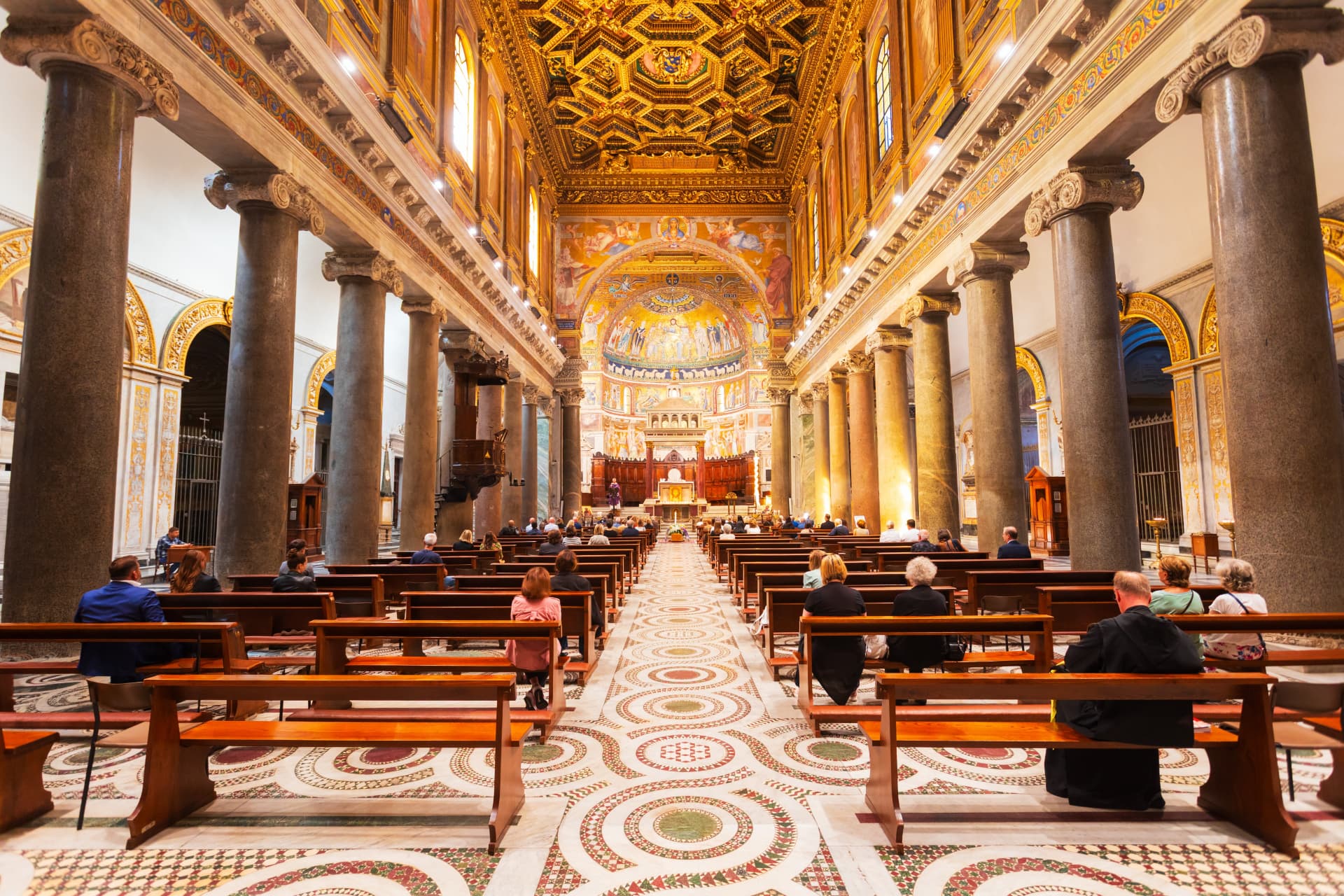
- The 22 granite columns lining the nave were taken from ancient Roman buildings — reuse (spolia) on a grand scale.
- Capitals vary: several carry carved heads of Egyptian deities from their original pagan setting, later partly re-carved.
- The Cosmatesque floor of inlaid coloured marble is itself made largely of recycled ancient stone.
- Look up to Domenichino's coffered wooden ceiling of 1617 with its central Assumption.
The facade and the piazza
- The upper facade carries a mosaic of the Virgin enthroned flanked by ten women bearing lamps — best seen at night, when it is lit.
- Carlo Fontana's 1702 portico shelters a collection of early Christian and medieval inscriptions and fragments.
- The octagonal fountain in the piazza in front is one of the oldest in Rome, restored by Carlo Fontana in 1692.
- The piazza is the social heart of Trastevere — busy in the evening, unexpectedly calm early in the morning.
Entry and cost in 2026
Entry is free. There is no ticket office, no booking system and no queue in the usual sense. You walk in under the portico from the piazza. A donation box supports the parish, and — as in many Roman churches — a coin-operated light illuminates the apse mosaic for a few minutes at a time, so small coins are genuinely useful.
Because it is an active parish basilica, access is restricted while Mass is being celebrated, and opening hours shift with the liturgical calendar. Treat any published timetable as indicative and check locally on the day if your schedule is tight.
Paid Trastevere walking tours often include the basilica as a stop. That can be worth it for the commentary on the mosaics, but you are never paying for entry itself — anyone can walk in for nothing.
Santa Maria vs the other Trastevere churches
| Feature | Santa Maria in Trastevere | Santa Cecilia | San Francesco a Ripa |
|---|---|---|---|
| Founded | 3rd–4th c. tradition; rebuilt 1138 | 5th c. (on 2nd-c. house) | 13th c. (Franciscan) |
| Highlight artwork | 12th-c. apse mosaic + Cavallini mosaics | Maderno sculpture + Cavallini fresco | Bernini's Beata Albertoni |
| Entry 2026 | Free | Basilica free (crypt/fresco: small fee) | Free |
| Visit length | 15–30 minutes | 60–90 minutes | 20–30 minutes |
| Crowds | Busy, especially evenings | Quiet — most tourists skip it | Quiet |
| Best for | Mosaics, piazza atmosphere | Serious art, hidden Trastevere | Bernini fans |
| Walk from Piazza S. Maria | — | About 10 minutes | About 6 minutes |
Verdict — simplest logistics: all three are free and sit on a 20-minute walking loop. Start at Santa Maria in Trastevere for the mosaics and the piazza, walk south to Santa Cecilia in Trastevere for the most rewarding art, and finish at San Francesco a Ripa for Bernini.
Best time to visit
Time of day
Early morning (best)
The piazza is close to empty and the church is quiet. Daylight through the nave windows also makes the mosaics far easier to read.
Late afternoon
Good light on the facade and a lively but not yet crowded square. Check that a service is not about to begin.
After dark
The facade mosaic is floodlit and the piazza is at its liveliest — but the basilica itself is usually closed by then.
Days and seasons
Weekdays
Calmer than weekends, when Trastevere fills with Romans as well as visitors.
Sunday
Mass takes priority and tourist movement is restricted for long stretches of the morning.
Summer
A cool, free indoor stop in the middle of a hot day — and a reason to carry something to cover shoulders.
Winter
Fewest visitors of the year; the gold mosaic is the best antidote to a grey Roman afternoon.
Getting there
Walking (best)
From Piazza Trilussa and the Ponte Sisto footbridge it is about 5 minutes through Via del Moro. From Campo de' Fiori allow roughly 15 minutes across Ponte Sisto; from Largo di Torre Argentina about 20 minutes via Ponte Garibaldi.
Tram 8
Tram 8 runs from Largo di Torre Argentina through Trastevere; get off at Belli and walk about 6 minutes west into the piazza.
Bus
Buses 23, 280, H and 780 stop along Lungotevere and Viale di Trastevere within 5–10 minutes' walk.
Finding it
The basilica fronts Piazza di Santa Maria in Trastevere, the square with the octagonal fountain. Do not confuse it with Piazza di Santa Cecilia, ten minutes south.
Common mistakes to avoid
Confusing it with Santa Cecilia in Trastevere
Two famous Trastevere basilicas sit ten minutes apart. Santa Maria in Trastevere is the mosaic basilica on the big nightlife piazza; Santa Cecilia is the quieter one in southern Trastevere with Maderno's sculpture. Point your map at Piazza di Santa Maria in Trastevere, not Piazza di Santa Cecilia.
Arriving during Mass and walking around
This is an active parish church, not a museum. Mass is celebrated daily and tourist movement around the nave is restricted while it is going on. If you arrive mid-service, sit quietly at the back or come back later.
Only seeing it at night
The lit facade at night is beautiful, but the interior mosaics need daylight and the church is usually closed by the time the piazza fills up. Come once in the morning for the mosaics and once at night for the facade.
Missing Cavallini below the apse
Most visitors look at the huge gold apse mosaic and leave. The six smaller panels underneath are by Pietro Cavallini and are art-historically just as important. Step close to the altar rail to see them properly.
Dressing for the piazza, not the church
Modest dress is required inside — shoulders covered, no very short shorts. In summer this catches out people coming straight from a terrace lunch on the square.
Rushing through in five minutes
It is free, so it is easy to treat as a quick stop. Give it 20 minutes: apse mosaic, Cavallini panels, the reused Roman columns and capitals, the Cosmatesque floor and the portico inscriptions.
Insider tips
Go early for the piazza to yourself
Before about 9am the square is almost empty — just the fountain, the deliveries and the light hitting the facade mosaic. It is the single best half hour in Trastevere and the church is generally open.
Bring a zoom or binoculars
The apse mosaic and the Cavallini panels are high and dimly lit. A camera zoom or small binoculars turn a golden blur into readable figures and inscriptions.
Pair it with Santa Cecilia
Ten minutes' walk south is Santa Cecilia in Trastevere, with Maderno's sculpture and Cavallini's Last Judgment fresco. The two together make one of Rome's best free art mornings.
Look for coins in the light boxes
As in many Roman churches, a coin-operated light illuminates the apse for a few minutes. Keep €1 coins handy — the difference in what you can see is dramatic.
Sit on the fountain steps afterwards
The octagonal fountain in front is one of the oldest in Rome and its steps are the traditional meeting place of the neighbourhood. It costs nothing and is the most Roman thing you can do here.
Photograph the facade after dark
The facade mosaic is floodlit in the evening and photographs beautifully from the far corner of the piazza, with the bell tower in frame.
Practical visitor tips
Free entry
No ticket and no booking are needed. A donation box supports the parish; the coin-operated apse lighting is separate.
Allow 15–30 minutes
Enough for the apse mosaic, the Cavallini panels, the columns and the portico. Add time if a service is in progress.
Check Mass times
It is a working parish basilica. Visiting around services is discouraged; hours and Mass times vary — check locally.
Photography
Photography without flash is generally permitted in the nave; tripods are not. Be discreet if people are praying.
Where to Stay Near Santa Maria in Trastevere
Looking for convenient accommodation near Santa Maria in Trastevere? Stay within walking distance to make the most of your visit.
Hotels Near This AttractionTop Rated HotelsBudget-Friendly OptionsLuxury HotelsCentral locations with easy access to Santa Maria in Trastevere and other attractionsFrequently Asked Questions
Is Santa Maria in Trastevere free to enter?
Yes. Entry to the basilica is free and no ticket or reservation is needed. It is an active parish church supported by donations; a coin-operated light for the apse mosaic usually takes small coins. Guided tours of Trastevere may include it, but you never need to pay to walk in.
How long should I spend there?
Fifteen to thirty minutes is right for most visitors. That covers the 12th-century apse mosaic, Cavallini's Life of the Virgin panels below it, the reused ancient Roman columns and capitals, the Cosmatesque floor, and the inscriptions under the portico outside.
What are the opening hours in 2026?
The basilica generally opens early in the morning and closes in the evening, with access restricted during Mass. Hours change with the liturgical calendar and parish needs, so check current times locally before planning a tight schedule.
What is the apse mosaic?
A 12th-century gold-ground mosaic showing Christ and the Virgin enthroned together, flanked by saints and by Pope Innocent II holding a model of the church he rebuilt. Below runs a frieze of thirteen lambs. It is one of the great medieval mosaics of Rome and the main reason to step inside.
Who was Pietro Cavallini and what did he do here?
Cavallini was the leading Roman painter and mosaicist of the late 13th century, a parallel figure to Giotto in the shift of Italian art toward naturalism. Around 1291 he added a band of mosaic panels below the apse showing scenes from the Life of the Virgin. About two years later he painted his Last Judgment fresco at Santa Cecilia in Trastevere, ten minutes' walk away.
Is this the oldest church in Rome?
It is often described as one of the oldest churches in Rome dedicated to the Virgin Mary, and tradition traces a Christian meeting place here to the early 3rd century under Pope Callixtus I. That tradition is old but not archaeologically confirmed, and other Roman churches make comparable claims. The building you walk into today dates from the rebuild begun in 1138.
Why are the columns all different?
They are spolia — ancient Roman columns and capitals taken from older buildings and reused in the 12th-century rebuild. Several capitals still show carved heads from their original pagan context. This kind of reuse was normal in medieval Rome and is part of what makes the nave so distinctive.
Do I need to cover up to go in?
Yes. As in Rome's other active churches, shoulders should be covered and shorts or skirts should reach roughly the knee. Hats off for men. A light scarf in your bag solves it in summer.
Can I take photographs inside?
Photography without flash is generally permitted in the nave, and tripods are not. Be discreet during services and avoid photographing people at prayer. Rules can be tightened at the parish's discretion.
Is the basilica wheelchair accessible?
The main entrance under the portico is close to level with the piazza and the nave is flat, so the basilica is broadly accessible. The piazza itself is cobbled, which can be uncomfortable, and there is no lift to any raised areas.
What else is nearby?
Within about ten minutes on foot: Santa Cecilia in Trastevere, San Francesco a Ripa with Bernini's Beata Ludovica Albertoni, Villa Farnesina with Raphael's frescoes, the Botanical Garden, Piazza Trilussa and the river, Tiber Island, and the climb up to Janiculum Hill for the panorama.
Is it worth visiting with children?
Yes, briefly. The gold mosaic and the lamb frieze hold attention for a few minutes, and the piazza fountain outside is an easy place to let children sit. It is a short indoor stop rather than an activity in itself.
When is the piazza least crowded?
Early morning, roughly before 9am, when the square belongs to residents and deliveries. It fills steadily through the afternoon and is at its busiest after dark, when the lit facade is the backdrop to Trastevere's nightlife.
Should I visit this or Santa Cecilia in Trastevere?
Both, in one morning — they are ten minutes apart. Santa Maria in Trastevere is the shorter, easier visit and the better piazza; Santa Cecilia takes longer and rewards anyone seriously interested in art, with Maderno's sculpture and Cavallini's fresco. If you only have time for one and want mosaics plus atmosphere, choose Santa Maria.
Related Attractions
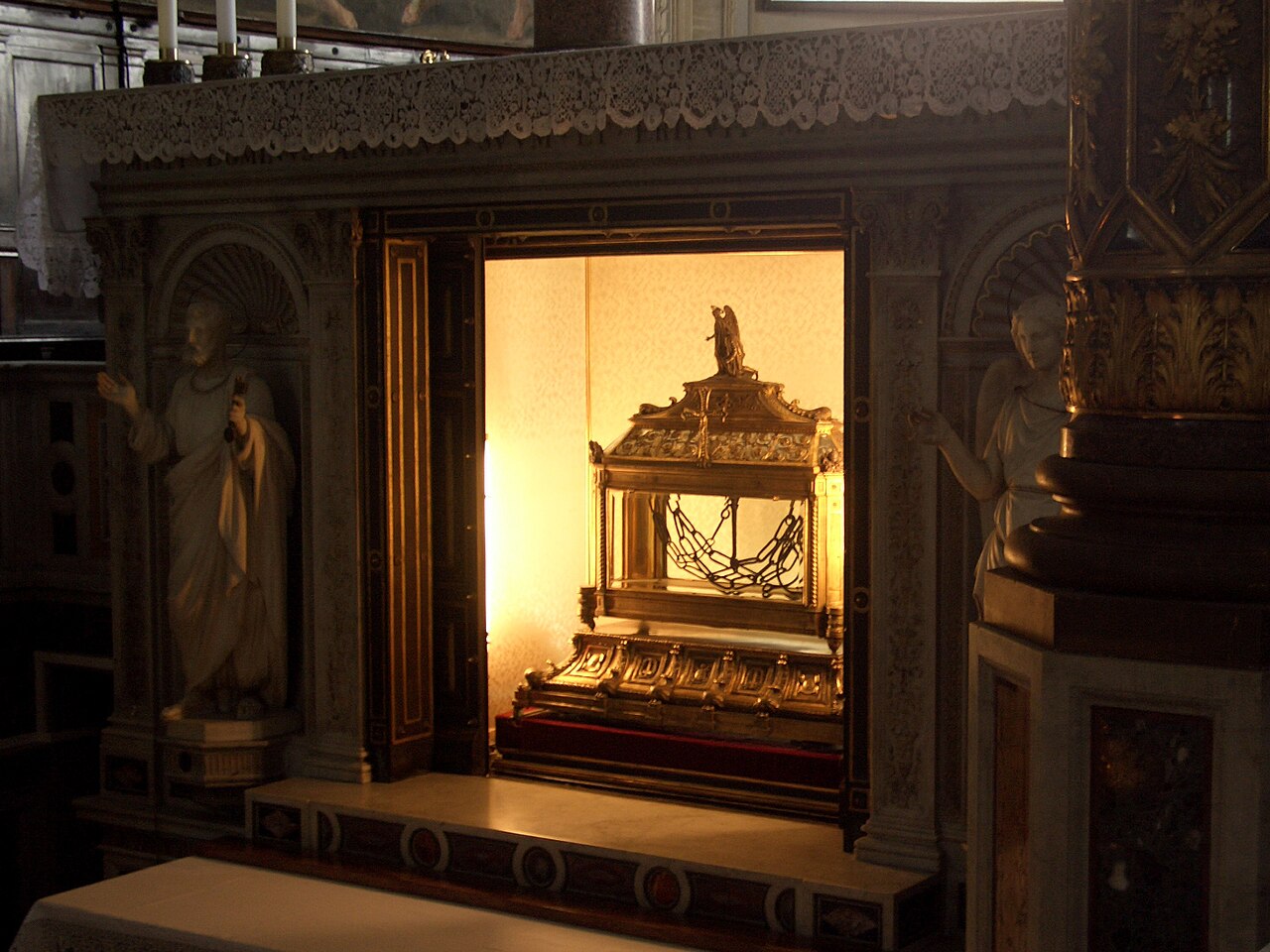
San Pietro in Vincoli
Home to Michelangelo's powerful Moses sculpture
Explore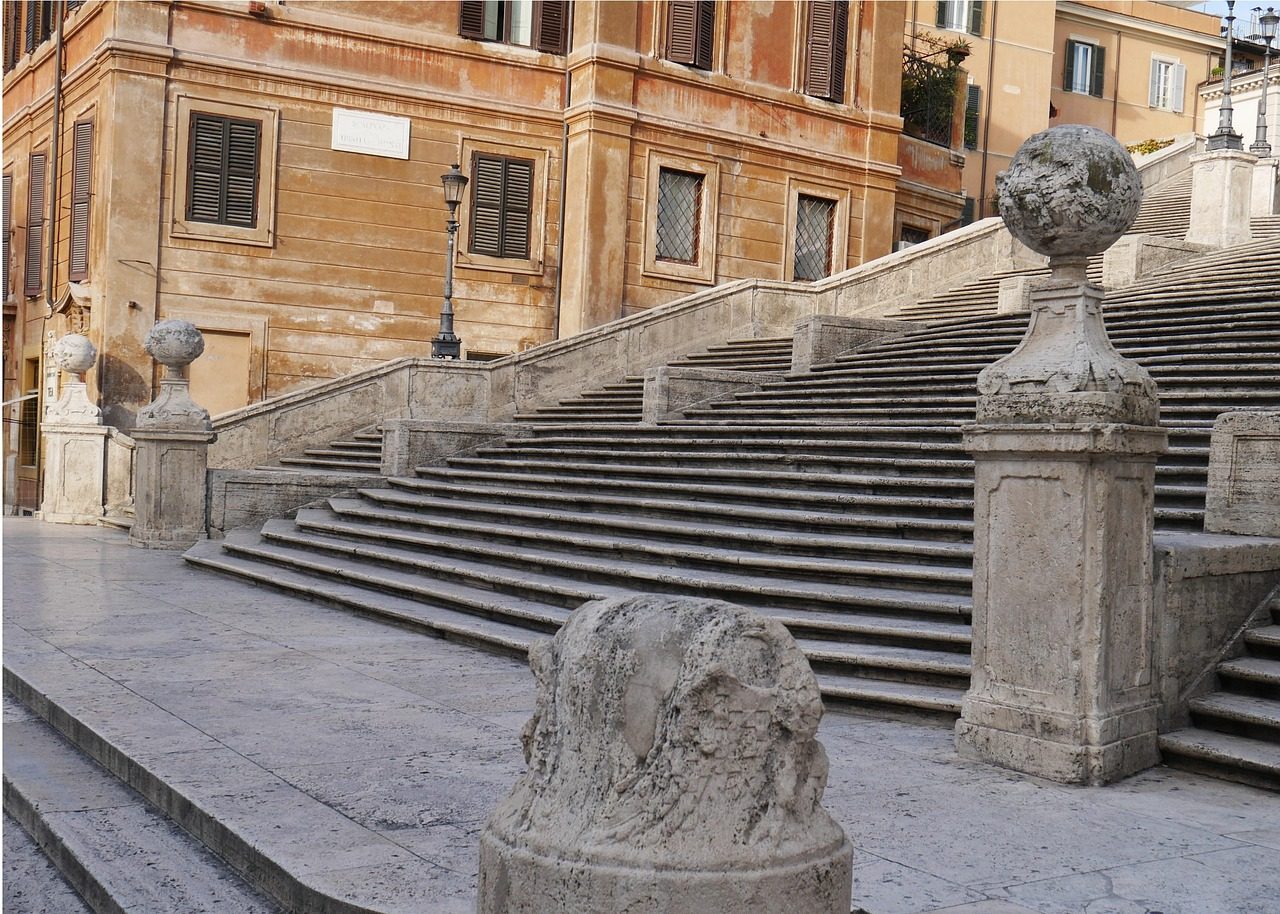
Spanish Steps
Famous Baroque stairway to Trinità dei Monti church
Explore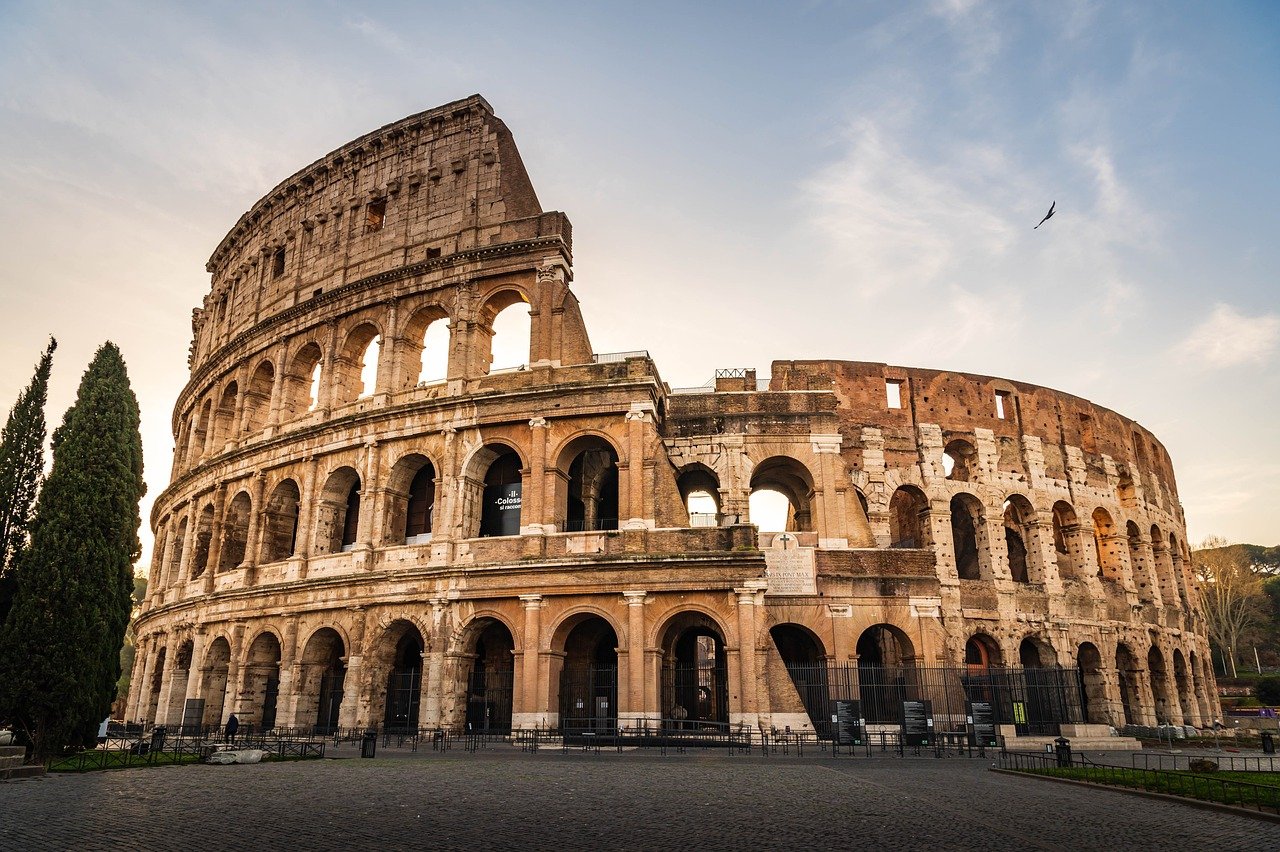
Colosseum
Iconic amphitheater and symbol of Imperial Rome, one of the New 7 Wonders
Explore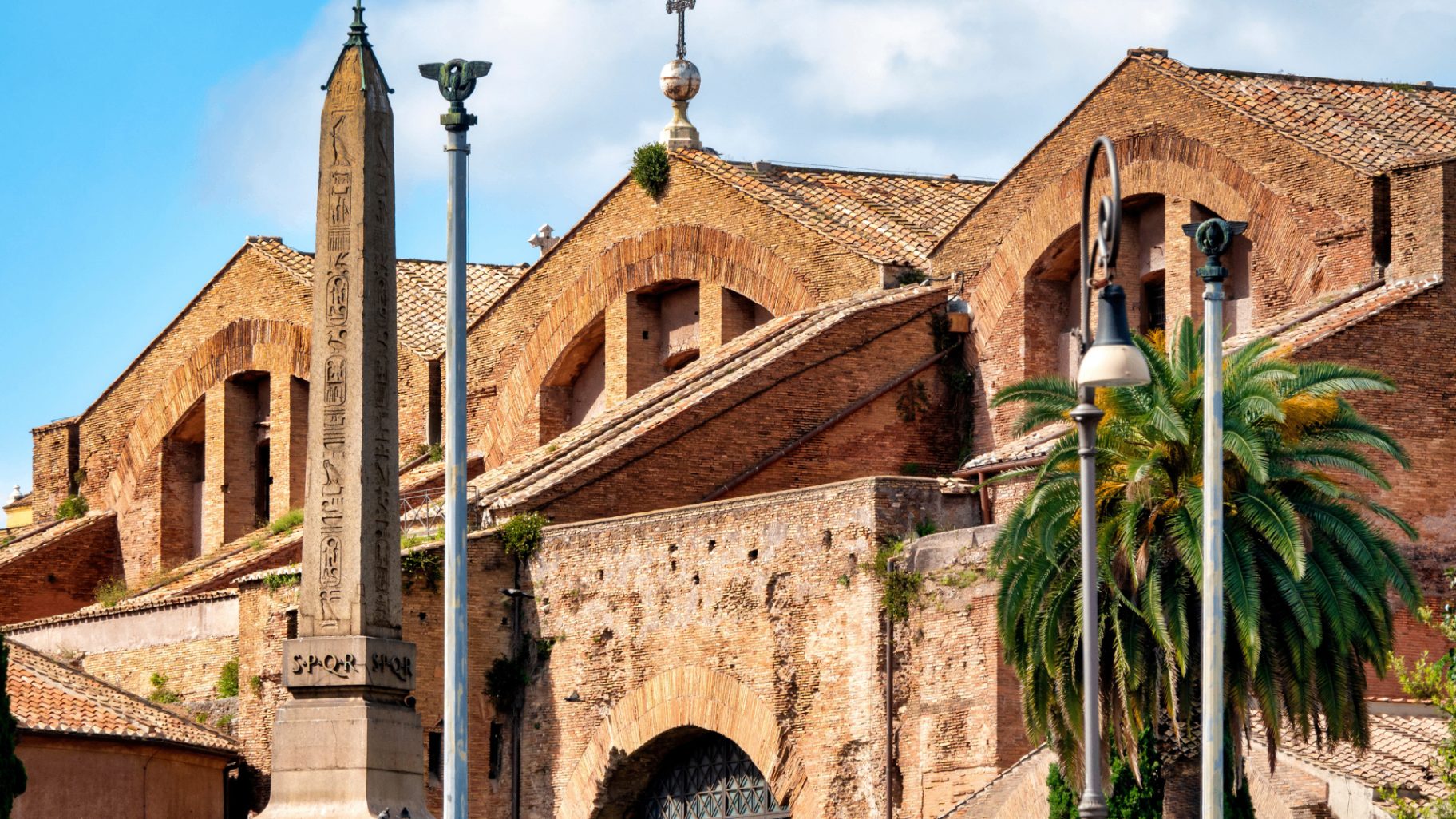
Baths of Diocletian
Ancient Rome's largest baths, now housing the National Roman Museum
Explore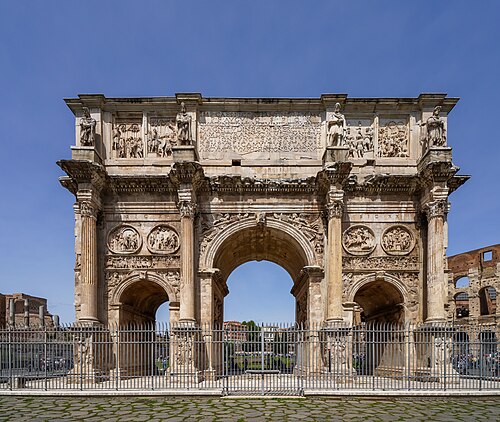
Arch of Constantine
Rome's largest triumphal arch (315 AD) next to the Colosseum
Explore
San Giorgio in Velabro
Early medieval church beside Rome's only surviving ancient quadrifrons arch
ExploreQuick Planning Guide
⏱️ Time Needed
15–30 minutes
💰 Cost
Free
🎫 Reservation
Not required
♿ Accessibility
Level entry, flat nave; cobbled piazza
📅 Best Time
Early morning for quiet; evening for the lit facade
👨👩👧👦 Family Friendly
Fine as a short stop
🌡️ Weather
Indoor, all weather
Nearby Attractions
Santa Cecilia in Trastevere10-minute walk
San Francesco a Ripa — Bernini6-minute walk
Villa Farnesina — Raphael8-minute walk
Piazza Trilussa5-minute walk
Tiber Island10-minute walk
Janiculum Hill viewpoint20-minute uphill walk
Featured In These Itineraries
Trastevere Walking TourHidden Gems of RomeLocal Rome ExperienceEssential Tips
- ✓ Free — no ticket or booking needed
- ✓ Modest dress required; active parish church
- ✓ Bring €1 coins for the apse lighting
- ✓ Mosaics need daylight; facade is best at night
- ✓ Pair with Santa Cecilia, 10 minutes south